Top 5 Largest Exporters in the World in 2025
China finished 2025 with a $1.19 trillion trade surplus. The Netherlands exports nearly $1 trillion in goods despite having a smaller population than Lagos. Here is what the world's top five export rankings actually reveal about who controls global trade.
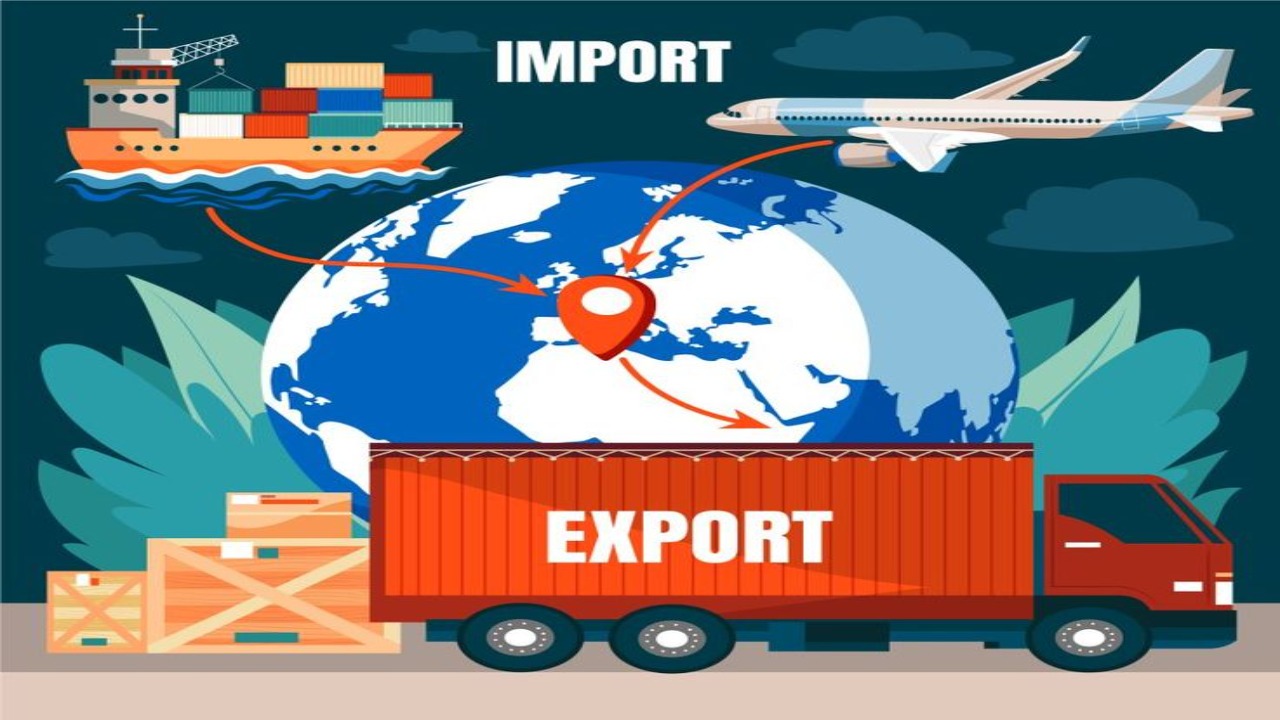
Every product you own crossed a border to reach you at some point. Your phone. Your clothes. The car outside. The food on your table. Somewhere in the chain, a country loaded it onto a ship, a truck, or a plane and sent it out into the world.
A handful of countries are responsible for most of that movement. And the gap between the top and everyone else is much wider than most people realise.
Here are the five largest exporters in the world in 2025 and what their numbers actually tell you.
1. China — $3.77 Trillion
Nothing else comes close.
China's exports rose 6.1% in 2025 to $3.77 trillion, and the country finished the year with a world record trade surplus of $1.19 trillion. That means China sold $1.19 trillion more to the world than it bought from it. In a single year.
People still think of China as a factory for cheap goods — T-shirts, plastic toys, low-cost electronics. That picture is outdated. China has climbed the industrial ladder from low-cost manufactured goods in the 1980s to electric vehicles and solar panels today.
China exported approximately 6.5 million vehicles in 2025, surpassing Japan to become the world's largest car exporter.
The country that used to assemble your iPhone now designs the battery technology inside it. In 2024, China accounted for 25% of the world's electric vehicle exports, 48% of battery exports, and 72% of solar module exports. Those numbers have only grown since.
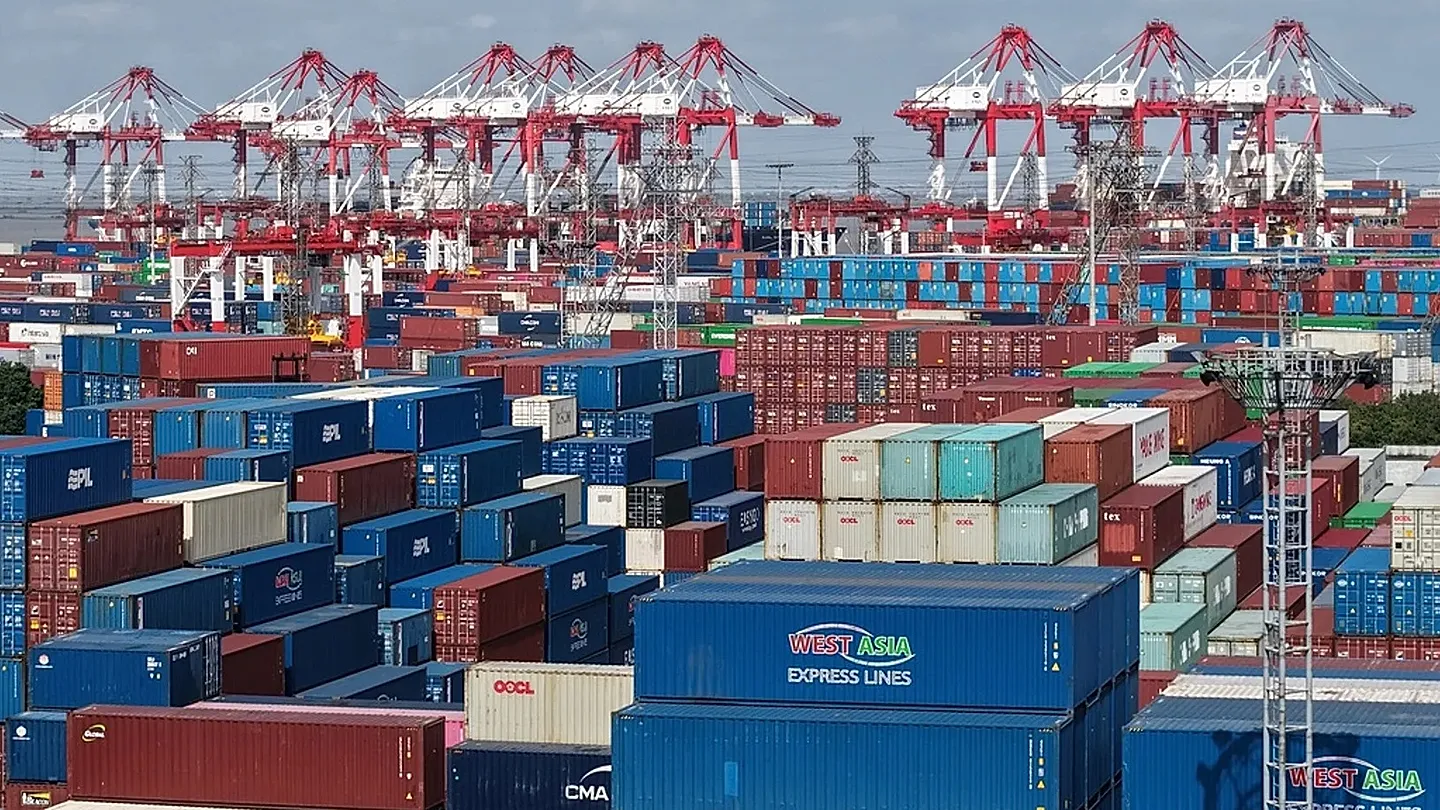
This did not happen by accident. From 4% of world exports in 2001 to almost 16% in 2024, China's rise as an export power was a two-decade structural evolution. It was planned. It was funded. And it worked.
2. United States — $2.185 Trillion
America is second and it is not even close to first.
The US exports $2.185 trillion worth of goods, nearly $1.6 trillion less than China. That gap is the source of significant political tension, particularly around tariffs, and it is not narrowing in any meaningful way.
What America exports is different from what China exports. The US is strongest in high-value manufactured goods: aerospace, pharmaceuticals, agricultural products, advanced technology.

The United States leads in services exports including technology, finance, entertainment, and education, a category growing faster than goods trade. When you add services to the picture, America's position looks stronger. But goods exports are what move physical supply chains, and China has the clear advantage there.
In August 2025, US-bound Chinese exports declined nearly 33% from the previous year, marking the fifth consecutive month of double-digit decreases, a direct result of Trump administration tariffs. China responded by deepening trade ties with ASEAN, Africa, and Belt and Road partners. The trade war is reshaping global supply chains. Slowly, but visibly.
3. Germany — $1.765 Trillion
Germany has 84 million people. It exports $1.765 trillion worth of goods a year. That works out to roughly $21,000 in exports per person annually. The maths alone should tell you something about how efficiently this economy is built.
Motor vehicles and parts accounted for 16.3% of Germany's exports in 2025, making them the country's single largest export category. Machinery came second at 13.8%, with computer and electronic products third at 8.7%.
The brands doing the heavy lifting are names you already know. Mercedes-Benz, BMW, Audi, and Volkswagen lead German car exports, with consistent demand across global markets.
German engineering has a reputation that commands premium pricing worldwide, and the country has built its entire export economy around maintaining that reputation.
What makes Germany interesting is that it exports things the world cannot easily replicate. You can manufacture a car anywhere. But German-engineered precision industrial machinery, the equipment other countries use to build things, is a different category entirely. Germany sits at the top of global manufacturing supply chains, not just inside them.
4. Netherlands — $989 Billion

This one stops most people cold.
The Netherlands has a population of roughly 18 million. It ranks fourth in global exports with nearly $1 trillion in goods. That is smaller than Lagos State by population, and yet it moves more trade value than Japan, South Korea, or the UAE.
The explanation is the Port of Rotterdam, the largest port in Europe and one of the busiest in the world. The Netherlands is where goods from Asia, North America, and beyond enter Europe.
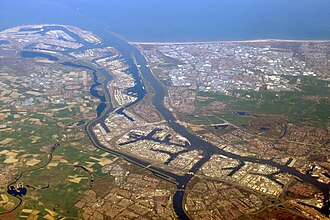
A significant portion of what the Netherlands exports originated somewhere else entirely and passed through Dutch ports and logistics infrastructure on its way to European markets.
The Netherlands achieved total agricultural exports of €137.5 billion in 2025, representing an 8.4% increase from 2024. So it is not purely a transit story. Dutch agriculture, particularly flowers, dairy, and vegetables, is genuinely world-class. But the port is the foundation.
The Netherlands proves something important: you do not need to manufacture everything to dominate trade. You need to be indispensable to how goods move. Geography and infrastructure, invested in over generations, can be as valuable as any natural resource.
5. Hong Kong — $754 Billion
Hong Kong has 7.5 million people and exports $754 billion worth of goods a year. Per capita, that makes it one of the most trade-intensive economies on the planet.
Like the Netherlands, Hong Kong's ranking is largely about position rather than production. As a special administrative region of China, Hong Kong sits at the intersection of mainland Chinese manufacturing and international financial markets.
It functions as the gateway. Goods and capital flow in and out through Hong Kong's financial infrastructure, legal system, and port facilities.
The tension in Hong Kong's story is political. Its role as an autonomous trading hub was built on a distinct legal and regulatory framework that global businesses trusted.
That framework has come under pressure in recent years, and some companies have begun rerouting operations through Singapore instead. Whether Hong Kong maintains its position in the next decade depends as much on geopolitics as economics.
What the List Is Actually Telling You
Look at what these five countries have in common. None of them are exporting raw materials. China exports manufactured goods and technology. The US exports aerospace, pharma, and services.
Germany exports engineering. The Netherlands exports logistics infrastructure and premium agriculture. Hong Kong exports financial and trade facilitation.
The countries that are not on this list, including every African nation, are largely still exporting raw materials. Crude oil. Cocoa. Copper. Iron ore. Resources that other countries refine, process, and sell back at multiples of the original price.
The distance between exporting crude oil and exporting a refined product. Between growing cocoa and selling chocolate. That distance is where wealth is built or lost in global trade.
The top five know that. The question is when everyone else decides to close the gap.