Tinubu's 2027 Re-election Bid Faces Scrutiny Amidst Campaign Council Debates
APC unveils its 108-member 2027 Presidential Campaign Council led by Tinubu, as Yari’s appointment draws praise and criticism from political parties.
The All Progressives Congress (APC) has officially constituted its 108-member Presidential Campaign Council (PCC) for the upcoming 2027 general elections. President Bola Tinubu will chair the council, with Vice President Kashim Shettima and APC National Chairman Nentawe Yilwatda serving as vice chairmen.
Former Zamfara State Governor, Senator Abdulaziz Yari, has been appointed as the Director-General, a decision announced by presidential spokesperson Bayo Onanuga. This formation marks the official commencement of the APC's preparations for the 2027 electoral cycle.
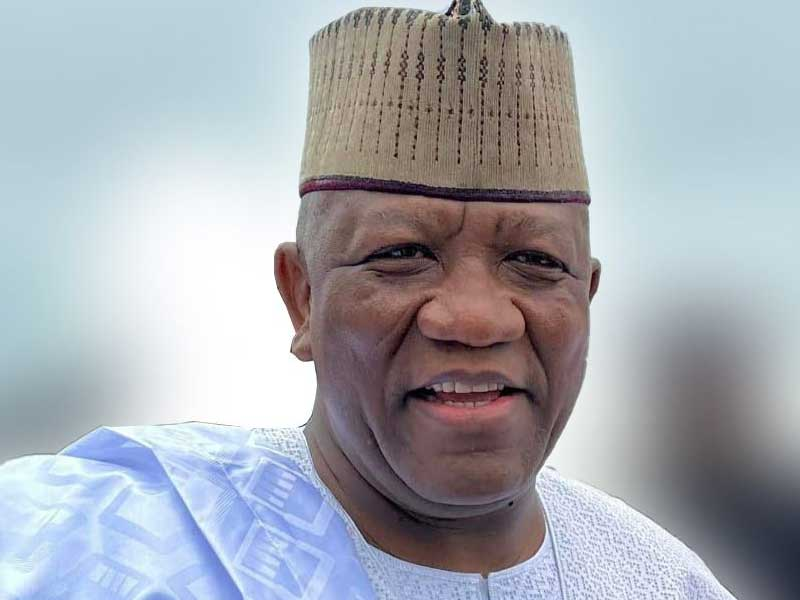
Yari's appointment as Director-General has notably stirred significant reactions within Nigeria's political landscape.
The Allied Peoples’ Movement (APM), through its National Publicity Secretary Abubakar Yusuf, swiftly described the council as “dead on arrival,” lambasting it as a reflection of the Tinubu administration’s alleged declining popularity and its inability to attract credible politicians.
The APM particularly criticized Yari's tenure as Zamfara State Governor, which they claimed was marred by worsening insecurity and poor living conditions. They argued that his appointment did not bolster Tinubu’s electoral prospects. They further characterized members of the council as “known political sycophants, inconsistent characters and ideological turncoats.”
Adding to the criticisms, the African Democratic Congress (ADC) unequivocally labeled President Tinubu’s Campaign Council as a “rehabilitation centre for corruption suspects.”
Bolaji Abdullahi, the ADC National Publicity Secretary, questioned the inclusion of former government officials such as Betta Edu, who was suspended amid controversy surrounding an attempted N585 million transfer into a private account, and Ngozi Olejeme, who has faced prosecution by the Economic and Financial Crimes Commission (EFCC) over alleged financial offenses.
The ADC challenged the Federal Government to provide evidence that the cases involving these individuals, and others associated with the campaign council, have been resolved. The party also asserted that the 2027 general election would serve as a referendum on the President’s performance, arguing that the council's composition, lacking credibility, cannot campaign away the prevailing cost of living crisis or endemic poverty.
In contrast, Prince Williams Akporeha, immediate past president of NUPENG and National Coordinator of Working People United, staunchly defended Yari's appointment, stating it would secure victory for President Tinubu. Akporeha praised Yari as a “tested and trusted leader” with extensive experience in governance, party organization, and grassroots mobilization, expressing confidence that he would bring discipline, strategic coordination, and the necessary political acumen to the assignment.
Similarly, Zamfara State Governor Dauda Lawal commended Yari’s selection, describing it as a recognition of his leadership experience and organizational capacity. Governor Lawal also saw the appointment as a significant source of pride for the people of Zamfara State, believing it would boost the morale of APC members and strengthen their commitment to the party's objectives.
Beyond the Director-General, the PCC features a comprehensive structure. Ajibola Basiru was appointed national deputy secretary, and Hadiza Bala-Usman as assistant secretary. A body of advisers includes prominent figures like Chief Bisi Akande, Chief Segun Osoba, Senator Rochas Okorocha, Senator Abdullahi Adamu, and Senator Florence Ita Giwa.
Senate President Godswill Akpabio, Speaker Tajudeen Abass, and Governor Mai Mala Buni of Yobe State were named deputy director-generals for the campaign in the South and North, respectively.
Other key roles include Adams Oshiomhole for mobilisation, Femi Gbajabiamila for administration, and James Faleke, retained from the 2023 presidential campaign, for election planning, coordination, and monitoring. Faleke will work with zonal directors including Dr Ngozi Olejeme for the South South.
The media and strategic communication directorate will be coordinated by Mohammed Idris, Minister of Information and National Orientation, alongside Dele Alake and Bayo Onanuga, among others.
FCT Minister Nyesom Wike offered a unique perspective on campaign effectiveness, clarifying that he cannot be a member of the APC Presidential Campaign Council because he is not an APC member. Wike emphasized that formal campaign council membership does not guarantee electoral victory, asserting that political relevance hinges entirely on a politician’s ability to win their respective states, local governments, and wards, encapsulated by the phrase “every politics is local.”
He cited examples of past Directors-General who failed to deliver their home states despite their prominent roles. Wike advocated for a focus on grassroots voter mobilization and highlighted the work of his cross-party “Rainbow Coalition” which, independent of formal APC structures, is committed to supporting the presidency. He assured that both the FCT and Rivers State remain firmly under his political stewardship to ensure victory for President Tinubu.
President Tinubu, addressing the newly constituted council, urged its members to diligently work towards securing victory for the APC in the 2027 elections.
He called on them to confidently showcase the administration’s record, stating, “We have delivered on our campaign promises and set our country on a path of economic progress. We are definitely out of the dark tunnel and are now at the cusp of reaping the benefits of a prosperous economy that will benefit all Nigerians.”
He further encouraged the heads of various directorates to involve other party members willing to contribute to the campaign, reinforcing the party’s commitment to soundly defeat opposing forces and continue its agenda.