The World's First Trillionaire: How Elon Musk Built a Fortune Bigger Than Most Countries
Meta Description: On June 12, 2026, a bell rang on the Nasdaq and the financial world changed permanently. Elon Musk became the world's first trillionaire. So how does one man accumulate $1.1 trillion?
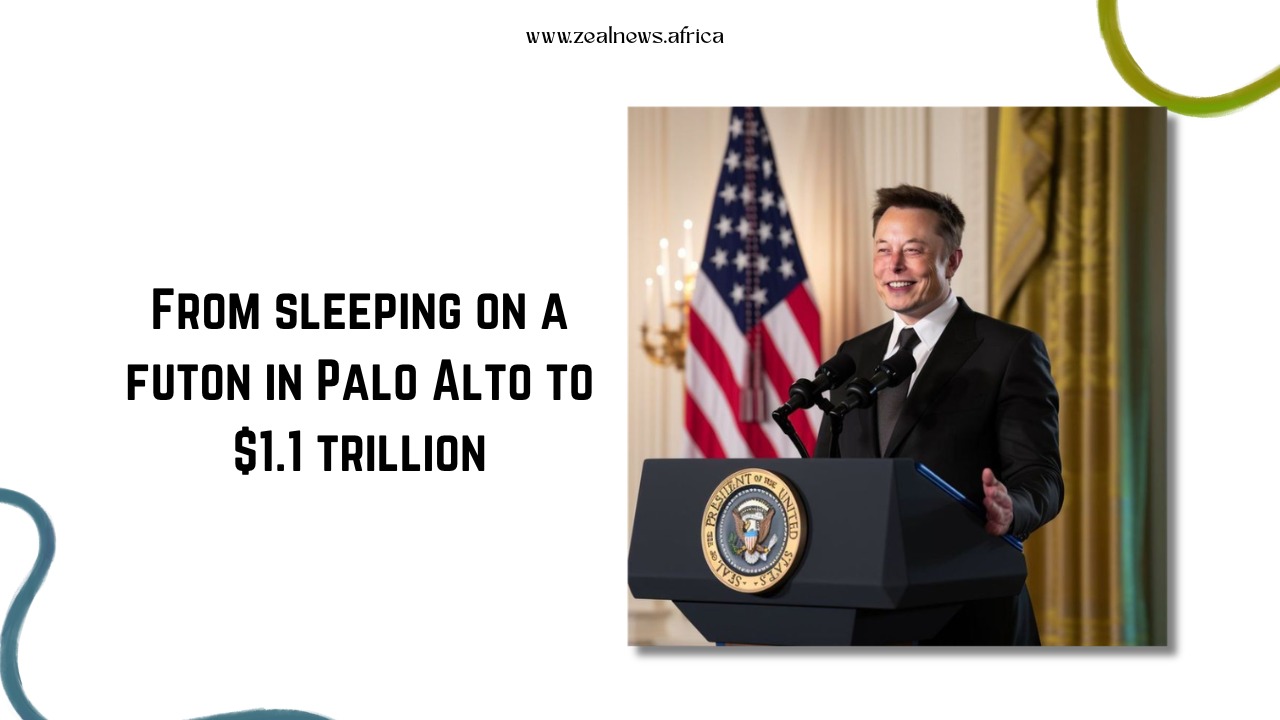
On June 12, 2026, a bell rang on the Nasdaq in New York, and the financial world changed permanently. As SpaceX officially began trading under the ticker symbol "SPCX," Elon Musk became something that had never existed before in recorded human history: a trillionaire. Not a billionaire rounding up.
Not a near-miss. A verified, documented $1.1 trillion, a number so large it exceeds the combined annual GDP of the Netherlands, Saudi Arabia, and Switzerland.
At $1.1 trillion, Musk's fortune is nearly four times the size of the next wealthiest person on earth. It exceeds the combined fortunes of Jeff Bezos, Sergey Brin, and Larry Page.
The question worth asking is not simply how much he is worth. It is how a boy who once slept on a futon in a rented office in Palo Alto, showering at the local YMCA because he couldn't afford anything else, ended up here.
The Beginning: A Futon, a YMCA, and a $307 Million Exit
Elon Musk was born June 28, 1971, in Pretoria, South Africa, to a South African father and a Canadian mother. He attended Queen's University in Kingston, Ontario, and later transferred to the University of Pennsylvania, where he received bachelor's degrees in physics and economics.
He enrolled in graduate school in physics at Stanford University but left after only two days, convinced that the internet had more potential to change society than any work in physics could.
That decision, leaving Stanford after 48 hours, set the course for everything that followed.
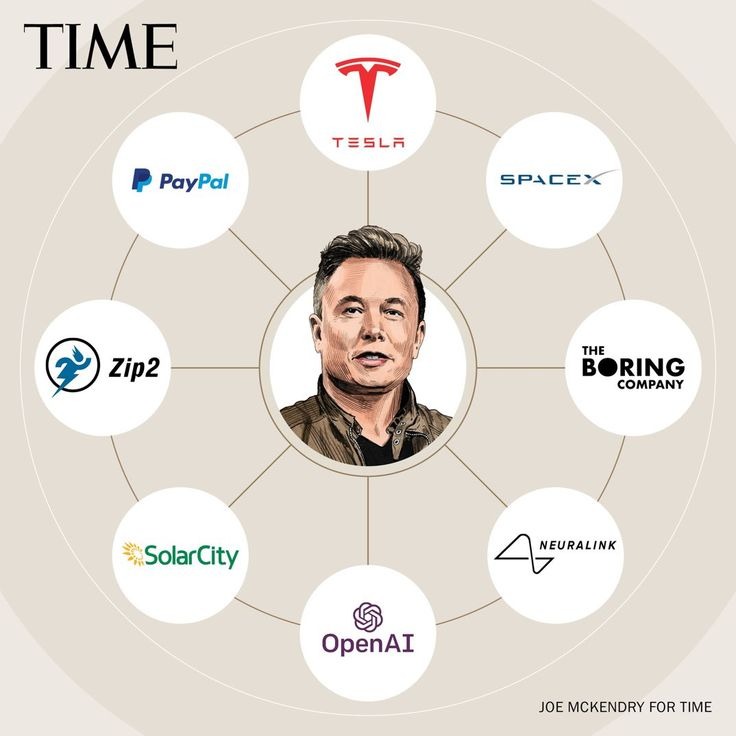
In 1995, Musk and his younger brother Kimbal founded Zip2 in Palo Alto, California, a web software startup that created online city guides for newspapers. The bootstrapping brothers lived in their small office, sleeping on futons and showering at a local YMCA to save money.
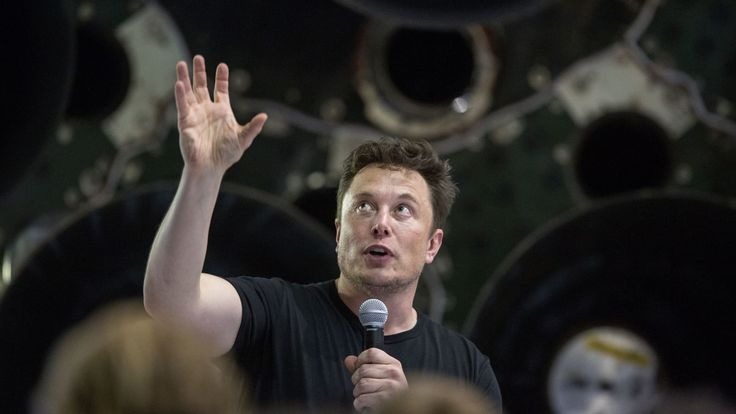
Elon coded the software himself, building the platform from scratch at a time when the internet was still in its infancy and many businesses didn't yet have websites.
In 1999, Compaq purchased Zip2 for nearly $307 million in cash and stock options. For Elon Musk, it was a life-changing event. He received $22 million from the sale. For most people, $22 million at age 27 would be the story. For Musk, it was seed capital.
He immediately used that money to found X.com, an online financial services and payments company. The following year, X.com merged with a similar company that Peter Thiel had founded. Thiel eventually assumed leadership and renamed the company PayPal.
In 2002, eBay acquired PayPal for $1.5 billion, of which Musk received $175.8 million. He was 30 years old, and he had just pocketed nearly $180 million. Most people stop there. Musk used $100 million of it to start a rocket company.
SpaceX: The Bet That Built a Trillion
SpaceX was founded in 2002 with the initial goal of reducing space transportation costs to enable the colonization of Mars. The company began by developing its first orbital rocket, the Falcon 1, from scratch.
In the early years, the company nearly collapsed. Three of the first four Falcon 1 launches failed. Musk later admitted that the company had enough money for one final attempt before bankruptcy.
Latest Tech News
Decode Africa's Digital Transformation
From Startups to Fintech Hubs - We Cover It All.
That fourth launch, in September 2008, succeeded. Later that year, NASA awarded SpaceX a $1.6 billion contract for cargo resupply missions to the International Space Station. The company never looked back.
SpaceX's value has grown at a pace that defies normal financial logic. When it was founded in 2002, it was worth just $27 million. By 2015, following major investments from Google and Fidelity, the valuation had risen to $12 billion. By 2019 it was $33.3 billion.
By October 2021 it had crossed $100 billion. By December 2024, a secondary share sale pegged the value at $350 billion. Then came Starlink, and everything accelerated further. Starlink was publicly launched in January 2015 with the goal of building a constellation of satellites to provide internet to remote geographies. SpaceX filed with the FCC to operationalize the system in 2016.
Today, Starlink is the largest satellite constellation ever deployed, beaming internet connectivity to customers across continents, oceans, conflict zones, and rural communities that no cable or fibre network has ever reached. It is also the single biggest revenue engine inside SpaceX, and the asset that ultimately convinced Musk to take the company public after years of insisting he would keep it private.
SpaceX set a fixed IPO price of $135 per share, planning to sell 555.6 million shares in a $75 billion fundraise, the largest in history.

By close of trading on June 12, shares had jumped 19% to $160.95, pushing SpaceX past a $2 trillion valuation. In extended trading, shares climbed further to $166.76, lifting the market capitalisation by another $80 billion to $2.2 trillion.
Musk retains over 82% voting control of SpaceX after the offering. His economic stake of roughly 43% translates, at current valuations, to the largest single block of wealth any individual has ever held in one asset.
The AI Twist: The Man Who Warned Against AI Became Rich From It
SpaceX is no longer just a rocket company, and that distinction matters enormously to understanding how the $1.1 trillion figure was reached.
On February 2, 2026, SpaceX acquired Musk's artificial intelligence startup xAI in an all-stock transaction that valued SpaceX at $1 trillion and xAI at $250 billion.
The combined entity brought together SpaceX's rocket launch services and Starlink satellite internet with xAI's Grok AI platform and Colossus supercomputer, and the social network X.
The irony embedded in that transaction is impossible to ignore. Musk co-founded OpenAI in 2015 as a nonprofit focused on ensuring AI benefited humanity. He later departed the board, reportedly over disagreements about the company's direction. He then sued OpenAI publicly for abandoning its original mission.
He testified before governments about the existential risks of artificial intelligence. He described AI as "more dangerous than nukes." Then in 2023 he founded xAI, hired away talent from the very companies he had criticised, merged his AI startup with his rocket company in 2026, and became richer from artificial intelligence than from electric vehicles.
The contradictions are not footnotes to his story. They are the story.
Tesla: The Foundation That Made Everything Legible
Before SpaceX was a public company, Tesla was the asset that made Musk's wealth visible to the world. He owns approximately 12% of Tesla, with options to acquire an additional 8%. At Tesla's current market capitalisation of roughly $1.2 trillion, that stake alone would rank him among the ten wealthiest people on earth even if he owned nothing else.
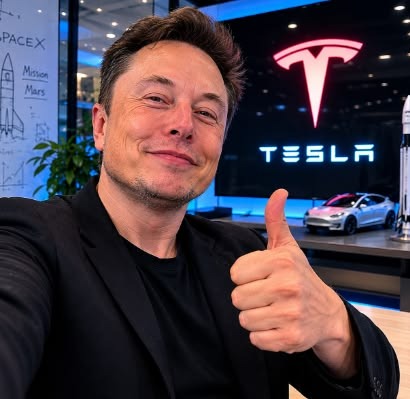
Tesla's contribution to the trillionaire story is also personal and legally dramatic. The Delaware Supreme Court's restoration of his 2018 Tesla compensation package in December 2025, a package originally worth $115 billion, was one of the pivotal events that accelerated his wealth in the final stretch toward $1 trillion. A court ruling, not a product launch or a market rally, added more to one man's net worth than most companies are worth entirely.
X, Neuralink, and The Boring Company: The Rest of the Empire
Latest Tech News
Decode Africa's Digital Transformation
From Startups to Fintech Hubs - We Cover It All.
Musk's fortune is split across SpaceX at roughly $800 billion, Tesla at approximately $290 billion, xAI at around $40 billion, and X at approximately $12 billion.
The remainder, Neuralink, his brain-computer interface company working on implants that connect human brains directly to computers, and The Boring Company, his tunnelling infrastructure venture, have collectively raised around $2 billion from private investors but contribute comparatively little to the headline number at this stage.
X, the platform formerly known as Twitter which Musk acquired in 2022 for $44 billion, remains the one clear financial underperformer in the portfolio.
Its current valuation of roughly $12 billion represents a significant markdown from the acquisition price, and the platform continues to generate controversy that has cost it advertiser revenue and public goodwill.
Whether X eventually recovers that ground remains one of the more interesting unresolved questions in Musk's financial story.
The Man Who Takes No Salary
Perhaps the most striking detail in this entire story is the simplest one.
Musk does not collect a traditional salary. His income is almost entirely tied to performance-based stock options and equity in his various companies. His paper wealth fluctuates by billions of dollars daily based on market sentiment.
Nearly 95% of his $1.1 trillion consists of unrealized equity gains, meaning Musk remains largely illiquid despite holding wealth that exceeds the GDP of many mid-size economies.
He is, in the most technical sense, asset-rich and cash-poor. A man worth $1.1 trillion who probably cannot write a personal cheque for $500 million without selling something first.
His net worth has climbed by roughly $410 billion in 2026 alone, an average of approximately $29,100 every second, or about $2.5 billion per day. For reference, Nigeria's minimum wage sits at ₦70,000 per month. Musk accumulates the naira equivalent of that figure in under three seconds.
So What Does This All Mean?
The speed of this wealth accumulation has no precedent in financial history. It took Jeff Bezos over two decades to go from first-time billionaire in 1999 to $200 billion in 2020. Musk went from $500 billion to $800 billion in four months.
The trillionaire milestone, when it came, arrived not as a slow climb but as a single morning on a stock exchange floor.
The milestone raises a question that economists and policymakers have barely begun to answer:
what does it mean for one person to hold wealth equivalent to the combined GDP of over 50 countries while operating within the same global economic system as everyone else? What happens to markets, to politics, to regulation, when a single individual commands resources at that scale?
Latest Tech News
Decode Africa's Digital Transformation
From Startups to Fintech Hubs - We Cover It All.
That is not a call for sympathy or outrage in either direction. It is simply an acknowledgement that $1.1 trillion is not a bigger version of a billion.
It is a category of wealth that has never existed before in recorded human history, built across three decades on a foundation of two internet companies, one electric car manufacturer, one rocket company, one satellite internet network, one AI startup, and the stubbornness of a man who left Stanford after two days because he thought he had bigger things to do.
He was right.