The World Cup Ended, So Why Are Millions of African Bettors Still Chasing What They Lost?
The World Cup drove an 80% surge in betting, but as Africa celebrates the wins, who is counting the debt, regret, and emotional cost of losing?
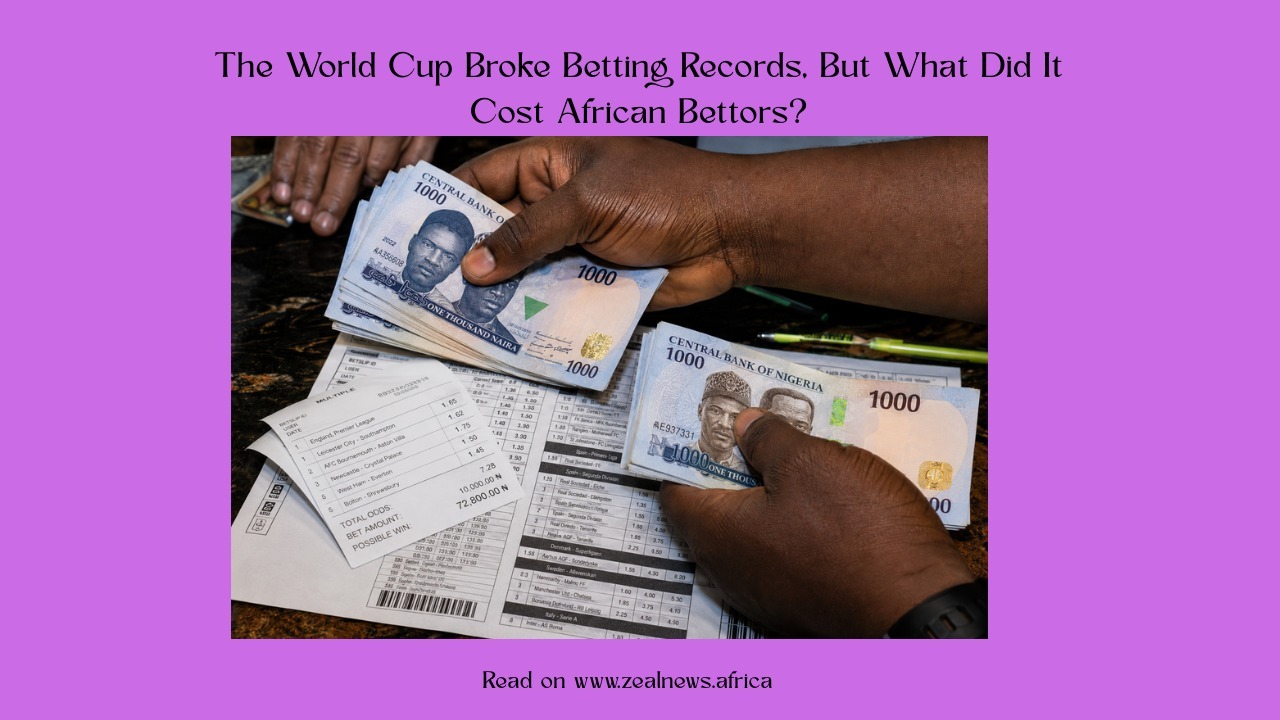
Betting activity at the 2026 World Cup rose 80 percent above Qatar 2022. Across Africa, the tournament turned every goal, card and corner into another chance to win, and another reason to chase what had already been lost.
“Football is money” is a phrase you’d always hear. As as for the money they are referring to, its the one where you’d stake 50 naira to win 100 million naira.
The most dangerous moment in a World Cup bet is not always when the goal goes in.
Sometimes, it is the five seconds after.
The screen flashes green, the betting balance rises, and a small stake has suddenly become rent money, school fees or the beginning of a larger dream. The bettor takes a screenshot. Friends flood the group chat with fire emojis. For one intoxicating moment, the mathematics of ordinary life appears to have been defeated.
Then comes the next match.
The stake is larger because confidence is higher. The accumulator is longer because the last ticket looked easy. A late penalty ruins one selection. A goal is disallowed. A player booked to score is substituted in the 58th minute.
The screen turns red.
The winner who felt untouchable an hour earlier is now trying to recover what was lost.
That cycle: hope, victory, confidence, loss, panic and another deposit, became one of the hidden stories of the 2026 FIFA World Cup.
In June, industry analysts predicted that the expanded tournament could become the biggest betting event in sporting history, with more than $50 billion expected to be wagered globally, compared with an estimated $35 billion during Qatar 2022.
Flutter, the owner of brands including FanDuel, Paddy Power and Betfair, expected World Cup staking to reach at least twice the level recorded four years earlier.
By the final weekend, the available data showed that the betting boom was not merely promotional hype.
Sportradar reported an 80 percent increase in betting-ticket volume compared with the 2022 World Cup, even after accounting for the expansion from 64 to 104 matches. The company expected to process approximately 8.5 million tickets for its 250 bookmaker clients during the final between Spain and Argentina alone.
England attracted about 16.3 million betting tickets during the tournament, followed by France with 15.5 million, Argentina with 15 million and Spain with 14.5 million.
England’s semi-final defeat to Argentina generated approximately 5.8 million tickets, making it the most heavily wagered match before the final.
The prediction made in June was therefore broadly correct: this was an extraordinary betting event.
The more important question is what those record figures conceal.

Africa Did Not Simply Watch the World Cup; They Did A Lot More
Across much of Africa, watching football and betting on football have increasingly become part of the same ritual.
A 2026 GeoPoll survey across seven African countries found that 94 percent of respondents planned to watch or follow the World Cup. More than half, 52 percent, said they had placed a football bet during the previous 12 months.

The figure rose to 64 percent in Kenya, 60 percent in Ghana, 58 percent in South Africa, 57 percent in Uganda and 54 percent in Nigeria.
A separate GeoPoll study conducted between June 24 and July 16 offers an even clearer picture of how deeply betting has entered everyday life.
Among active bettors surveyed across six African markets, 55 percent said they gambled at least once a week. Twenty-eight percent bet at least once a day. Ninety-five percent placed their wagers through mobile devices.
The audience was also overwhelmingly young: people between 18 and 34 accounted for 71 percent of respondents.
This is why the World Cup was such a powerful accelerator.
The tournament did not require bettors to enter a shop, fill out a paper slip or wait for the weekend. The bookmaker was already inside the phone.
A person could wake up to odds on an afternoon match, receive a notification about a boosted market, place a bet during lunch and cash out—or lose—before the evening commute. By night, another fixture was available to begin the cycle again.
The expanded World Cup created 104 matches, but bookmakers offered thousands of betting opportunities inside those matches.
A bettor no longer had to predict only the winner. He could wager on the number of corners, throw-ins, bookings, shots, substitutions, first-half goals or whether a particular player would score with a particular foot within a particular period.
Football did not merely provide the event.
It supplied a continuous stream of emotional triggers.
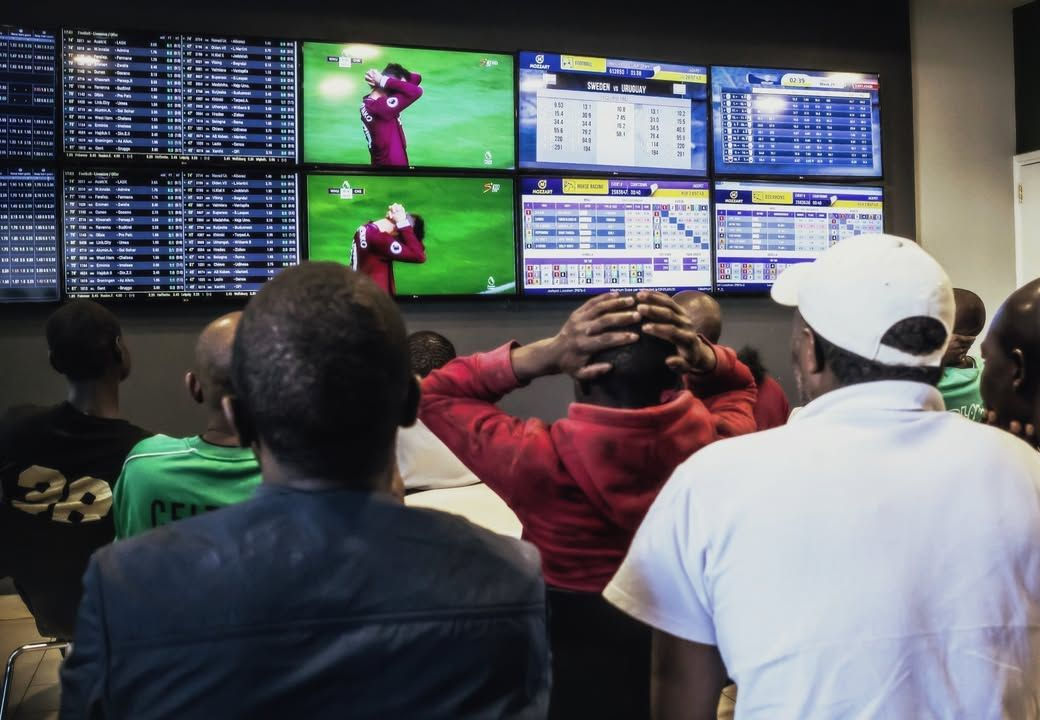
The Tournament Turned Hope Into a Product
In wealthier markets, sports betting is often marketed as entertainment.
In parts of Africa, it is increasingly consumed as an economic strategy.
The distinction matters.
A young professional who stakes a small amount for amusement experiences a loss differently from an unemployed graduate who believes one successful accumulator could solve an urgent financial problem.
For many bettors facing high living costs, insecure employment and limited economic mobility, the ticket is not simply a prediction. It becomes a private rescue plan.
That is why wins can feel so powerful.
A successful ticket does more than produce money. It appears to validate the bettor’s intelligence. It suggests he has discovered a system, understood the game better than the bookmaker or found a path that other people have missed.
The next stake is therefore rarely made by the same person psychologically.
It is made by someone carrying the confidence of the previous win.
The loss that follows also does more than remove money. It attacks the story the bettor has begun telling himself.
Instead of accepting the loss as the cost of a game designed to favour the operator, he may interpret it as an interruption: one bad referee, one unlucky substitution or one careless defender standing between him and the life-changing ticket he almost won.
The word almost does enormous work in gambling.
A ticket with 14 correct selections and one losing leg produces no more profit than a ticket on which every prediction failed. Emotionally, however, the near miss can feel like proof that the method works.
So the bettor returns.
Not necessarily to win something new, but to recover something he now believes already belonged to him.
Winning Creates the High. Losing Creates the Chase
The betting industry understands this emotional movement.
Promotions arrive after losses. Cash-out offers appear while matches remain undecided. Odds change in real time. Betting apps celebrate wins with bright graphics while losses disappear into account history with very little ceremony.
The winner is encouraged to feel skilled.
The loser is encouraged to try again.
This creates an emotional imbalance: victories become public, while losses remain private.
Winning tickets are posted on WhatsApp statuses, X and Telegram. Losing tickets are deleted. Betting influencers display extraordinary payouts, expensive cars and successful accumulators, while the audience rarely sees the full record of failed predictions that came before them.
A 2026 study examining 5,467 betting slips promoted by three Nigerian social-media tipsters found a severe difference between the wealth projected online and the actual performance of their selections.
The researchers tracked approximately $4.8 million in wagers. The influencers collectively lost 25.24 percent on their promoted bets. A follower staking an equal amount on every tip would have lost 38.27 percent of the money invested. Every staking strategy tested produced substantial losses.
That is the part missing from the screenshots.
The feed shows the ticket that turned ₦5,000 into ₦800,000.
It does not show the dozens of deposits, failed accumulators, borrowed funds and desperate recovery bets that may have preceded it.

Governments Have Noticed the Money
As betting activity has expanded, African governments have increasingly looked at the industry as both a social problem and a source of revenue.
In February, Lagos introduced an automatic five percent withholding tax on net winnings paid through licensed online gaming platforms. The deduction is taken before the bettor receives the payout.
The announcement produced a simple but revealing reaction beneath one online discussion: “What if the person loses?”
The question captures a wider frustration.
The government shares in the visible win, while the bettor absorbs the full loss.
Kenya has gone further. Its current system includes a five percent charge on deposits into betting wallets and another five percent deduction when money is withdrawn, even when the withdrawal includes the bettor’s original funds rather than profit.
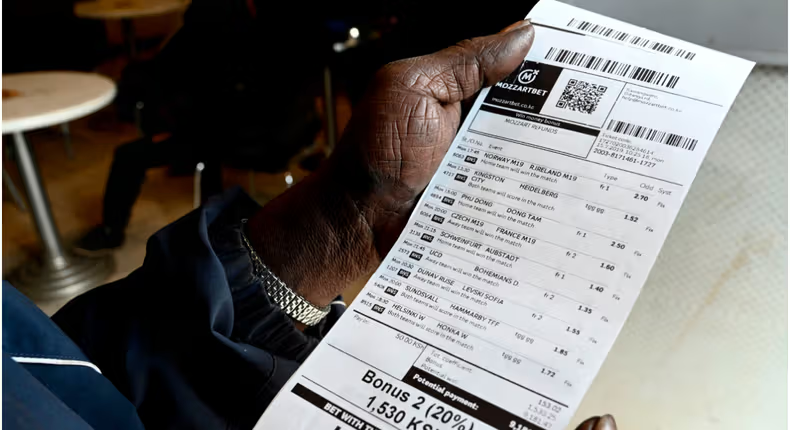
The policy has attracted backlash precisely because a user can be charged without winning anything.
Yet the levies have not stopped the market from expanding.
Kenya’s excise revenue from betting services rose 24.9 percent to KSh16.5 billion, betting tax increased 20.3 percent and withholding tax from betting and gaming jumped 59.2 percent, according to figures published in July.
South Africa, meanwhile, has proposed a national 20 percent tax on online gambling profits. The government argues that the levy could discourage harmful gambling and raise annual revenue from the sector from 4.8 billion rand to roughly 10 billion rand. Industry groups say it could instead push users toward illegal operators.
Taxation may capture more of the money moving through betting platforms.
It does not automatically repair the emotional damage underneath it.
A deduction on winnings cannot cure compulsive gambling. A levy does not stop a person from chasing losses. And a government collecting more revenue from a booming industry must confront an uncomfortable question: how much of that revenue is being generated by people trying to gamble their way out of economic distress?
As one South African gambling-support leader put it, many people are “trying to gamble ourselves to prosperity.”
The Data Changed, But The Warning Did Not
So, has the betting data changed since June?
Yes.
The early prediction was that the World Cup would smash existing gambling records. The later evidence showed an 80 percent rise in betting tickets compared with Qatar 2022, millions of wagers on individual teams and matches, and stronger-than-expected customer activity across major platforms.
Across Africa, the latest surveys show that betting is no longer a marginal habit. It is mobile, frequent and concentrated among young adults. In Nigeria, football accounts for 81 percent of the activity reported by surveyed bettors.
Across the markets studied, more than one in four active bettors gamble at least daily.
But the most important number may never appear in an industry report.
It is the amount borrowed after a loss.
The school fee delayed because a “sure” ticket failed.
The salary spent trying to recover yesterday’s stake.
The hours of sleep lost replaying the disallowed goal.
The apology never made because admitting the truth would require admitting how much money is gone.
Bookmakers will remember this World Cup through record customers, ticket volumes and revenue.
Some bettors will remember it through the one accumulator that changed their month.
Others will remember the tournament through the bet they nearly won, the loss they tried to recover and the final deposit they promised themselves would be the last.
The World Cup ended when the referee blew the final whistle.
The emotional game did not.
For millions of African bettors, it simply moved off the pitch, into bank balances, borrowed money, strained homes and the quiet pressure to win back what football had already taken.