The Nile: Africa’s Eternal Artery of Life
For millennia, the Nile River has been the unbroken thread weaving together the lives, economies, and dreams of the people of Africa. From the days of the pharaohs, when its seasonal floods turned desert into farmland, to the bustling trade boats that carried gold and grain, the Nile has been more than water — it has been life itself. It shaped empires, inspired gods, and built cities whose ruins still whisper of its power. Yet, as its waters continue their timeless journey to the Mediterranean, the question remains: what might happen if modern Africa could harness the Nile’s full potential? Could this ancient river once again become the beating heart of a new African renaissance?
The River That Birthed Civilizations
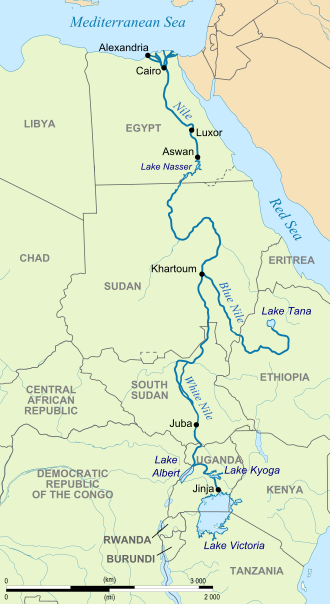
Long before Africa’s borders were drawn by modern maps, long before cities rose and fell, and long before the world even had a name for “history,” there was the Nile. Stretching more than 6,600 kilometers across eleven countries, the Nile’s journey from the heart of Africa to the Mediterranean Sea is more than a geographical fact — it is the story of human endurance, ingenuity, and culture.
SOURCE: wikipedia

The Nile was the quiet architect of ancient life. Without its waters, the great civilization of Egypt — whose monuments still defy time — would never have risen from the desert sands. Every year, like the slow beat of a giant heart, the river swelled with the seasonal rains from the highlands and lakes of East Africa. This flood, which could seem destructive elsewhere, was a gift here, spreading nutrient-rich silt across its banks and turning otherwise barren lands into fields of green.
A Lifeline for Agriculture
The phrase “Egypt is the gift of the Nile” was not mere poetry. It was reality. Ancient farmers depended entirely on its annual inundation to plant wheat, barley, flax, and lentils. Without the river’s rhythm, there would have been no bread to eat, no linen to weave, no food surplus to sustain growing cities.
Along its banks, the agricultural cycle became the heartbeat of society. When the floods receded, the people sowed their seeds. When the crops grew tall, the harvest fed not only the population but also foreign markets. Egypt’s grain became one of the most sought-after exports in the ancient Mediterranean world, feeding empires far beyond Africa.
The Highway of the Ancients
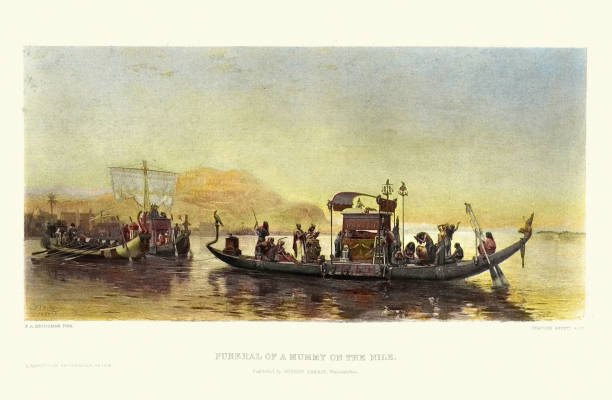
The Nile was not just a giver of food — it was also a road, a moving ribbon of opportunity. In an era when roads were scarce and land travel was slow and dangerous, the river became the safest and most efficient route for transportation.
SOURCE: gettyimages

Wooden boats, some carrying families and goods, others bearing soldiers and officials, glided along its surface. From Nubia to the delta, goods such as gold, ebony, ivory, papyrus, and exotic animals were exchanged for wine, copper, and luxury items from foreign lands. In many ways, the Nile was the first great artery of African trade, connecting the interior of the continent with the bustling ports of the Mediterranean.
A Tool of Power and Politics
Control of the Nile was not just about owning land — it was about holding the keys to survival. Whoever controlled the river’s course and the fertile floodplain could dictate the lives of those who lived along it. In ancient Egypt, the ability to manage and predict the Nile’s flooding became a symbol of divine kingship.
Pharaohs were seen as chosen by the gods to maintain harmony between the river’s cycles and the needs of the people. This belief was not mere superstition — it was a form of political legitimacy. To lose control over a stretch of the Nile was to lose both power and the trust of the people.
Military campaigns often followed the river’s path, using it as both a supply route and a strategic barrier. The ancient conflicts between Egypt and Nubia were as much about cultural dominance as they were about access to the river’s life-giving waters.
The River in the Eyes of the Gods
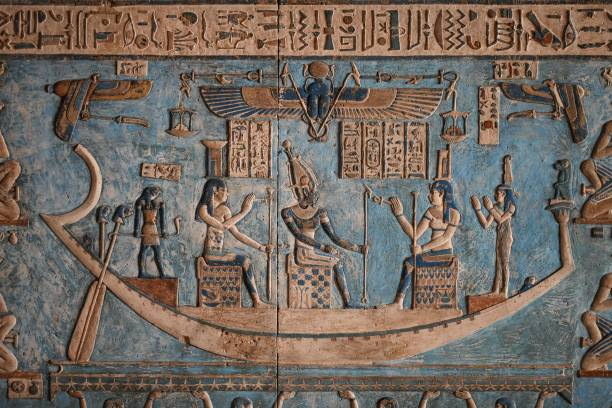
In the spiritual imagination of the ancient world, the Nile was more than a river — it was a divine being. The god Hapi was believed to be the source of its flooding, his annual arrival bringing fertility to the land. Festivals were held in his honor, and offerings were made to ensure the flood would be generous but not destructive.
History
Rewind the Stories that Made Africa, Africa
A Journey Through Time, Narrated with Insight.
Temples rose on the banks of the river, their colossal walls adorned with carvings depicting the bounty the Nile bestowed. Many of these sacred structures were oriented toward the water, a reminder that even in matters of the spirit, the river remained central.
A Source of Materials and Innovation
Beyond food and trade, the Nile supplied resources that shaped the material culture of ancient Africa. Papyrus reeds, which grew thickly along its banks, were harvested to make mats, baskets, ropes, and the world’s first form of paper. This papyrus paper carried not only the records of trade and governance but also the earliest forms of literature, science, and poetry.
Mud from the river’s floodplain was molded into bricks, building homes, granaries, and even temples. The river’s bounty extended beyond survival — it fostered innovation. The early calendars of Egypt, designed to predict the floods, became a cornerstone of timekeeping. The need to measure farmland after each flood encouraged the development of geometry. In this way, the Nile was indirectly responsible for some of the world’s earliest scientific advancements.
The River as a Cultural Thread
Even today, the Nile flows through more than just geography — it flows through African identity. From its origins in Burundi and Rwanda, through the vast waters of Lake Victoria, across the plains of Sudan, and into the fertile delta of Egypt, it connects multiple nations and cultures.
In ancient times, this connection was expressed in shared agricultural techniques, interlinked trade networks, and even diplomatic marriages between Nile Valley kingdoms. The river was not just a divider between East and West banks — it was a unifier, binding diverse peoples into a single, interconnected story.
The Challenges of the Ancient Nile

While the Nile was a giver, it could also be a taker. When the floods were too low, famine stalked the land. When they were too high, villages were swept away. Ancient Egyptians developed an intimate understanding of the river’s moods, building canals, reservoirs, and irrigation systems to better control its flow.
This management was itself a political act. Leaders who failed to prevent flooding or famine often faced rebellion or loss of legitimacy. The Nile was generous, but it demanded respect — a truth as relevant today as it was thousands of years ago.
A Legacy That Flows On
The Nile’s role in shaping African history is immeasurable. It is not merely the world’s longest river — it is one of humanity’s oldest teachers. It taught early civilizations how to farm in harmony with nature, how to trade across distances, how to organize societies around a shared lifeline, and how to turn nature’s gifts into enduring culture.
Even in the modern era, the Nile remains a source of both opportunity and contention. Its waters are still contested by nations seeking to balance development with preservation. Yet the river endures, as it has for millennia, winding its way through time and history, carrying with it the stories of countless generations.
A Legacy to Protect

SOURCE: gettyimages

If the Nile birthed civilizations, then protecting it is nothing less than protecting the memory of who we are. This is not a task for one nation, but for all who share its waters. Its banks still hold ancient stones that have seen more history than any living human. Its currents still nourish farmland that feeds millions.
But like the past, the future of the Nile depends on stewardship. Modern dams, climate change, and population pressures threaten its delicate balance. The story of the Nile is not finished — and perhaps that is its most powerful lesson. It flows forward, urging each generation to decide what they will add to its long, unbroken narrative.
History
Rewind the Stories that Made Africa, Africa
A Journey Through Time, Narrated with Insight.