The Next Great Wall Isn't Being Built With Cement, and It's 8,000 Kilometers Long. What Is It Made Of?
There's a wall going up that could outlast China's most famous landmark, and it's not built to keep anyone out. What is this wall all about?
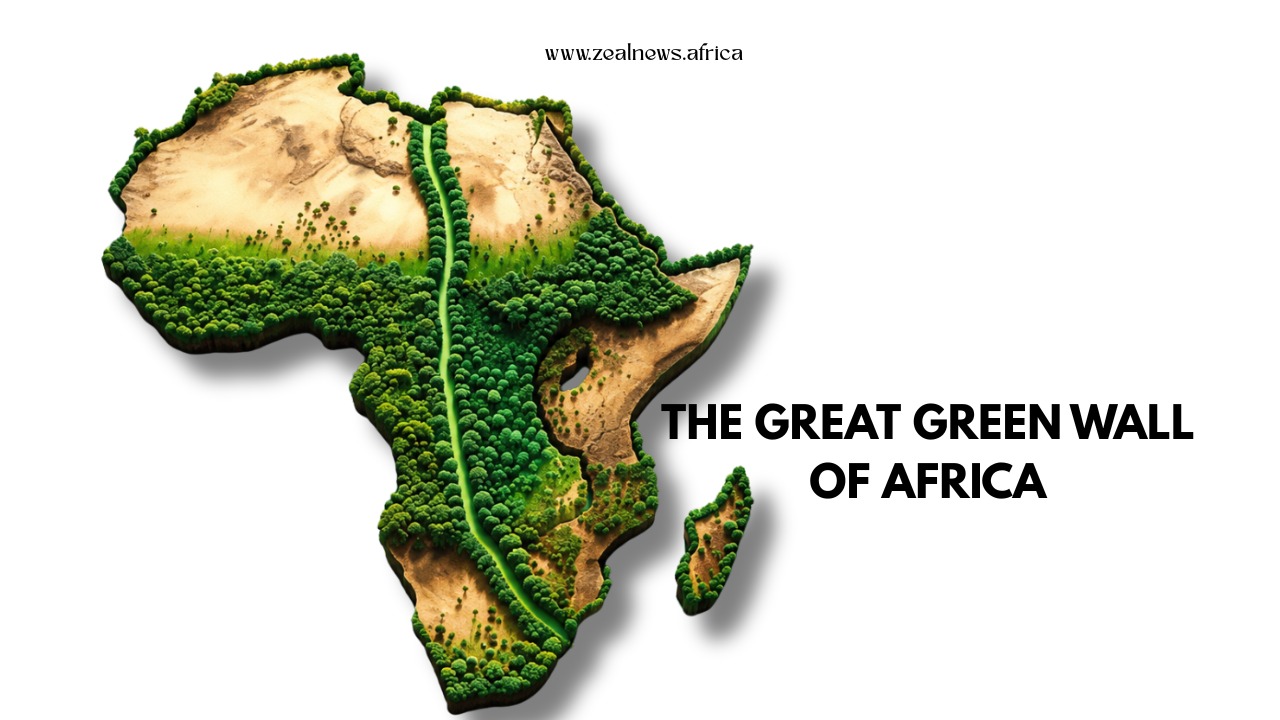
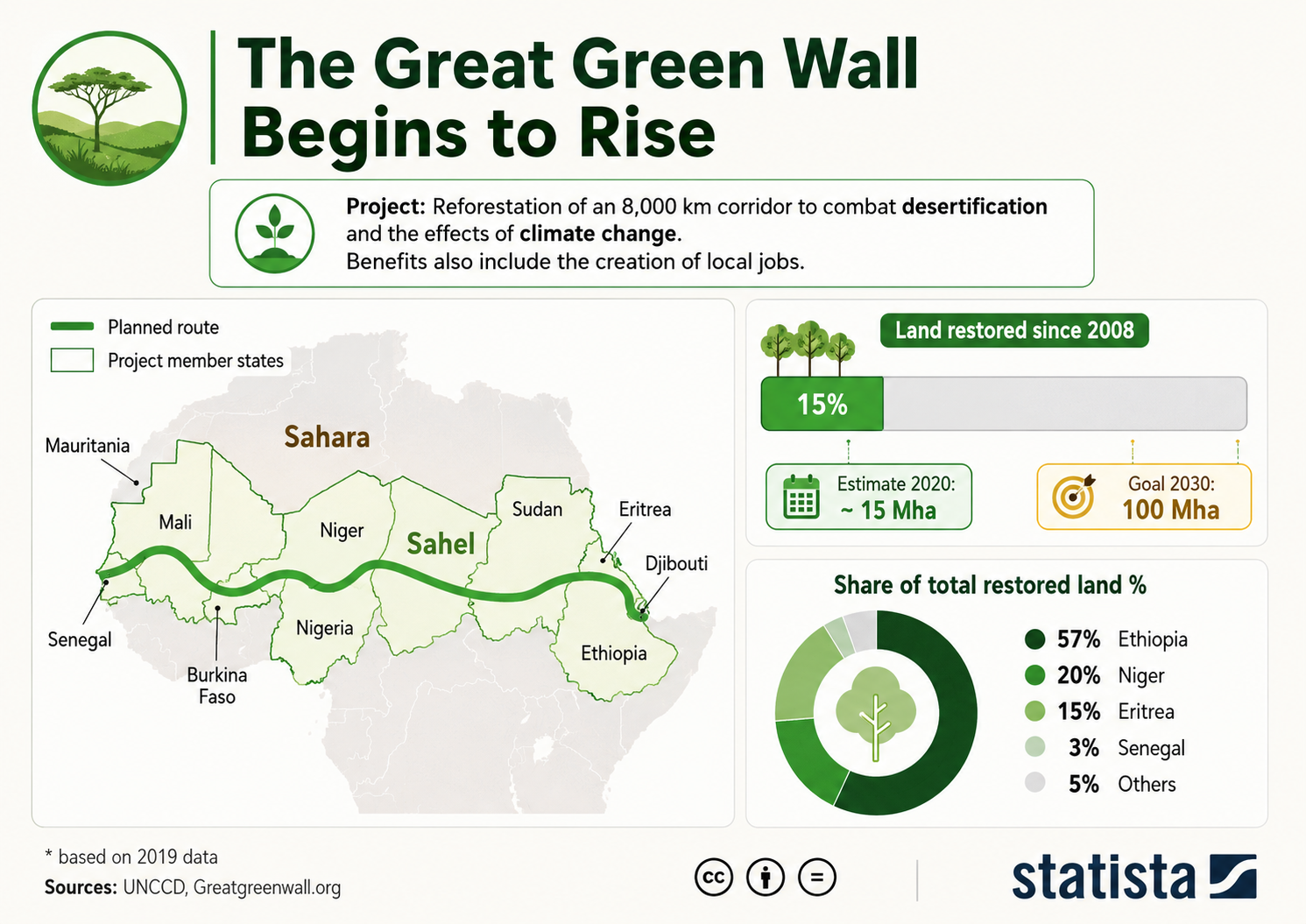
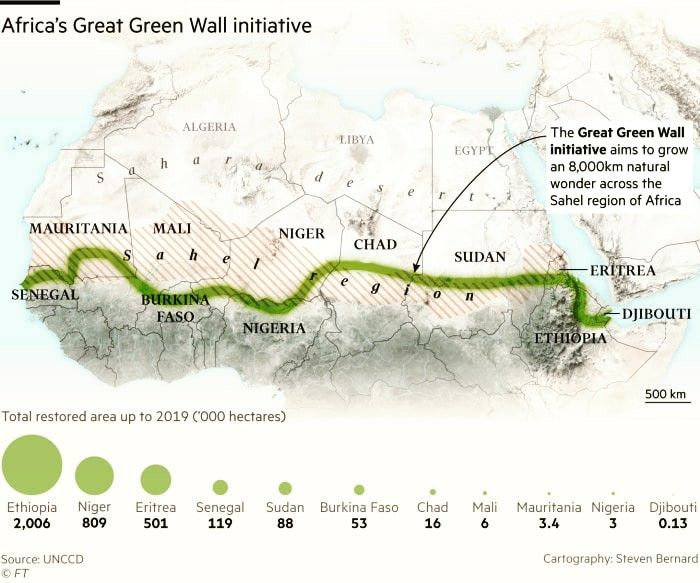
China built a wall to keep people out. Africa is building one to bring land back to life. Stretching nearly 8,000 kilometers from Senegal's Atlantic coast to Djibouti on the Red Sea, the Great Green Wall runs through the Sahel, the semi-arid belt separating the Sahara from the greener land further south.
The goal was never just trees. It is restoring soil, fighting hunger, creating jobs, and giving entire communities a reason to stay on land that has been turning against them for decades.
Why This Project Exists at All
The African Union launched the Great Green Wall in 2007 to respond to a crisis that had been building across the Sahel for years. The original plan called for a continuous belt of trees roughly 8,000 kilometers long and 15 kilometers wide, a literal green line cutting across the continent.
Scientists and conservationists eventually realized a single row of trees wouldn't hold up against the scale of the problem. The project shifted toward something more practical: restoring forests, grasslands, wetlands, and farmland based on what each specific location actually needs.
That shift matters because the Sahel's problems run deeper than missing trees. Millions of people across the region depend on farming and raising livestock to survive.
Decades of drought, land degradation, and unpredictable rainfall have hollowed out crop yields and pushed entire communities toward food insecurity and poverty.
Restoring healthy soil, improving how land holds water, and rebuilding vegetation cover isn't just an environmental fix.
It's an attempt to keep people from being forced off land their families have worked for generations, and to slow the migration that happens when farming simply stops being viable.
Not One Line of Trees, but Thousands of Local Projects
Despite the name, nobody is planting a single unbroken line of trees across Africa. The Great Green Wall works more like a patchwork of restoration efforts, each shaped by local conditions.
In some regions, that means planting native trees. In others, farmers are protecting vegetation that's already regenerating on its own, rebuilding grasslands, improving soil health, harvesting rainwater, or shifting toward farming methods that don't strip the land further.
This flexibility is deliberate. A restoration method that works in Senegal's coastal zones won't necessarily work in the drier stretches near Djibouti, so the project leans on regional adaptation instead of a single blueprint applied everywhere.
The targets behind this effort are large by any measure. By 2030, the initiative aims to restore 100 million hectares of degraded land, an area close to the size of Egypt.
It also aims to pull 250 million tonnes of carbon dioxide out of the atmosphere and generate 10 million green jobs across the continent.
More than 20 African countries are involved, backed by international organizations, development banks, and environmental groups working alongside national governments.
What's Actually Been Built So Far
Progress hasn't matched the full scale of the ambition yet, but it isn't negligible either. Senegal has planted millions of trees and restored large stretches of degraded land. Ethiopia has rehabilitated millions of hectares through large-scale restoration programs of its own.
Nigeria, Niger, and several neighboring countries have expanded sustainable land management practices, adjusting how farmland gets used so it doesn't degrade as quickly.
Recent assessments put the total restored land at around 30 million hectares, a meaningful chunk of the 100-million-hectare target, even if the remaining 70 million hectares represent real distance still to cover.
Experts working on the project say closing that gap will take more funding, tighter cooperation between the countries involved, and better security in regions where conflict has made restoration work difficult or outright dangerous.
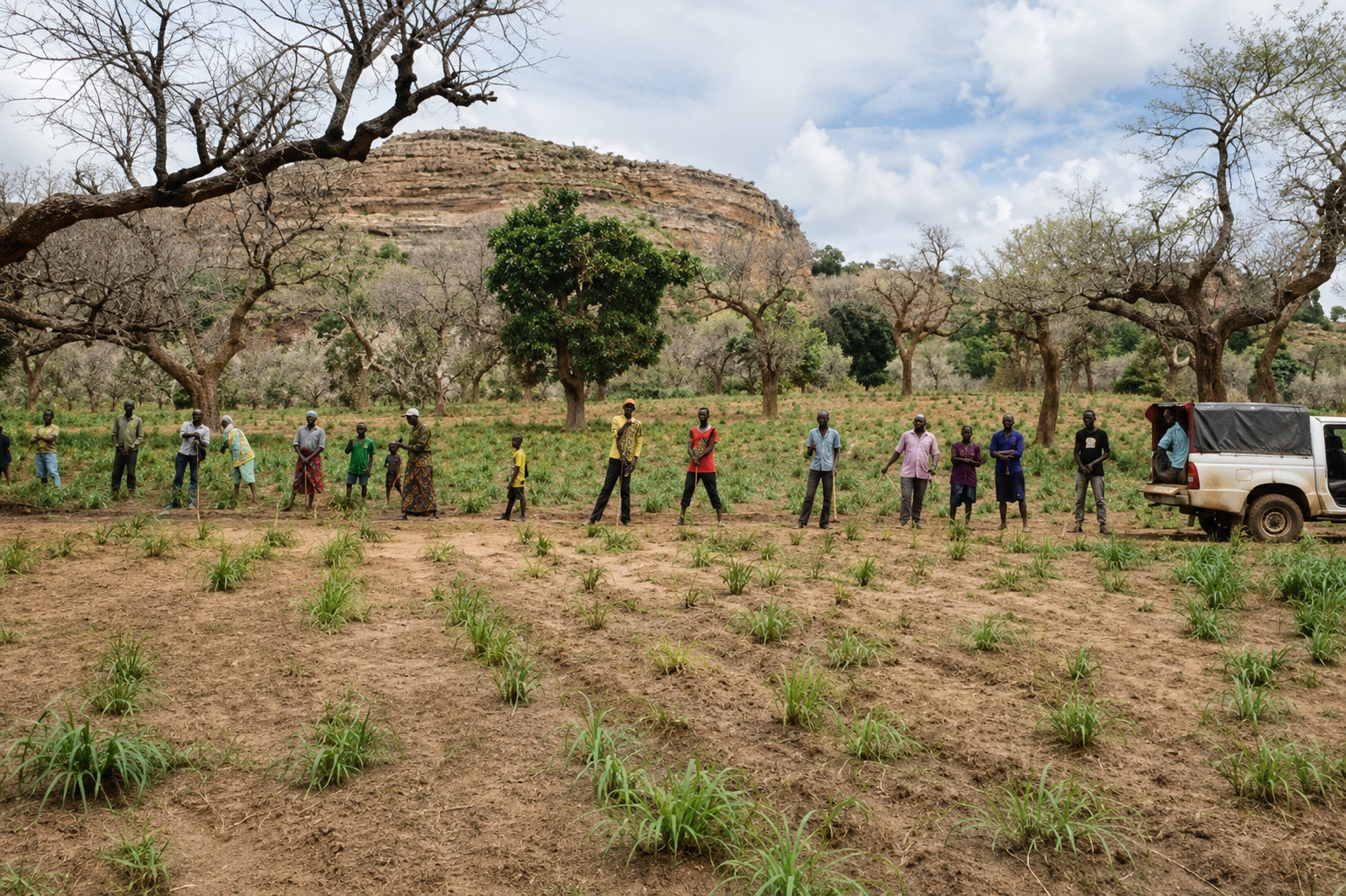
That 30 million figure matters for a specific reason. It answers the ecological question before anyone has to ask it. Land in some of the world's toughest growing conditions has already responded to restoration, which means the science behind the project works when it's actually implemented.

What determines whether the rest of the target gets reached isn't whether the land can recover. It's whether the funding, security, and political cooperation that made the first 30 million hectares possible can be extended across the remaining stretch of the Sahel.
Why A Restored Sahel Matters Beyond Africa
Healthy land does more than grow crops. Trees and native vegetation stabilize soil, cut down erosion, help groundwater recharge, and store carbon that would otherwise stay in the atmosphere.
Restored landscapes also become habitat again, bringing back birds, insects, and other wildlife, while giving farms a better shot at surviving future droughts without collapsing entirely.
For the people living across the Sahel, this translates into something more immediate than carbon metrics. Better soil means better harvests. Healthier grazing land means livestock survive dry seasons instead of dying off. Both of those outcomes mean steadier incomes for families who have spent years watching their land produce less every season.
The project's significance stretches well past Africa's borders too. Land degradation and climate change aren't problems confined to one continent, and if restoration methods proven in the Sahel can be adapted to other dry regions facing similar pressure, from parts of Asia to the American Southwest, the lessons learned here could shape how other governments approach their own degraded landscapes.
The Great Green Wall has become something of a case study in how environmental restoration and economic development can move together instead of competing with each other. It's proof, still incomplete but already visible in the numbers, that protecting land and improving people's lives don't have to be separate goals.
Unlike walls built to keep people apart, this one is designed to reconnect landscapes that drought and mismanagement pulled apart over decades. Its success won't be measured by a tree count alone.
It will be measured by whether soil holds together through the next dry season, whether wildlife returns to land that had gone quiet, and whether families across the Sahel find it easier to stay and farm than to leave.
Eight thousand kilometers of restored land was never going to come from one government or one growing season. What makes this project different from most climate pledges is that the people with the most to lose are also the ones doing the work, which tends to be exactly the condition under which large, slow, necessary projects actually get finished.