The Hidden Hierarchy of Wedding Guests
Not all wedding guests are created equal. From the VIPs in front-row lace to the silent seat-fillers in borrowed suits, Nigerian weddings reveal a fascinating hierarchy of love, power, and performance.
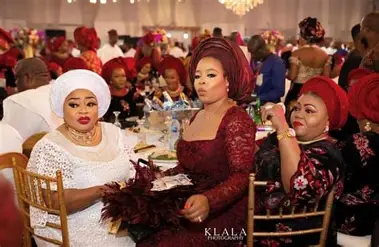
They arrive in convoys that glitter under the sun, SUVs draped in ribbons, drivers honking in unison, guests stepping out in an explosion of lace, gele, and perfume. The air hums with anticipation, not just for the union of two people but for the theatre about to unfold. Weddings here are not quiet vows whispered in small chapels; they are productions, measured in headcounts, high tables, and hashtags. Every detail, from the size of the cake to the color of the Aso Ebi carries coded meaning. To attend is to perform, to be seen, and to be situated within the unspoken ladder of affection, wealth, and relevance that defines the day.
In Nigeria, weddings are less an event and more a spectacle; a theatre of lace, perfume, and politics. Beneath the shimmer of sequins and the sound of live bands lies a complex social order: the wedding guest hierarchy. Every chair, color, and camera flash tells a story about status, proximity, and belonging.
The Guest List Is Never Just a List
At first glance, the guest list seems simple, a roll call of friends and family invited to celebrate love. But in practice, it’s a map of influence. Who gets a seat, where that seat is placed, and what fabric they wear all whisper the same question: “How close are you to the couple or to their parents?”
Sociologists call this “symbolic participation,” where attendance is a public affirmation of social ties. According to The Guardian Nigeria, the Nigerian wedding guest list operates like an unspoken caste system: Aso Ebi wearers in matching outfits occupy the top; acquaintances in “free pass” attire fill the back. The closer your fabric matches, the higher your ranking.
Aso Ebi: The Uniform of Belonging
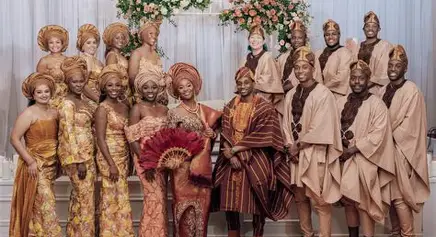

The Aso Ebi, the coordinated fabric worn by groups at Nigerian events, is more than fashion; it’s proof of loyalty. To wear it is to declare, “I belong to this story.” To refuse or fail to buy it is, sometimes, social heresy.
Fashion scholar Dr. Onome Ukpong describes Aso Ebi as “a soft power tool,” bridging community and commerce. Tailors work overtime to deliver elaborate designs before D-Day. The result? A sea of silk and sequins; visual confirmation of status and solidarity.
But not all Aso Ebi wearers are equal. There’s the “Main Group” (close family and bridal party), the “Extended Squad” (friends of friends), and the “Late Buyers”, those who got leftover fabric in panic the week before. Each tier signals its own proximity to power.
The Front Row Phenomenon
At a typical Lagos wedding, proximity to the couple is physical. The front row isn’t just prime seating; it’s social proof. Politicians, business magnates, and spiritual leaders sit closest to the aisle, often flanked by security or entourages. Their presence alone confers prestige both on the couple and themselves.
As BBC Africa once observed, Nigerian celebrations are “arenas of status display.” Champagne flows faster in the front row, the band plays louder, and the photographers hover longer. It’s not vanity; it’s visibility.
Middle Row Diplomacy
Behind the elite sits the delicate middle colleagues, classmates, family friends. Their importance is moderate but strategic. They clap at speeches, dance briefly for photos, and then quietly retreat before the after-party. In wedding sociology, this group maintains social equilibrium.
They are the bridge between generations, the buffer between in-laws and outsiders. They may not trend on Instagram, but their attendance carries weight in WhatsApp groups and family politics.
The Backbenchers
And then, there are the backbenchers; distant relatives, plus-ones, and curious gate crashers who arrived with “a friend of the groom.” They hover near the buffet, form alliances with servers, and position themselves for leftover souvenir bags.
In a culture where weddings double as social networking events, backbenchers are often dismissed but never insignificant. Many new friendships, deals, and even future unions have sprouted from those unreserved seats.
The Souvenir Economy
At the heart of every Nigerian wedding lies the souvenir; gift bags filled with branded towels, mugs, and occasionally, kitchen utensils. It’s both currency and conversation starter. The higher your rank, the better your souvenirs.

Culture
Read Between the Lines of African Society
Your Gateway to Africa's Untold Cultural Narratives.
According to Quartz Africa, Nigeria’s wedding industry is now worth over $5 billion annually, driven by a culture of generosity and performance. Guests don’t just attend, they participate in a full economic ecosystem of giving, flaunting, and remembering.
Influencers and the New Aristocracy
In the Instagram era, a new class of wedding royalty has emerged: influencers. They might not be close to the couple, but their social media reach makes them valuable guests. A tag, a reel, or a post can amplify an event far beyond the hall’s capacity.
As CNN Africa notes, Lagos weddings have become “fashion runways in disguise.” Designers, makeup artists, and photographers treat them as marketing platforms. Influence now rivals intimacy in determining access.
Cultural Currency: The Politics of Attendance
Attendance itself carries weight. To miss a wedding you were expected to attend can fracture relationships. To attend one uninvited can be seen as ambition or audacity. Nigerian weddings, in this sense, operate like miniature parliaments. every move, every seat, every selfie negotiated through power.
Even within diasporic communities, this dynamic persists. In London, Toronto, or Houston, Nigerian weddings follow the same script; Aso Ebi groups, VIP tables, family drama, and dance-offs. The hierarchy may be subtle, but the order is intact.
When Love Meets Logistics

Of course, not every wedding is a spectacle. Rural or low-budget ceremonies often flip the hierarchy, emphasizing intimacy over display. Yet, even there, echoes of the old system remain: elders at the front, youth at the back, and everyone bound by tradition.
Sociologists argue that these hierarchies reflect more than vanity, they reveal how African societies value community and respect. Every guest, even the quietest one, reinforces a shared belief: that love is public, and joy must be witnessed.
The Performance of Belonging
Weddings in Nigeria are, above all, performances of belonging. They blur the line between celebration and spectacle, between love and logistics. Every outfit, invitation, and souvenir says something about identity. To attend a wedding is to participate in a collective act of social storytelling.
And so, when the music fades and the guests disperse, what remains isn’t just the memory of cake or champagne, it’s the unspoken knowledge of where everyone stood. In the grand choreography of Nigerian weddings, even the seating plan is a reflection of society itself.