Tech and Power Cuts: Innovation in a Generator Age
In a country where the lights rarely stay on, innovation has learned to adapt. From diesel-powered offices to pay-as-you-go solar kits, Nigeria’s tech industry keeps finding ways to thrive amid failure.

Picture this: The lights cut out mid-sentence. Someone in a Lekki co-working space sighs, closes their laptop and waits. The hum of the air conditioner fades into the rattle of a generator somewhere outside. A few people check their phones, others joke about “NEPA doing their thing again.” Within seconds, a backup inverter clicks on, half the bulbs flicker back to life, and work resumes. It’s a rhythm so familiar that it barely registers as disruption anymore, just another layer in the country’s daily improvisation.
In Nigeria, innovation has never had the luxury of perfect conditions, yet somehow the tech ecosystem keeps pulsing, adapting and expanding. Startups launch, apps gain traction and networks stretch farther. But, the question is: how does technology thrive in a place where the lights never stay on for long?
The Price of Darkness
Nigeria loses an estimated $29 billion annually due to unreliable power supply, according to the World Bank and the African Development Bank (AfDB). For startups, that figure feels personal, as every unplanned outage means interrupted meetings, burnt hardware, delayed deployments or missed funding calls.
In Ikeja, where power rationing is practically institutional, a small IT firm probably spends more on diesel than on internet subscriptions. Multiply that by thousands of small tech businesses across the country, and you start to see the silent tax that innovation pays for existing here.
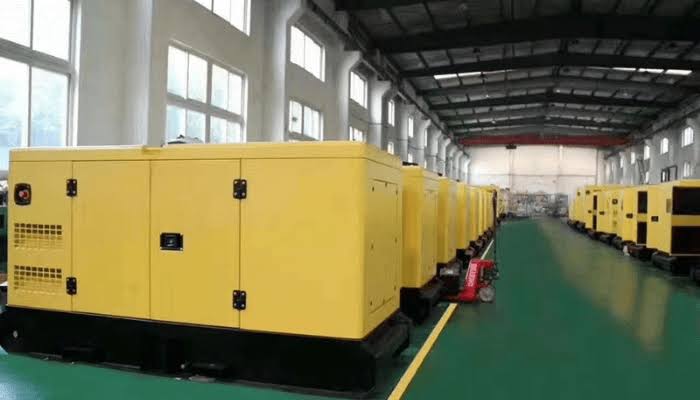
Even for individuals, the fatigue is collective, and multiple people take to social media platforms to rant, with several hundreds resharing them due to familiarity of the situation. In spite of all these, though, work continues, it's just slower, costlier and heavier. Yet, there’s a stubborn pride in that.
The Generator Generation
For the average tech person, the hum of a generator is the soundtrack of progress. There’s an entire informal industry built around this dependence, from technicians who fix inverters at dawn, to men who refill diesel drums at midnight and small electrical shops selling solar panels one piece at a time. Every outage sustains another micro-economy.
In 2024, when fuel prices spiked and subsidy removal stretched budgets, the cost of keeping offices powered rose by over300%. Yet somehow, co-working hubs stayed open. From Yaba to Abuja, spaces like CCHub, Venia Business Hub, and The Village doubled down on backup infrastructure, framing power stability as a luxury service. You weren’t just renting a desk, you were renting light. Invention, therefore, became a coping mechanism.
Innovation in the Shadows
Scarcity breeds improvisation, and nowhere is that clearer than in how Nigeria’s startups respond to the power crisis. Take Arnergy, a solar-tech company that builds smart renewable systems for offices and homes. In 2023 and 2025, they raised funding to scale operations. Their goal was simple, to accelerate the deployment of solar energy systems across Africa, particularly in Nigeria, to provide affordable, clean, and reliable energy solutions to households and businesses. Or Lumos, whose pay-as-you-go solar kits now serve over a million Nigerians. These are companies born from necessity, not luxury.
Latest Tech News
Decode Africa's Digital Transformation
From Startups to Fintech Hubs - We Cover It All.
Then there’s the quieter wave, that of fintech-like startups merging energy and finance. Companies like Rensource and Beacon Power Services are rethinking power as a service, not a privilege. They offer subscription models, micro-leasing, and digital energy tracking, all innovations born out of the simple fact that the grid cannot be trusted.
Every inverter installed, every solar panel mounted and every app that monitors usage, they’re all silent forms of defiance and proof that the country’s biggest energy reform didn’t come from government policy, but from private persistence.
Coding Through Blackouts
In every ecosystem, there’s a story of persistence that borders on the absurd. Developers attending Zoom meetings on tethered hotspots, designers juggling two laptops, with one charging while the other hums with activity and even teams coding through the night, fueled by power banks and candlelight. Even when connectivity falters, routines bend and comfort is abandoned, work always finds a way.

When the #EndSARS protests swept through Nigeria in 2020, a viral thread captured the resilience of young developers. Despite blackouts and curfews that severed them from their usual tools, they found ways to build platforms, track donations and coordinate efforts using backup devices. It was a vivid portrait of creativity under pressure, a story of people refusing to let failing infrastructure define their agency, and a testament to ingenuity thriving in unlikely circumstances.
Solar Dreams and Financial Reality
Solar energy has long been painted as Nigeria’s great hope. And while its adoption is growing, the cost remains steep. A basic solar setup for a one-bedroom apartment can cost₦500,000 to ₦1 million. That’s not accessible for most individuals or startups scraping by in their early days, especially in a country where unstable income flows and inflation often make long-term investments feel like luxuries.
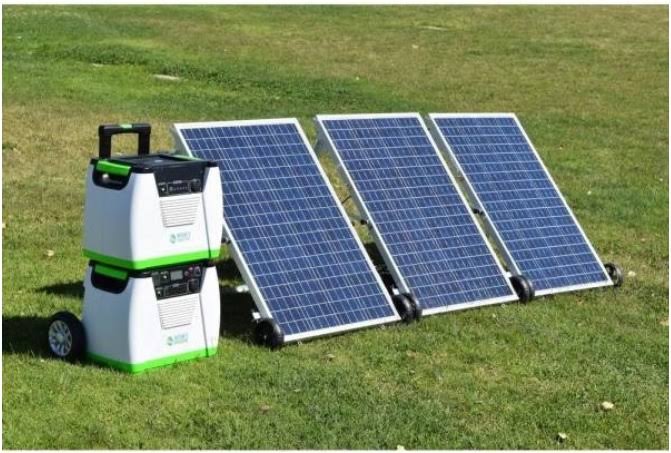
Still, the shift is happening, and the solar energy market in Nigeria is growing in leaps and bounds. Platforms like Pay-As-You-Go Solar and Solar Sister are slowly democratizing access and making it possible for people to literally buy light in installments, one payment at a time.
There’s an unspoken truth in this boom: energy innovation in Nigeria isn’t driven by environmental idealism, rather, it’s driven by survival. People are going solar because it works, because it’s the only reliable path to consistency in a power system defined by chaos.
The Cost of Resilience
Resilience has become Nigeria’s most profitable export. Every time a system fails, a new industry emerges around fixing it or finding a clever way to work around it. Generator sellers, inverter installers, logistics startups, and fintech platforms all trace their roots to one thing; the art of surviving dysfunction. But this cycle of workaround innovation also hides a quiet national tragedy which is the normalization of broken systems.
Tech founders who once dreamed of reform now design for chaos, startups pitch solutions that assume failure as default, apps are built with offline modes not because it’s trendy, but because it’s necessary. It’s brilliant, but it’s also exhausting. Innovation here often feels like endurance disguised as progress.
Latest Tech News
Decode Africa's Digital Transformation
From Startups to Fintech Hubs - We Cover It All.
And yet, it’s this exhaustion that fuels creativity. Nigeria’s tech scene thrives in spite of, not because of, its conditions. It’s a testament to the people who keep building even when the ground shifts beneath them.
Can Tech Light the Grid?
Nigeria’s tech ecosystem has always had one defining trait, that of adaptation. If it can’t fix a problem, it learns to monetize it. And probably that’s where the next opportunity lies, in transforming backup culture into sustainable infrastructure. Already, energy-tech collaborations are emerging; solar companies integrating fintech, telecoms exploring distributed power models and communities experimenting with micro-grids.
Maybe the future of power here won’t be a single grid humming flawlessly across the nation. Maybe it’ll be a patchwork of smaller systems that are localized, private, efficient and quietly reliable. Because if there’s one thing the past decade has proven, it’s this: Even when the lights go out, Nigeria’s tech keeps shining.