Tatiana Maslany Baffled by 'Maximum Pleasure Guaranteed' Finale's Unpredictable Aftermath
The Season 1 finale of "Maximum Pleasure Guaranteed" sees Paula win custody, only for her mysterious Portland past to resurface with a shocking video. Star Tatiana Maslany discusses Paula's vulnerable courtroom monologue, complex character dynamics, and the ultimate question of whether audiences can truly trust her.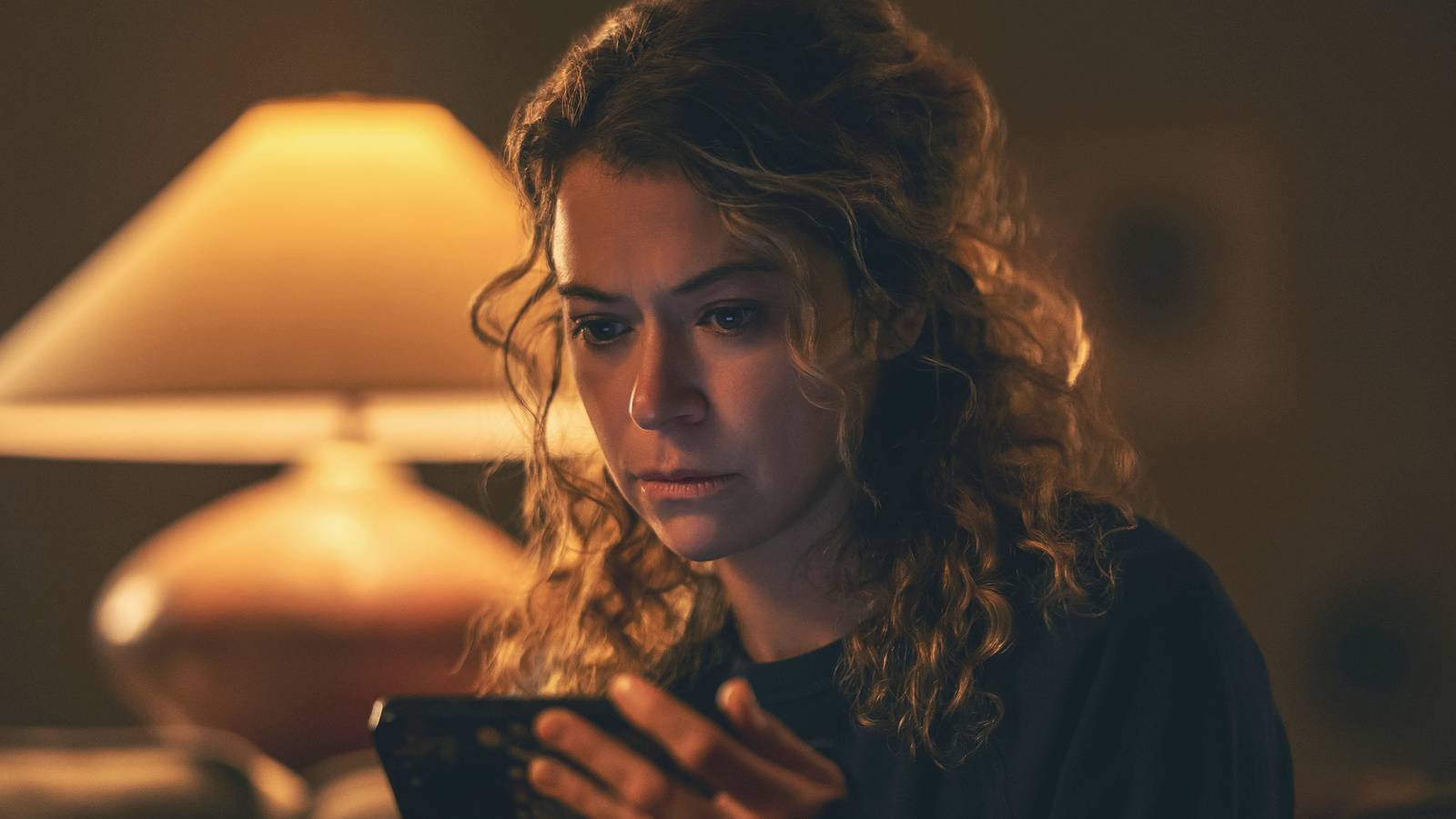
The Season 1 finale of Apple TV's "Maximum Pleasure Guaranteed" delivered a shocking conclusion, leaving viewers with profound questions about its central character, Paula, portrayed by the magnificent Tatiana Maslany. While Paula successfully secured custody of her daughter, Hazel, from her ex-husband Karl (Jake Johnson), her victory was immediately overshadowed by the resurfacing of her mysterious past in Portland, culminating in a chilling video twist that suggests she intentionally killed her neighbor.
Tatiana Maslany, in an interview with Collider, delved into the complexities of Paula's journey, acknowledging that the show consistently defies comfort and relentlessly pulls Paula back into the clutches of her past. She emphasized how the finale perfectly encapsulated the coexistence of "huge griefs and huge joys" in Paula's inner life, mirroring the show's unpredictable narrative. Maslany revealed she was not surprised by Paula winning the custody battle, despite co-star Jake Johnson's initial surprise, noting the inherent precariousness of everything in Paula's world.
A pivotal moment in the finale was Paula's courtroom monologue, which Maslany found particularly compelling to perform. She described it as a "clumsy monologue," deliberately unpolished and reactive, highlighting Paula's vulnerability as she was "pinned against the wall" with everything at stake. Maslany explained her interest in conveying Paula's challenge against a system that unfairly vilified her, pointing out the double standards applied to her versus her ex-husband, Karl, whose past indiscretions were conveniently overlooked or even benefited him. The creative team, including show creator David Rosen and Andrew Gottlieb, provided ample space for Maslany to explore different nuances for this emotionally charged scene.
Regarding Paula's interactions with other characters, Maslany found the scene where Paula had the upper hand over a now-disheveled Karl to be cathartic. She viewed it as a rare moment of levity where Paula could "skewer him without it costing her anything." The evolving dynamic with Geri and Rudy, who became integral to Paula's storyline in the latter half of the season, also proved significant. Maslany admitted to feeling that trust was a rare commodity among them, likening the trio to a "Scooby-Doo gang" of 12-year-olds on a sleepover. She praised Charlie Hall and Kiarra Hamagami Goldberg for elevating their characters beyond typical tropes, making them living, breathing individuals with complex intentions.
The ultimate twist came with the anonymous video received by Paula, casting her actions in Portland in a new, sinister light. Maslany confessed to having "no idea" about the sender's identity, relying on the show's creators for future developments, which she humorously noted she might forget anyway. However, she was certain that Paula "100%" remembers what she did in that scene. The most pressing question for Maslany, and one intentionally offloaded onto the audience, is "Who is Paula? Can we, as an audience, trust her?" This fundamental query about Paula's identity and past actions underpins her journey of reinvention and self-discovery throughout the series, constantly challenging the audience's alliance with her perspective. The show also brought back Dennis, whose surprising death and non-verbal interactions with Paula underscored the series' knack for delivering unexpected turns.