Smashing Expectations: The 2025 WTA Finals in Riyadh and What It Means for Women’s Tennis
The 2025 WTA Finals in Riyadh marked more than a tournament, it was a cultural statement redefining women’s tennis, empowerment, and global sport politics in the Middle East.
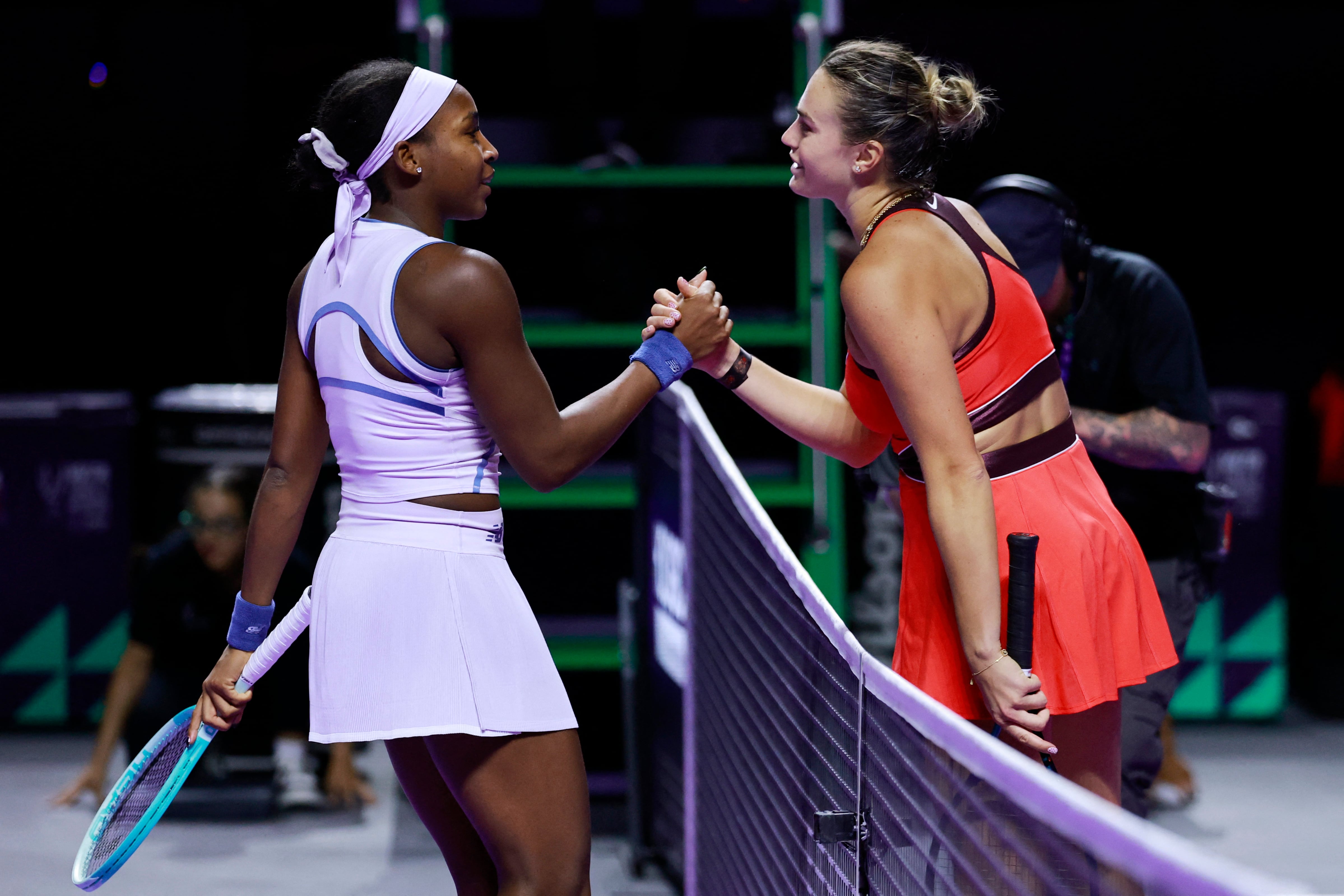
Under the desert lights of Riyadh, the sound of a tennis ball striking a racket cut through the dry evening air. A young Saudi girl, barely ten, sat on the edge of her seat, clutching a plastic racket her mother bought for her just last week.
On the court, Aryna Sabalenka let out a triumphant roar after clinching a set against Coco Gauff. The crowd erupted not just because of the brilliance of the match, but because this was history: the first time the WTA Finals were being held in Saudi Arabia.
For decades, the WTA Finals, women’s tennis’ season-ending spectacle, rotated among global cities like Singapore, Shenzhen, and Fort Worth. But in November 2025, the sport’s most elite eight gathered in Riyadh, a city once seen as the last place you would expect to host such a tournament.
This wasn’t just about forehands and trophies. It was about symbolism, a powerful statement that women’s sport was stepping into new and contested territory.
A Serve Across Boundaries
When the WTA announced Riyadh as the host, the reactions were split. Some called it a bold move, the needed chance to grow the game in a region hungry for change. Others called it hypocrisy. They wondered why an organization built on women’s empowerment is suddenly partnering with a country criticised for its gender restrictions.
Both arguments hold weight.
However, in the stands of the 15,000-seat Riyadh Arena, the scene tells a story. Rows of women in abayas and baseball caps cheered for Iga Świątek’s precision and Gauff’s explosive returns. For many, this was their first live tennis match. For some, their first time attending a sporting event at all.
In a country where women were once banned from attending stadium events, the event carries the weight of a revolution. The WTA Finals was not just a tournament, they were sending a message that women’s sport could thrive anywhere, even in places where empowerment was still finding its footing.
The Economics of Empowerment
This event wasn’t just about symbolism. It was about money, visibility, and the future of global sport. Saudi Arabia has been on an aggressive campaign to diversify its economy through sports like boxing, Formula 1, football, and now, tennis.
Hosting the WTA Finals is part of Riyadh’s “Vision 2030” plan, an ambitious blueprint designed to make the kingdom a global entertainment hub. The estimated purse for the 2025 Finals reportedly hit a record $15 million, matching men’s ATP Finals prize levels for the first time.
That is a headline in itself. For years, the call for pay equity in tennis has been loud. While the Grand Slams achieved parity, smaller events still lag behind. With Riyadh’s deep pockets, the WTA finally found a partner willing to put its money where its mouth is.
Critics argue the move is transactional. They posit it is “sportswashing” disguised as progress.
Indeed, it is difficult to ignore the regional impact. Tennis academies in Dubai and Doha have seen a surge in young female enrollments. Saudi Arabia recently opened its first women-led tennis training center in Jeddah. The ripple effect is undeniable and global visibility is accelerating it.
The Players Who Made It More Than a Match
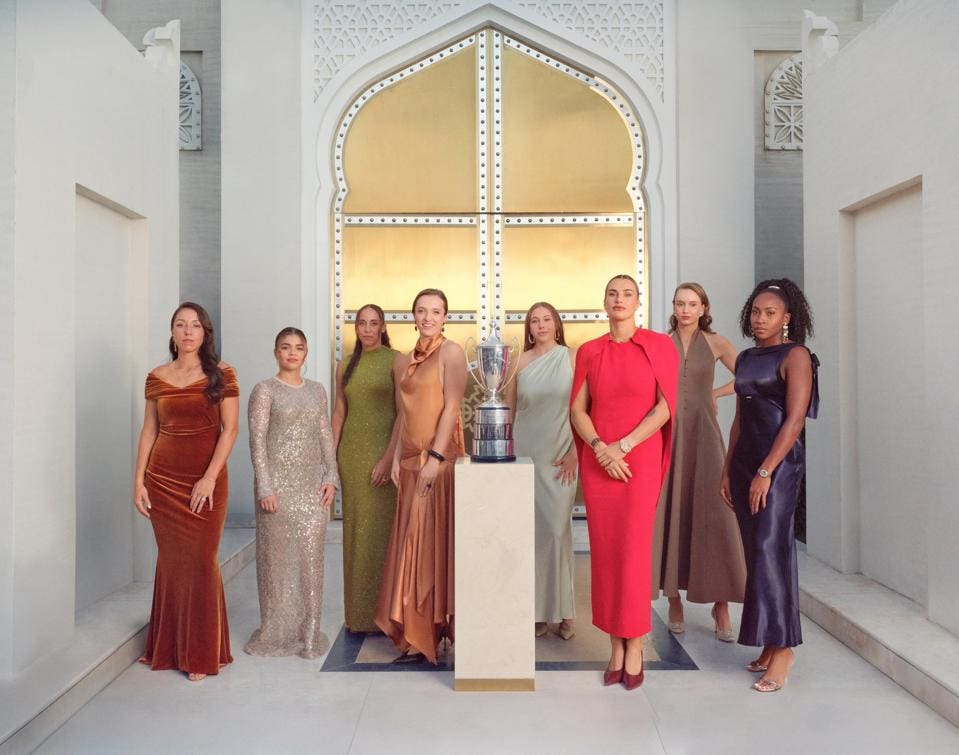
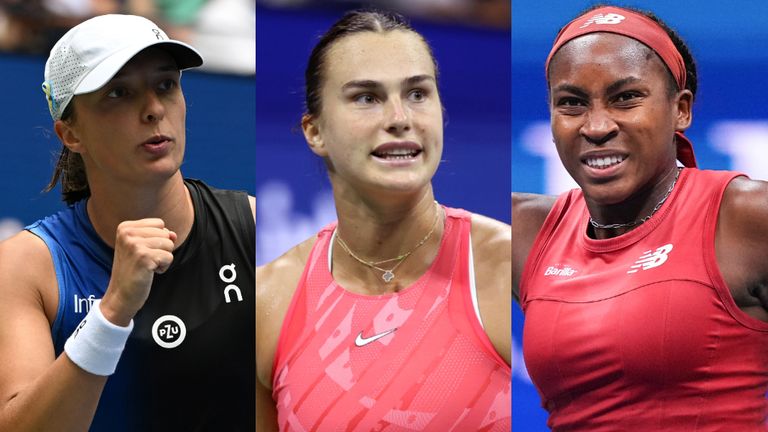
This year’s singles lineup read like a dream roster: Coco Gauff, Iga Świątek, Aryna Sabalenka, Elena Rybakina, Jessica Pegula, Amanda Anisimova, Madison Keys, and Madison Keys. Eight athletes representing eight nations serve as a gentle reminder that women’s tennis remains one of the most diverse individual sports in the world.
Gauff, the reigning U.S. Open champion came to Riyadh as a symbol of the sport’s new generation. Świątek, calm and methodical, embodied the discipline and tactical brilliance that makes tennis art in motion. Sabalenka, with her sheer power and emotional vulnerability, represented the raw, human side of competition.

What unfolded on court was beyond sport. It was theatre. Two women at the top of their game, showing the world why equality in sport is just common sense.
Beyond the Court: The Cultural Tightrope
Hosting the WTA Finals in Saudi Arabia forced both the organizers and the players to navigate complex moral terrain. Reporters pressed players about the nation’s human-rights record and women’s freedoms. Some dodged the questions; others leaned into diplomacy.
Coco Gauff was candid but thoughtful. “Change doesn’t happen by staying away,” she said during a press conference. “Sometimes you have to show up, play your game, and let the visibility speak for itself.”
That visibility matters. Representation is not just about geography; it is about possibility.
And for Saudi women, possibility is growing. Over the last few years, female participation in sports has increased by over 150%. Women now head sports federations and manage training programs. Tennis, with its blend of grace, grit, and glamour, may just become the sport that defines this transformation.
Sport as Soft Power
What is happening in Riyadh isn’t isolated. Across the Gulf, sports have become tools of diplomacy. Taking a good look at Qatar’s World Cup and UAE’s investments in football clubs, we'd see an undisputable use of sports as a tool for diplomacy. Saudi Arabia’s leaning into women’s tennis adds a new dimension, using female sport to redefine its global image.
It is easy to be cynical about the motives but the fact remains: visibility changes things. It shifts perceptions, builds economies, and inspires new stories. The women who played in Riyadh did not just compete for titles; they became symbols of a world in flux, one where boundaries between politics, gender, and sport blur every day.
A New Era for Women’s Tennis
If there is a takeaway from the 2025 WTA Finals, it is this: women’s tennis is not waiting for validation anymore. It is claiming new ground, geographically, financially, and culturally.
Riyadh was a statement that the future of sport will be built on inclusivity and global collaboration, not geography or tradition.
For the players, the Finals offered a bigger stage and bigger stakes. For the fans, especially young girls in the Middle East, it was proof that ambition has no borders.
As the lights dims on the final night, the athlete holds her winner’s trophy high, the stadium lights catching its silver curves. Somewhere in the stands, that young Saudi girl cheers until her voice cracks.
Maybe she doesn't yet understand the politics or the debates. All she knows is that she just saw a woman win and that maybe, one day, she could too.