Shockwave: World Bank, Microsoft-Backed Koko Networks Collapses!
Koko Networks, a major clean cooking firm in Africa, has entered administration after the Kenyan government declined approval for its crucial carbon credit sales. This collapse, impacting 1.3 million households, highlights the significant policy and regulatory risks for climate startups dependent on carbon revenue and raises questions about the future of carbon-subsidized utility models.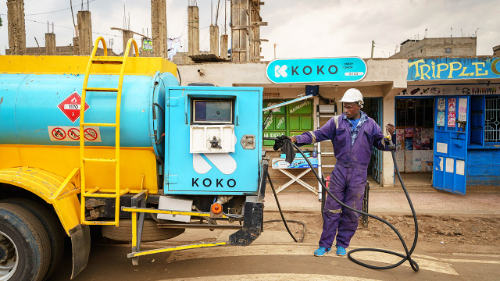
Koko Networks, a prominent clean cooking company operating across Africa, has recently entered administration. This significant development occurred after the Kenyan government declined to issue a crucial Letter of Authorisation, which was necessary for the firm to sell its carbon credits in international compliance markets. The Nairobi-based company had established itself as a major player, providing bioethanol fuel and cookstoves to approximately 1.3 million households through an extensive network of over 3,000 automated fuel kiosks. At its peak, Koko Networks employed more than 700 individuals and had successfully attracted over $300 million in investments from notable investors, including Microsoft, Mirova, and Rand Merchant Bank, also benefiting from a World Bank-backed guarantee.
The core of Koko's business model relied heavily on subsidizing its cookstoves and fuel products through the strategic sale of carbon credits. These credits were intended for sale under established international mechanisms such as CORSIA and Article 6 of the Paris Agreement, which offer regulated demand from entities like airlines and other buyers, potentially supporting higher prices. However, without the required Letter of Authorisation from the Kenyan government, a process that spanned at least eight months without resolution, Koko was unable to bridge the growing financial gap between its low retail prices for consumers and its substantial operating costs.
Kenyan government officials cited concerns that the sheer scale of Koko's proposed carbon credit issuance posed a risk of absorbing a significant portion, if not most, of Kenya’s available international carbon quota. This regulatory hurdle ultimately led to the company's financial distress. The collapse has also brought into focus the financial arrangements Koko had in place, including a $60 million facility secured by lenders against company assets, and a $179.6 million MIGA guarantee, which may now face testing through arbitration processes.
The unfortunate shutdown of Koko Networks offers several critical takeaways for the broader climate finance and startup ecosystem. It starkly highlights the inherent risks faced by climate startups whose viability is predominantly dependent on policy alignment and carbon revenue streams, rather than robust direct consumer margins. Clean cooking remains an urgent humanitarian and environmental issue in Africa, where indoor air pollution contributes to an estimated 815,000 premature deaths annually, and the widespread use of wood fuel continues to drive deforestation. While carbon credits have been widely promoted as an innovative financing mechanism to facilitate the transition from traditional charcoal to cleaner fuel alternatives, their integrity has faced scrutiny. A peer-reviewed paper in 2024, for instance, raised questions about cookstove credits, suggesting that emission reductions were often overstated in sampled projects.
For investors, the Koko Networks case serves as a poignant reminder of the significant regulatory risks embedded within Article 6 and other compliance carbon markets, where sovereign governmental approval is an indispensable requirement. Even in scenarios where political risk insurance is in place, securing payouts can often be a protracted process, taking several years. Koko’s closure leaves more than one million households without their accustomed clean cooking fuel supply and casts a shadow of doubt over the long-term scalability of carbon-subsidised utility models without either direct governmental fiscal support or a shift towards higher end-user pricing.