Shockwave! Deepfake Crypto Scandal Ropes in Kenya's Ex-PM
Recent incidents in Kenya highlight a concerning rise in cryptocurrency scams, notably involving a fake 'Kenya Token' promoted via a deepfake video and a compromised social media account of former PM Raila Odinga. This, alongside the contentious 'Kenya Digital Token' project, underscores the pervasive risks in the crypto market and prompts Kenya's move to tighten regulatory oversight.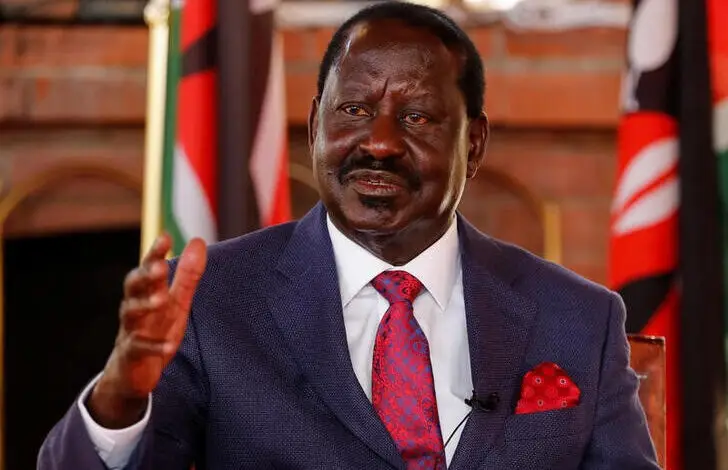
A recent series of events in Kenya has brought to light the sophisticated and opportunistic nature of cryptocurrency scams, often leveraging deepfake media and compromised high-profile social media accounts. These incidents underscore the urgent need for enhanced digital literacy and robust regulatory frameworks in the burgeoning digital finance landscape.
On September 18, the verified X account of former Kenyan prime minister Raila Odinga briefly posted a promotion for a new cryptocurrency named the Kenya Token ($KENYA). The now-deleted post asserted that the token would soon launch and position Kenya at the forefront of Africa’s crypto revolution, accompanied by a video seemingly showing Odinga endorsing the project. While Odinga has not issued a direct statement, reports indicate the post did not originate from him and the video was a fabrication. This incident exemplifies the growing nexus of deepfake media, compromised accounts, and crypto projects seeking instant legitimacy, highlighting how public figures can be unwillingly weaponized to lend credibility to potentially fraudulent schemes.
A strikingly similar scenario unfolded in February 2025 in Tanzania, where billionaire Mohammed Dewji’s X account was hacked to promote a fake token called $Tanzania. A deepfake video depicted Dewji's apparent endorsement, and by the time his account was reclaimed, scammers had already siphoned off nearly $1.48 million. Investigations by TechCabal revealed that the creators of the Kenya Token had launched a preliminary website branding the token as the “official digital token” of Kenya, promising staking opportunities. The project’s Telegram channel, as of September 19, 2025, had approximately 1,620 members, though without a launched token or contract address, its adoption remains untrackable. Critics have swiftly labeled it a scam, noting its lack of prior history before September 17, suggesting a hastily assembled project with minimal planning.
Beyond the Kenya Token controversy, Kenya has grappled with another project bearing a similar name: the Kenya Digital Token (KDT or $KDT). Launched on July 11 by anonymous developers, KDT was marketed as a tool for civic participation and a means for citizens to “buy into Kenyan heritage.” Its launch was met with skepticism due to the absence of a white paper or pre-sale, critical tools for investors to assess a project’s fundamentals. Although the KDT team later released a white paper in July, describing it as a “non-investment” project where users could earn tokens through community activities, the contradiction arises from its availability for purchase on decentralized exchanges (DEXs), effectively rendering it a speculative asset. This duality has led critics to suggest the “non-investment” label may be a tactic to circumvent regulatory scrutiny.
Technical analysis of the Kenya Digital Token on Solscan, a blockchain explorer for Solana (where KDT is built), reveals limited adoption, with around 2,800 holders, less than $200,000 in liquidity, and a total supply of one million tokens. A significant red flag is the concentration of 60% of the token supply (600,000 tokens) in a single wallet. Such high concentration poses a classic rug-pull risk, where a large sell-off by this “whale” account could devastate ordinary investors. For many observers, trust in such projects is nonexistent, and they embody the inherent risks of the global crypto market, particularly in regions with lax oversight.
In response to these burgeoning threats, Kenya is actively working to fortify its regulatory framework. The government has proposed a 10% excise duty on cryptocurrency transactions and plans to monitor trading activities for taxation purposes. Additionally, the Virtual Asset Service Providers (VASP) Bill, aimed at broad sector regulation, is slated for its second reading on September 23 when Parliament reconvenes.