Seeds of Control: GMO, Africa’s New Dependency, and the Quiet War on Indigenous Farming
Africa is being sold on genetically modified organisms (GMOs) as a solution to food insecurity, but at what cost? Can Africa chart a different path that balances science with sovereignty and local ecology?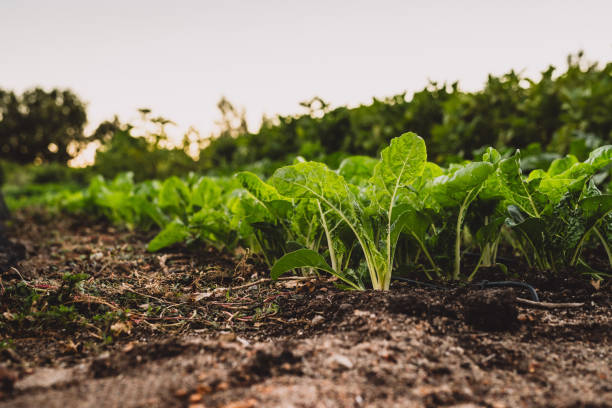
The Promise That Wears a Mask
In the age of biotechnology, not all miracles come unwrapped. Some come coated in science and sealed in promises. Genetically Modified Organisms—popularly known as GMOs—are one such promise. They are hailed as the food of the future: disease-resistant, high-yielding, climate-smart. But beneath the marketing and the foreign funding, a quiet question is growing on African soil: at what cost?
It is not that science should not evolve. But when evolution starts to erode autonomy, when help disguises control, and when a continent begins to forget how to plant, save, and sow without corporate permission—then perhaps we are at a point that we need to pause and ponder.
Africa's Farm, Their Rules?
In June 2025, African biotech policy saw a quiet pivot. Several international biotech firms, in partnership with national governments and development banks, signed memoranda of understanding to “boost food security through modern agricultural innovation.” Ghana, Kenya, Nigeria, and Uganda were among the names highlighted. Hidden beneath the fine print was a renewed push for genetically engineered seeds.

SOURCE: sciencedirect
At first glance, it appears hopeful. Food security is no joke. With climate change threatening harvests and population growth outpacing food production, any edge is welcome. But history often hides inside convenience, and in the seed of GMO lies something darker: dependency.
In most GMO systems, seeds cannot be saved and replanted. They are engineered to terminate. Each planting season requires fresh purchase. Who controls the seeds controls the food. And who controls the food controls the people.
For many traditional African farmers, this model represents not innovation but interruption. For centuries, the culture of saving seeds, breeding them for local resilience, and exchanging them freely among communities has been a sacred practice. It was farming, yes—but also heritage.
A Culture Slowly Eclipsed
The Yoruba say, "a kì í fi ọkọ títun s’ọmọ àyà," meaning, “you don’t abandon the old chest just because a new one glitters.” Yet that is exactly what is happening. In villages across Nigeria, elders watch as indigenous maize varieties vanish from the soil, displaced by laboratory strains from labs far away. In Ghana, millet farmers speak of reduced biodiversity. In Kenya, bean farmers now rely on packets labeled in foreign scripts.
The concern is not just food. It is memory.
African agriculture is more than production; it is culture. The chants of harvest, the lore behind each crop, the ceremonial blessings before planting, these are fast becoming irrelevant. Farming is being pulled from the hands of the old and placed into the arms of the unfamiliar.
And GMOs are part of this detachment. They may boost output in the short term. But if output comes without ownership, if farming becomes more corporate than communal, then what remains?
From Laboratory to Legislation
The push for GMOs in Africa didn’t start yesterday. Nigeria’s National Biosafety Management Agency (NBMA) approved the release of genetically modified cowpea—branded as “Bt Cowpea”—in 2019. Uganda’s National Agricultural Research Organization (NARO) has conducted field trials on GM banana and cassava for over a decade. Kenya’s lifting of the GMO ban in 2022 opened the floodgates for partnerships between government research institutes and private companies like Monsanto (now Bayer) and Syngenta .
The laboratories are not sleeping. Nor are the legislatures.
Biotech laws are being fast-tracked. International treaties—sometimes signed without public discourse—are binding African states to long-term biotech supply agreements. Meanwhile, farmers, the supposed beneficiaries, often remain in the dark.

Where are the public hearings? Where are the environmental audits? Where is the free, prior, and informed consent from those who actually plant the land?
The GMO Deal: Short-Term Fix, Long-Term Fragility
One cannot argue that Africa does not need agricultural improvement. But not every solution sold to Africa is sold in goodwill. GMOs, by design, are engineered for control. They represent a model where food production is no longer determined by soil or season, but by patents.

SOURCE: premiumtimesng
Each GMO seed is intellectual property. In countries like the U.S. and Brazil, lawsuits against farmers who saved or crossbred patented seeds have become common. What happens when an African farmer accidentally grows GMO strains due to cross-pollination? What happens when traditional seed banks are contaminated by modified genes?
Worse still, what happens if these multinational seed providers choose to walk away?
The continent may find itself in a hunger crisis of its own making—unable to return to indigenous crops because the old seeds have disappeared and the soil has adjusted to foreign input. The loss, then, would not just be nutritional. It would be ecological, cultural, and economic.
Beyond Yield: Tracing the Hidden Harms
GMOs are often praised for high yields. But critics have long warned of the hidden costs. Studies in India and parts of South America link long-term GMO use to soil degradation, pest resistance, and rising input costs. In Argentina, glyphosate-resistant crops led to excessive pesticide use, causing health scares in rural communities.
Africa, with its weak regulatory institutions and porous environmental oversight, is even more vulnerable.
Recent observations in Nigeria’s cotton belt, where GMO cotton was introduced with fanfare, showed no significant yield advantage after two cycles—only increased cost of farming. In Uganda, smallholder farmers trialing GM bananas lamented poor taste and market resistance. In Ethiopia, where GM maize trials are ongoing, local ecologists have raised alarms about pollinator disruption and biodiversity loss.
Is This the Next Tool of Control?
Food is not just sustenance—it is strategy. Any power that can control what people eat, how they grow it, and where they buy it from does not need to raise an army.
If Africa becomes overly dependent on GMO seeds from a handful of global corporations, it risks walking into a new age of colonization—one not of flags, but of formulas.
Already, some GMO contracts come tied with fertilizer agreements, machinery clauses, and access to “improved data services.” This isn’t just farming. It’s franchising. The farmer becomes a client. The soil becomes leased.
And if geopolitics shift—if sanctions come, if corporations pull out, if trade lines are disrupted—what happens to food security?
Can Africa Chart Another Path?
Africa is not anti-science. But science must sha walk with sense. Biotechnology should enhance sovereignty, not reduce it. If GMOs are to play a role, it must be one that respects local ecology, upholds farmer choice, and coexists with indigenous practices.

Several agroecology movements across the continent are showing alternatives. In Mali, the “We Are the Solution” campaign promotes farmer-led seed systems. In Ethiopia, the Tigray Project has rebuilt soil fertility through composting and local crop diversity. In Burkina Faso, after failed GMO cotton experiments, farmers returned to native seeds—and improved yields through cooperative innovation.
The path forward need not reject science. But it must reclaim agency.
A Seed Is Not Just a Seed
In African folklore, seeds are sacred. They represent beginnings. Ancestors buried them in time, hoping that future generations would plant them in wisdom. But today, seeds have become contracts. And contracts, as history teaches us, can become chains
If Africa forgets how to farm freely, it may one day forget how to feed itself. And no continent can truly rise if its food is not its own.
A Final Thought
Perhaps the real question is not whether GMOs should continue in Africa. The real question is: who does it truly serve?
And if that answer lies more in boardrooms than in farms, then maybe it's time we replant the question—and tend to it with more care.