Tragic Downfall: Controversial Magnate Wicknell Chivayo's Shocking Death Unveils Dark Secrets and Political Patronage
Businessman Wicknell Chivayo, his wife, and three others perished in a helicopter crash near Marondera, Zimbabwe, amidst reports of severe weather. While investigations are underway, the tragedy has sparked national mourning, controversies including alleged money laundering, and a critical re-evaluation of political patronage in the country.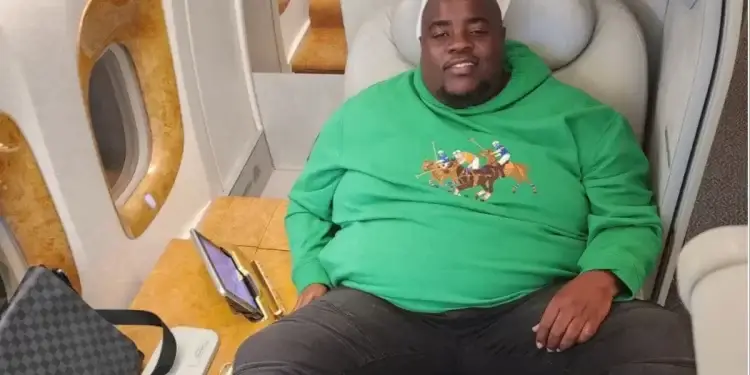
A fatal helicopter crash in Marondera, Zimbabwe, tragically ended the lives of prominent businessman Wicknell Chivayo, his wife Lucy Muteke, her personal aide Senelisiwe Magagula, and pilots Soda and Captain Courage Mutavirwa. The Bell 430 helicopter went down at Kudenga Farm near Waddilove Mission in Marondera Rural around 5 PM on Wednesday, September 30. Initially, police reported six people on board, but later revised the figure to five.
Details surrounding the aircraft’s final moments emerged through Froster Chisi, Chivayo’s senior security aide, who was travelling in a second helicopter nearby. Both aircraft were returning to Harare from Chivayo’s rural homestead in Gandami, Chikomba, when they encountered severe rainy and misty conditions. Chisi reported that weather deteriorated as they approached Marondera, where they planned a stopover. The pilot of the second helicopter suggested diverting through Bromley due to worsening visibility. However, Soda, pilot of Chivayo's helicopter, continued communicating, stating, “I’m in bad weather; I haven’t exited the cloud.” His last reported position was in the Surrey area. A final exchange saw Soda question the destination, “Which destination?” when the trailing pilot mentioned being 10 minutes away from Marondera, after which all communication ceased.
The second helicopter landed safely in Marondera, where its occupants waited for the Bell 430, believing it might have diverted. They later flew to Harare and spent over an hour attempting to contact Chivayo and his party before learning of the devastating crash. Civil Aviation Authority of Zimbabwe (CAAZ) director-general George Mashababe noted preliminary observations indicated fuel spillage after impact, leading to a fire that consumed surrounding grass. Reports from the crash scene suggested the aircraft’s tail might have struck the ground first, though official findings on the impact sequence are pending. A flight recorder has been recovered and is expected to provide crucial insights into the aircraft’s final moments, aiding investigators in reconstructing the events. The CAAZ investigation will examine the recorder, radio communications, weather conditions, and wreckage to determine the cause, though bad weather or spatial disorientation are not yet concluded causes.
The crash resulted in extensive damage, making a traditional body viewing impossible. Family spokesperson Herbert Chivayo described a harrowing scene at Kudenga Farm, with “human flesh and body parts scattered everywhere,” severed heads, and badly burnt bodies due to the impact and subsequent fire. Despite the gruesome nature of the remains, the Chivayo family announced that the burial, scheduled for Thursday, October 8, at Glen Forest Cemetery in Harare, would be open to the public, welcoming friends, supporters, and anyone wishing to pay their final respects.
The nation reeled from the loss, with President Emmerson Mnangagwa expressing “deepest personal condolences” and describing the incident as a “devastating national tragedy” that left Zimbabwe “numbed and in deep shock and grief.” President Mnangagwa accorded Chivayo Provincial Hero Status, reflecting on their personal friendship and hailing Chivayo as a man with a “grand vision” for Zimbabwe and Africa, acknowledging his charitable work in public service, religion, culture, and sport. He also mourned Lucy and the other three victims, offering prayers for all grieving families and the deceased.
Prophet Walter Magaya, a prominent religious leader, also addressed the tragedy, fielding questions regarding why prominent prophets had not foreseen the event. Magaya stated that God chooses what to reveal and what to keep hidden. He controversially commented on the nature of Chivayo’s death, saying, “There was nothing amiss. This is how rich people die.” Magaya also spoke of Chivayo’s extensive plans, retrieved from his phone, which included projects to construct hospitals, schools, and stadiums for the benefit of Zimbabwe, providing a glimpse into the businessman’s ambitions beyond his public persona.
Adding another layer of controversy to Chivayo's demise, Kenyan Deputy President Rigathi Gachagua, speaking in Boston, United States, alleged that Chivayo was involved in money laundering for Kenyan President William Ruto. Gachagua claimed Chivayo had been used by Ruto to receive and transport vast sums of money, purportedly moving cash equivalent to over Ksh1.5 trillion (more than US$11 billion) to Zimbabwe for safekeeping. Gachagua further alleged that Ruto was “distressed” and “berserk” after the helicopter crash due to the uncertainty surrounding the whereabouts of these colossal sums, sparking widespread social media discussion.
Beyond the personal tragedy and emerging controversies, Chivayo's death has also prompted a critical examination of Zimbabwe's political economy. His “personal brand of spectacle,” characterized by highly visible luxury handouts to the ruling ZANU PF party, such as fleets of Toyota Land Cruisers and Hilux pickups worth millions, effectively modernized the alignment of private capital with state machinery. These were not mere acts of personal charity but constituted crucial party campaign infrastructure for voter mobilization, provincial tours, and rally logistics. This model, critics argue, collapses the boundary between private wealth, the ruling party, and the state, fostering a hierarchy of patronage and dependency where political proximity determines access to resources.
The moral contradiction of this system is stark, especially in a country where public hospital nurses earn a fraction of the upkeep for such vehicles, and basic services are chronically strained. Chivayo’s expenditure on vehicles and cash distributions reportedly surpassed tens of millions of dollars, creating a political culture that celebrates private accumulation over public service delivery. His most potent contribution was making this patronage visible through social media, transforming political loyalty into online entertainment by posting dealership invoices and tagging recipients. While his death removes the flamboyant showman, it does not address the underlying demand for such political financing. If the incentives that made Chivayo’s public handouts valuable to ZANU PF remain, another patron, perhaps less visible, will inevitably fill the void.
Addressing this systemic issue requires concrete structural remedies. Parliament must legislate mandatory public disclosure of all political party donors, enforce strict legal caps on donations, and establish a public register for all assets gifted to political structures. Rigorous, independent legislative scrutiny should be applied to any state contracts or tenders awarded to individuals or firms linked to major party benefactors. Civil society and independent oversight bodies are crucial in dismantling the broader culture of political dependency, ensuring accountability is not outsourced to private bank accounts. Until the legal ties between party machinery and private capital are severed, political loyalty will continue to be measured in material wealth rather than genuine public service, potentially leading to a less transparent and more corrosive form of patronage.