Secret Diplomacy: CIA Chief's Urgent Moscow Mission Raises Stakes on Ukraine, NATO, and Iran
CIA Director John Ratcliffe made a surprise visit to Moscow amidst heightened U.S.-Russia tensions over Ukraine and growing concerns of Russian escalation. The undisclosed purpose of his hours-long talks with Russian intelligence officials has sparked speculation, with possibilities ranging from a warning against further provocations to discussions on Iran. This high-stakes visit underscores the critical nature of the messages exchanged.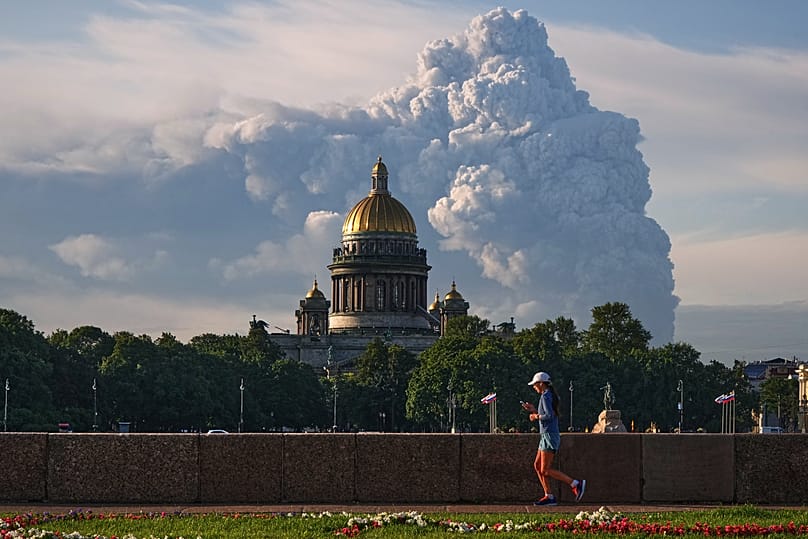
CIA Director John Ratcliffe's unannounced visit to Moscow on Tuesday ignited considerable speculation regarding its abrupt nature and the critical message Washington deemed important enough for its top spy chief to deliver in person. During his hours-long stay, Ratcliffe reportedly held discussions with Russian intelligence officials, a fact confirmed by the Kremlin, though it clarified that no meeting with President Vladimir Putin was scheduled or took place. Despite Putin being briefed on the outcome of these discussions, neither Washington nor Moscow has officially disclosed the topics covered, leaving the precise purpose of this unusual high-level engagement shrouded in mystery.
The visit, Ratcliffe's first known trip to Russia since assuming the role of CIA director, occurred at a particularly fraught juncture in Moscow's ongoing war in Ukraine, compounded by increasing concerns over potential Russian escalation against European nations. The timing, coupled with the stringent precautions surrounding Ratcliffe's arrival and his influential position within the Trump administration, fueled theories that he was conveying a message far more sensitive than those typically handled through conventional diplomatic channels.
One significant detail that emerged amidst the secrecy was a request from the United States to Ukraine to refrain from striking Moscow or St. Petersburg while Ratcliffe was in Russia. Reports indicate that Kyiv was informed a senior U.S. delegation would be visiting Russia but was initially kept unaware of Ratcliffe's direct participation. This request highlights the sensitivity of the situation, especially in light of Ukraine's expanding capabilities for long-range strikes within Russia, targeting energy infrastructure, military assets, and facilities supporting the Russian war effort.
Speculation regarding the visit's primary objective has coalesced around several possibilities. One prominent theory suggests Ratcliffe traveled to Moscow to issue a warning against further Russian escalation. U.S. intelligence circles reportedly harbored concerns that Moscow might be preparing for additional mobilization, not only to sustain its campaign in Ukraine but also to potentially test NATO's resolve through provocations against alliance members. This theory resonates with recent observations of increased Russian activity in NATO territory, including suspected sabotage operations and drone incursions in recent months.
This scenario draws a striking parallel to a previous visit by a CIA director to Moscow. In November 2021, William Burns journeyed to the Russian capital as Russian forces were amassing near Ukraine, delivering a stern warning to the Kremlin against an invasion and outlining the severe consequences Washington anticipated. Despite repeated denials from Moscow of any invasion plans, Russia launched its full-scale invasion of Ukraine just three months later. Notably, Ratcliffe is regarded as one of the senior Trump administration officials who most strongly advocates for continued U.S. assistance to Ukraine, including providing intelligence to support Kyiv's long-range operations, placing his visit at a critical juncture for both Moscow and Kyiv.
Beyond Ukraine and NATO, another potential explanation for the visit involves mounting tensions between Washington and Moscow concerning Iran, Russia's closest partner in the Middle East. Russia has faced accusations of supplying Tehran with intelligence on U.S. military assets, while the U.S. has intensified economic pressure on Iran. Kremlin spokesman Dmitry Peskov characterized the contacts between the intelligence services as positive, yet he cautioned that it was premature to determine if these discussions could lead to broader improvements in U.S.-Moscow relations. Ultimately, Ratcliffe's visit, though brief and unannounced, underscored its profound sensitivity and significance, necessitating the CIA director's personal presence in Moscow.