Volkswagen's New EV Concept Shows How Far Efficiency Can Go
Volkswagen's Mission Efficiency concept uses a 54.9 kWh battery to achieve exceptionally low energy consumption, showing how aerodynamics could reshape future EVs.
Volkswagen has unveiled a new electric vehicle concept designed to demonstrate how much range and efficiency can be achieved without simply putting a bigger battery into the car.
Called Mission Efficiency, the near-production prototype recorded an average consumption of 6.89 kWh per 100 kilometres during an officially documented 1,278-kilometre drive from Wolfsburg in Germany to Vienna, Austria.
The vehicle completed the journey with its 54.9 kWh battery charged only once and still had an estimated 164 kilometres of range remaining when it reached Vienna.
Volkswagen says the prototype has also achieved a drag coefficient of 0.158, which it describes as a new record for a road-approved vehicle.
That aerodynamic efficiency is central to the car's design.
The Mission Efficiency has a low, streamlined body, enclosed rear wheels, a covered underbody and specially developed aerodynamic components designed to reduce the amount of energy needed to push the vehicle through the air.
Volkswagen is also using technology that is much closer to conventional production than the exotic hardware often found in concept cars.
The prototype is based on the company's MEB+ platform and uses a 99 kW, or 135-horsepower, electric motor and battery technology related to the upcoming ID. Polo.
The result is a relatively modest battery doing an unusually large amount of work.
Under idealised test conditions, Volkswagen recorded consumption of just 6.48 kWh per 100 kilometres while travelling at a constant 68 km/h without gradients or energy-consuming systems such as air conditioning.
The car also carries a 370-watt solar system integrated into its roof and tailgate.
Volkswagen estimates that the solar system could contribute up to 30 kilometres of additional range per day depending on location, season and weather conditions, although its primary role is to support the vehicle's electrical systems.
Inside, efficiency has also influenced the cabin.
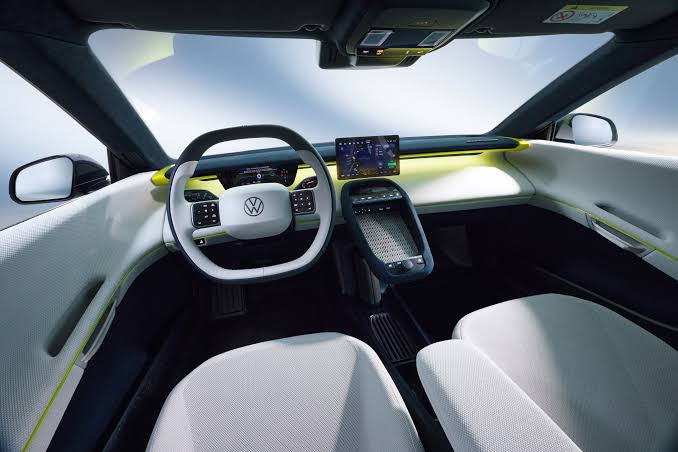
Instead of a conventional built-in infotainment system and speakers, the prototype uses a smartphone or tablet and a portable speaker, while lightweight materials are used throughout the interior.
Latest Tech News
Decode Africa's Digital Transformation
From Startups to Fintech Hubs - We Cover It All.
Despite its focus on reducing energy consumption, the 2+2-seater has 481 litres of luggage space, making the concept more practical than many technology demonstrators.
Volkswagen says the vehicle is intended to show what could be achieved by combining production technology with improvements in aerodynamics, weight, rolling resistance and energy management.
That matters because increasing EV range does not necessarily require dramatically larger batteries.
A more efficient vehicle can travel farther using the same amount of stored electricity, potentially reducing battery requirements while also lowering the energy needed to charge and operate the car.
For markets where charging infrastructure remains limited, that efficiency equation could become increasingly important.

But the Mission Efficiency is not yet a production model. Volkswagen describes it as a concept vehicle and says it is not for sale.
The company instead sees it as a technology showcase for the next generation of electric vehicles, demonstrating how much further EV efficiency can be pushed using technologies that could eventually reach mass production.
The bigger lesson is simple: the future of EV range may not be about carrying more electricity, but about needing less of it.