Ramaphosa's Bold Vision: SA Leader Unveils Major Shifts and Tackles Key Crises at SONA 2026
South Africa's 2026 State of the Nation address by President Cyril Ramaphosa highlighted a narrative of economic stabilization and green growth opportunities, yet it faced public scrutiny amid persistent crises like unemployment, water shortages, and infrastructure collapse. The address outlined government plans for energy transformation, water crisis intervention, and increased investment, though critics question the sufficiency of these incremental approaches to address deep-seated structural inequalities and the widespread trust deficit.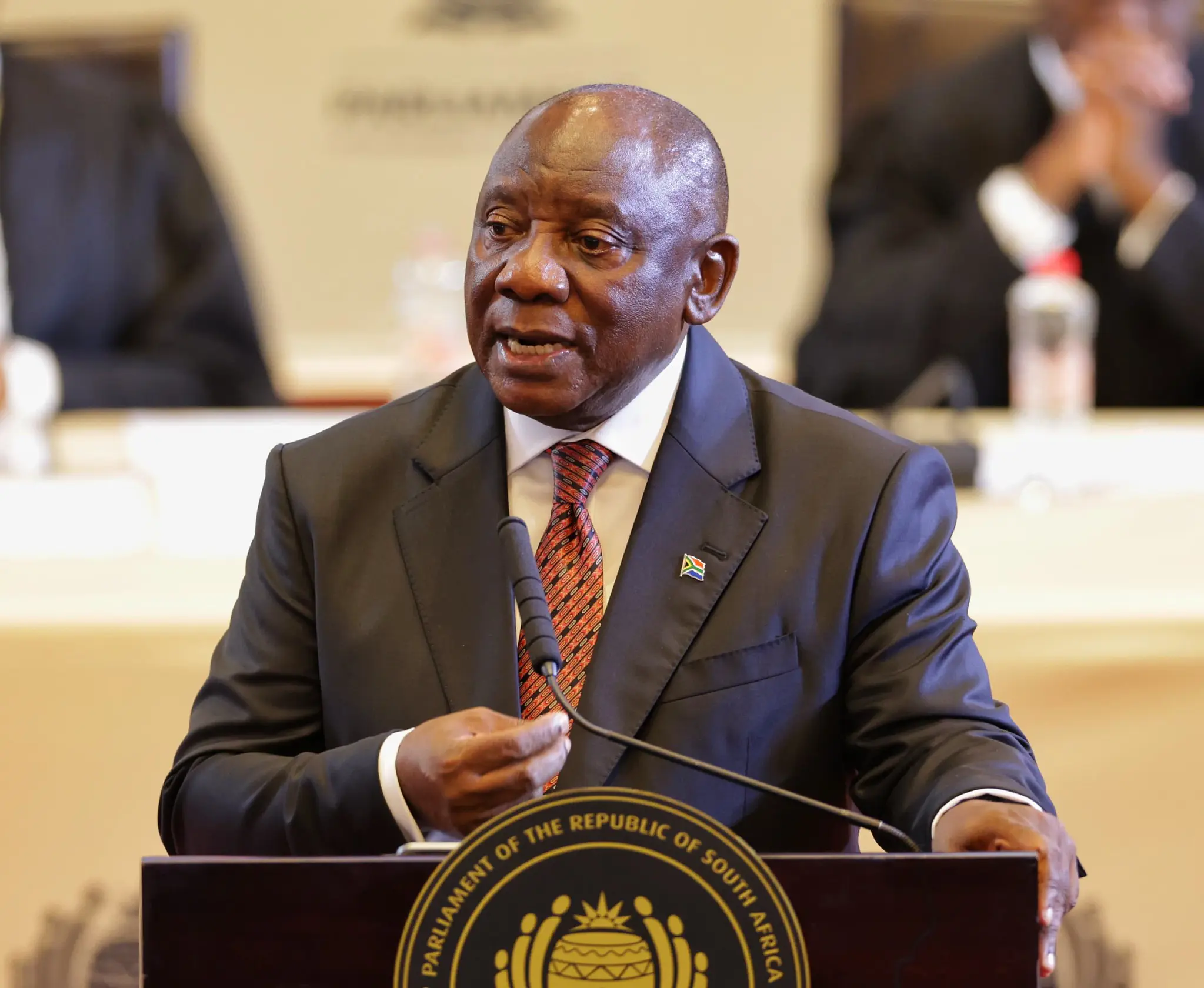
South Africa enters 2026 grappling with deepening crises, including collapsing infrastructure, widespread hunger, chronic unemployment, and a political class often seen as detached from ordinary citizens' realities. Despite these challenges, President Cyril Ramaphosa's eighth State of the Nation address (Sona) unfolded with familiar ceremony and carefully curated optimism. For millions of weary citizens, Sona has increasingly become a ritual of unfulfilled promises rather than a moment of genuine reckoning, particularly as the nation approaches 32 years of democracy.
The address occurred in temporary parliamentary chambers, with the original building, damaged by fire, expected to reopen for Ramaphosa's final Sona. The president's opening remarks, however, signaled a departure from ceremonial ritual towards a more sober stocktaking, echoing promises of candour and humility. While there was a flicker of hope that progress could be consolidated through reforms in energy, home affairs, and economic recovery, the nation yearned for tangible proof of momentum and a robust plan to tackle its toughest realities.
Despite its perceived drift into spectacle, Sona remains a crucial declaration of intent, signaling government priorities to citizens, investors, and institutions. Its intentions, however, rely on the budget, delivered by the Finance Minister. Ramaphosa's pre-Sona visit to Khayelitsha for a youth roundtable highlighted a critical crisis: youth unemployment, with nearly half of South Africans aged 15 to 34 jobless, and millions more excluded from education and training.
While the president presented a narrative of stabilization, many South Africans continue to face daily struggles such as dry taps, contaminated water, and failing infrastructure. Farmers are alarmed by the spread of foot-and-mouth disease, threatening milk supply, and Johannesburg endures a severe water emergency. Load-shedding, though eased, persists as a reminder that the country has drifted in and out of darkness for years, leading some to lament that democracy dies in darkness. The spectacle of ministers and MPs in designer outfits against a backdrop of poverty and power cuts further underscores the growing divide between the political elite and the populace, especially with soaring food prices and stagnant wages leaving millions below the poverty line.
Ramaphosa asserted that South Africa has moved beyond crisis management into consolidation, citing evidence such as nearly a year without major load-shedding, improved freight movement through ports and rail, exit from the Financial Action Task Force grey list, strengthened sovereign credit ratings, moderated borrowing costs, eased inflation, four consecutive quarters of GDP growth, and primary budget surpluses. He noted that the energy crisis had transitioned from an acute emergency to a managed risk, and logistical bottlenecks had softened, making the macroeconomic environment more predictable.
A significant focus of the address was on South Africa's economic opportunities, particularly in green growth. The government aims to pivot its economy to become a leading global supplier of green products, from fertilizer and jet fuel to chemicals and steel. Businesses investing in new energy vehicles (NEVs) will receive a 150% tax deduction from March, alongside support for local battery production. The Just Energy Transition Investment Plan has attracted approximately R250 billion in international pledges for large-scale manufacturing, infrastructure, and skills development. South Africa's mineral wealth, valued at over R40 trillion, was highlighted as a cornerstone of the mining industry, with recent investments like the Industrial Development Corporation's R300 million in the Frontier Rare Earths Project. Investor confidence was evident at the Mining Indaba, with new mines opening and G20 backing local beneficiation of critical minerals. The country has raised R1.5 trillion in investment commitments to date, targeting R2 trillion over the next five years.
On energy, Ramaphosa emphasized the need to transform the system for long-term security, noting regulatory changes and abundant solar and wind resources, with a goal for over 40% of energy from clean, renewable sources by 2030. Eskom is undergoing restructuring, including a new independent transmission entity and a dedicated task team to ensure clear implementation timeframes, aiming to eliminate load reduction by next year. The president also acknowledged South Africa's increasing vulnerability to extreme weather, citing catastrophic floods in Limpopo, Mpumalanga, and KwaZulu-Natal that killed at least 45 people and destroyed infrastructure, classified as a national disaster to prioritize funding for affected communities.
The deepening water crisis, from large cities to rural areas, was identified as a paramount issue, fueled by frustrations over inadequate and unreliable access to basic services. Ramaphosa stated that poor planning and years of inadequate municipal maintenance of water systems were the main causes. To address this, the government is building new dams, upgrading infrastructure with R156 billion in public funding over three years, and advancing projects like Phase 2 of the Lesotho Highlands Water Project. A National Water Resource Infrastructure Agency is being established to manage infrastructure and mobilize funding. The Water Services Amendment Bill will hold water service providers accountable, allowing license withdrawal for non-performance and interventions where municipalities fail. Critically, Ramaphosa announced the establishment of a National Water Crisis Committee, which he will chair, to coordinate efforts and deploy experts and resources, vowing decisive national intervention and criminal charges against municipalities misusing water revenue.
Despite the claims of stabilization, a persistent structural constraint remains: largely unchanged unemployment. The official unemployment rate stays above 30%, exceeding 40% on the expanded definition, with youth unemployment remaining acute. Economists like Daniel Meyer argue that current growth levels, though improved, are insufficient (needing 3% or more) to absorb new labor market entrants, merely stabilizing the economy rather than meaningfully expanding employment. The government's strategy, centered on debt containment, infrastructure-led growth (R1 trillion in public infrastructure spending, R156 billion for water/sanitation), regulatory reform, and expanded private sector participation, is incremental. Meyer critiques this, stating the investment-to-GDP ratio remains too low and capital-intensive projects may not absorb low-skilled workers without massive upskilling. Political economist Dale McKinley views the approach as continuity rather than structural redirection, lacking shifts in monetary, fiscal, and industrial policy needed for bottom-up change. Small and medium enterprises, though earmarked R2.5 billion, are still suffocated by red tape, unreliable infrastructure, and limited finance. Social protection measures like the Social Relief of Distress grant and the Presidential Employment Stimulus cushion poverty but do not fundamentally alter labor market dynamics.
Governance and public trust are eroding, with Parliament, municipalities, state-owned enterprises, and oversight bodies facing credibility challenges. The president committed to transparent governance, lifestyle audits, and rebuilding state capacity. Municipal failure is a national emergency, with systemic collapse in basic services. Sona should have presented a national rescue plan for failing municipalities, professionalized the public service, and confronted political decisions like cadre deployment. Economic commentator Reg Rumney questioned whether bypassing local government, as suggested for water, solves systemic weakness or merely shifts financial burdens. Crime and safety remain critical concerns, with violent crime, organized crime, extortion, and gender-based violence eroding public confidence. Ramaphosa outlined a national anti-crime strategy, strengthened police leadership and technology, and announced SANDF support for police operations against gangs and illegal mining. Corruption remains endemic despite Ramaphosa's promise of renewal, with slow implementation of Zondo commission recommendations and further allegations from the Madlanga commission. South Africans require a clear timeline for implementing anti-corruption reforms, strengthening the National Prosecuting Authority, and reforming procurement.
For Sona to be more than a ritual, it must become a turning point. Citizens need a believable, measurable vision anchored in delivery. This requires acknowledging the true state of the nation, presenting a credible, implementable plan with clear timelines and accountability, and addressing the nation directly rather than solely the political class. While the emergency phase may be receding, South Africa's deeply entrenched structural constraints persist, demanding urgent and effective action over rhetoric.