Shockwaves! Anti-Graft Agency EACC Recovers Staggering Sh3.4 Billion in Major Sweep
The Ethics and Anti-Corruption Commission (EACC) recovered Sh3.4 billion in the 2024/2025 financial year, as detailed in its newly launched annual report. The report highlights significant achievements in asset recovery, investigations, and integrity verification, while also acknowledging challenges like resource limitations and court backlogs.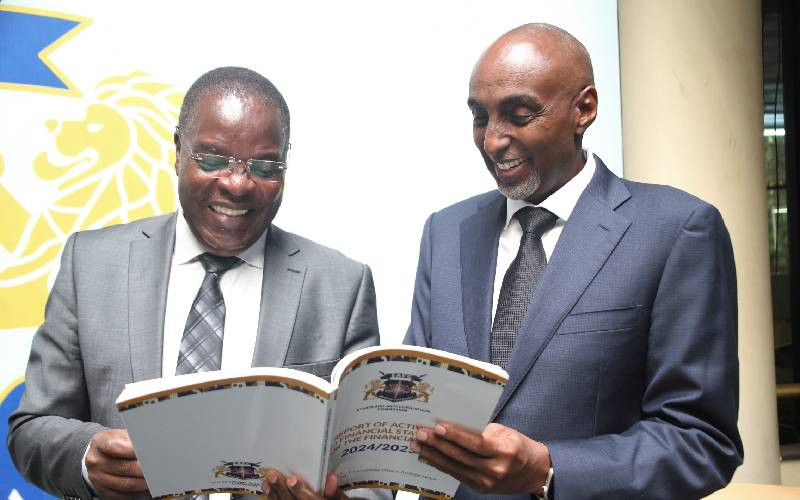
The Ethics and Anti-Corruption Commission (EACC) officially launched its annual report for the Financial Year 2024/2025 on December 8, 2025, in Nairobi. The event, attended by EACC Chairperson David Oginde and CEO Abdi Mohamud, alongside Vice Chairperson Monica Muiru, commissioners, directors, and staff, revealed substantial achievements in the fight against corruption and economic crimes in Kenya. A key highlight from the report was the successful recovery of Sh3.4 billion during the specified financial year.
Willis Wasala, the Deputy Director of Budget and Planning, presented the core achievements of the Commission, emphasizing its unwavering dedication to safeguarding public resources. He detailed that the EACC initiated 79 recovery suits, targeting assets with an estimated total value of Sh4.8 billion. The successful recovery of Sh3.4 billion from these efforts underscores the tangible impact of the EACC's law enforcement and asset recovery initiatives.
During the 2024/2025 financial year, the EACC managed a considerable caseload. It received a total of 4,083 allegations that fell within its mandate, with 2,846 of these allegations deemed actionable for further investigation. The Commission conducted thorough investigations on 800 files, resulting in the completion of 229 cases related to corruption and economic crimes. Additionally, 56 cases involving violations of Chapter Six of the Constitution, which outlines leadership and integrity standards for public officers, were successfully brought to completion.
Integrity verification remained a central pillar of the EACC's operations, as articulated by Wasala. The Commission meticulously processed 33,973 declaration forms and handled 2,783 integrity verification requests, playing a vital role in ensuring that public officers adhere to the highest standards of leadership and ethical conduct. This proactive approach is fundamental to preventing corruption by upholding ethical behavior across the public service.
Asset tracing and recovery constituted another significant aspect of the Commission's work. Beyond the aforementioned recovery suits, the EACC finalized 27 cases that led to the tracing of assets valued at Sh22.9 million. To further protect public interest in ongoing investigations and cases, preservation orders were actively sought for assets estimated at Sh2.685 billion, and 102 petitions and judicial review applications were filed to secure these assets.
The EACC also implemented a range of preventive measures aimed at curbing corruption at its source. These initiatives included conducting comprehensive system reviews in critical state agencies such as Kenya Power, the National Social Security Fund (NSSF), and the Kenya Prisons Service. Furthermore, the Commission empowered 13 institutions across various ministries and counties by training them to conduct their own corruption risk assessments, thereby fostering a culture of self-regulation and vigilance within public sector entities.
Public education and awareness campaigns were prioritized to instill ethical values and promote good governance nationwide. Wasala highlighted that an estimated 128,000 citizens were reached through extensive school and community programmes designed to raise awareness about corruption and its consequences. The EACC also engaged with 742 institutions across 23 counties and provided training to 203 integrity assurance officers and other public officials, thereby strengthening governance frameworks and ethical standards at various administrative levels.
From a financial standpoint, the report's audited statements indicated that the EACC received Sh4.2 billion in funding from the government. Notably, 99 percent of these allocated funds were effectively utilized. The National Audit Office issued the Commission a clean bill of health regarding its expenditure, attesting to the EACC's fiscal prudence and transparent financial management. Despite these commendable achievements, Wasala acknowledged several persistent challenges, including limitations in financial, human, and physical resources, delays in cooperation from other State agencies, and a growing backlog of court cases, all of which continue to pose impediments to the Commission's work.