Property And Power: Mauritius, The Price Tag on Chagos Islands, and What It Reveals About the World
The US reportedly drafting options to purchase the Chagos Islands from Mauritius raises a deeper question about African sovereignty, colonial property logic, and why international law keeps struggling against great power preference.
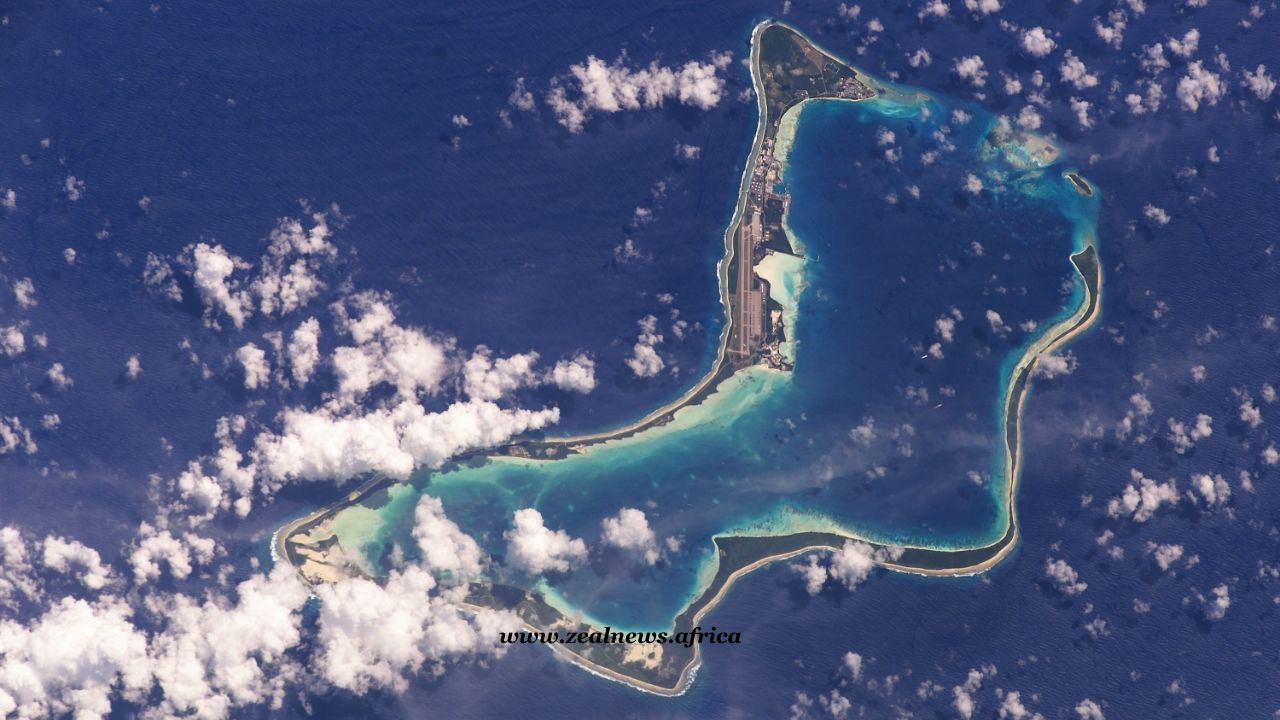
Somewhere mid-scrolling, an average person, including you, might have picked up their phone and scrolled past a headline that read something like: "US considers buying Chagos Islands from Mauritius."
Most people kept scrolling as they always do; others would probably pause long and frown at it. A few others will laugh at the news, because what else do you do when the world reminds you, again, that African soil is still being discussed in rooms where Africans are not sitting?
In light of this news, Mauritius has stated clearly that it has not received any official proposal from the United States administration regarding a separate agreement on Diego Garcia or the Chagos Archipelago. Its position is that sovereignty over the Chagos is non-negotiable.
But the fact that Mauritius had to say it at all is the story. Because somewhere between a Telegraph report and a White House policy paper, the question of whether an independent African island nation could be purchased had graduated from the unthinkable to the discussable, and that graduation deserves far more scrutiny than it is receiving.
The Framing Nobody Is Questioning
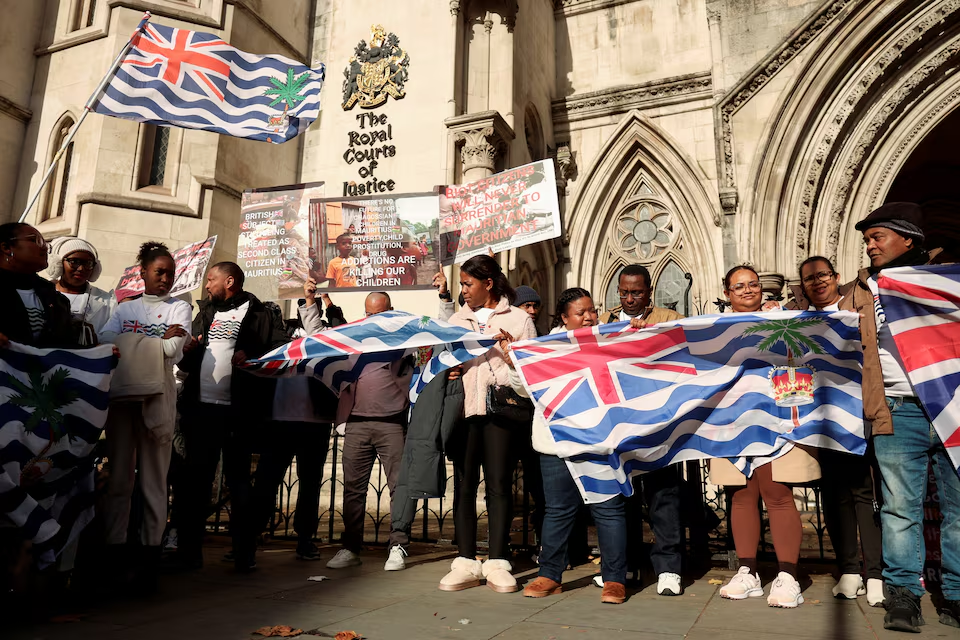
Let us sit with what is actually being reported here. The White House is reportedly drafting options that include the United States buying the Chagos Islands from Mauritius.
The discussion around it does not require leasing an existing base or negotiating a bilateral security arrangement with an independent state, but outright buying a country's sovereign territory.
That framing has moved through global media with a casualness that should disturb anyone paying close attention. It is being treated as a policy option the way one might treat a real estate negotiation, a transaction between parties where the only variable is price.
The sovereignty of an African island nation, in this framing, is not a legal or moral boundary. It is a starting position.
Is Africa real estate? Is any part of the continent or its surrounding islands a property whose deed can be redrawn when a powerful enough buyer expresses interest? The question sounds extreme only until you read the headlines carefully.
Because the language of purchase, not partnership, not treaty, not agreement, is already in the room, and the fact that it entered without causing a greater international rupture says something uncomfortable about whose sovereignty the world treats as truly inviolable.
What happens when the same logic is applied elsewhere? When a strategically located port in East Africa becomes inconvenient, or a coastal corridor in West Africa sits over a resource a larger power needs? The Chagos framing is not an isolated eccentricity. It is a template, and the silence around it is not neutrality.
The Global South Has Seen This Before
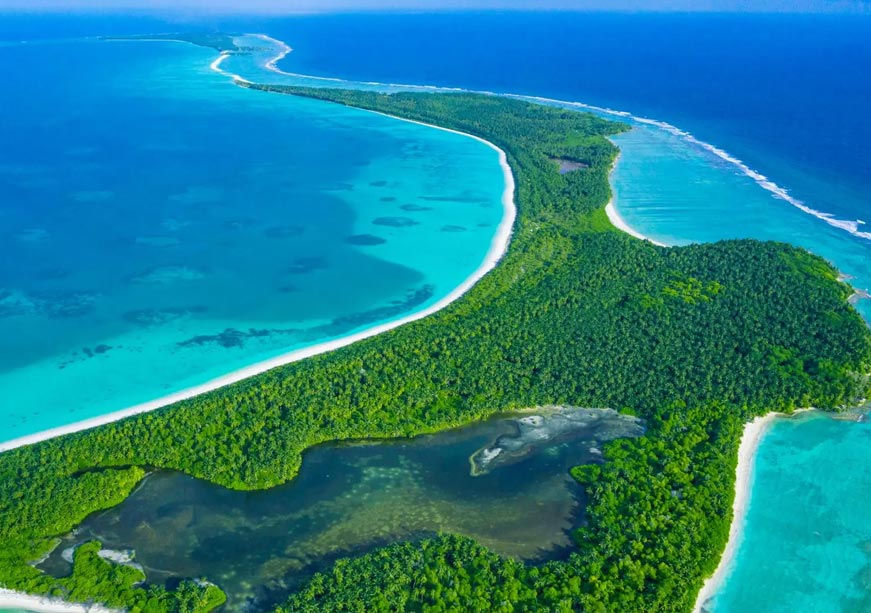
This is not new; when you strip away the diplomatic language, the policy papers, and the carefully worded statements, what remains is a logic that the Global South has encountered in different forms across centuries: the idea that strategic necessity, when held by a powerful enough state, supersedes the sovereignty of a smaller one.
Britain detached the Chagos Archipelago from Mauritius in 1965, before Mauritian independence, specifically to establish a military base on Diego Garcia with the United States.
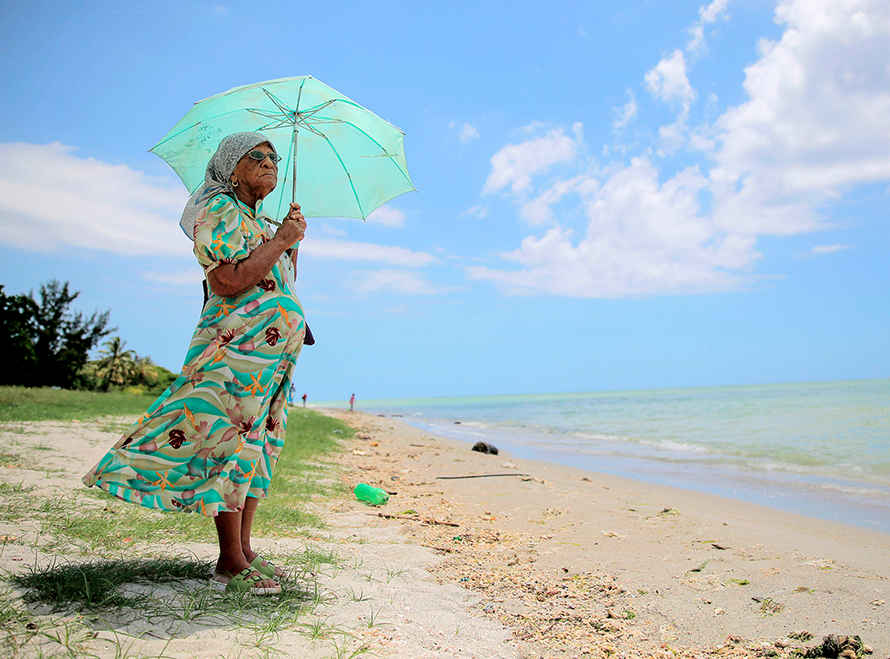
The approximately 2,000 Chagossians living there were forcibly displaced between the late 1960s and early 1970s, the displacement was not an accident of policy; it was the policy.
For decades, Mauritius contested British control. The international community eventually agreed with Mauritius. The International Court of Justice, in its 2019 advisory opinion, found that the decolonisation of Mauritius had not been lawfully completed when the Chagos Archipelago was excised, and that the UK was under an obligation to end its administration of the islands as rapidly as possible.
The UN General Assembly passed a resolution affirming Mauritius's sovereignty and the International Tribunal for the Law of the Sea confirmed it in 2021.
The UK and Mauritius signed an agreement in May 2025 formally acknowledging Mauritian sovereignty and arranging a 99-year lease for the Diego Garcia base. It was, by any measure, the correct outcome of a process that should have concluded decades earlier.
Then the Trump administration called it a mistake, and now the conversation has reset.
That reset is the colonial property logic doing what it has always done: reasserting itself when the arrangement stops being convenient for the powerful. The language changes, purchase options instead of colonial administration, but the underlying assumption does not. The Global South has seen this before. It is seeing it again.
Foreign Interests on African Soil, What Does International Law Actually Say?

The question of whether the United States could legally purchase the Chagos Islands from Mauritius is not complicated. International law is clear: the acquisition of territory by purchase from a sovereign state requires the full, free, and genuine consent of that state.
There is no mechanism by which a third party, including the United States, can compel, pressure, or incentivise such a transaction and have it recognised as legally valid under the UN Charter and established principles of self-determination.
The ICJ's 2019 advisory opinion did not merely express a preference for Mauritian sovereignty. It found that the excision of the Chagos from Mauritius in 1965 violated the right to self-determination, which the Court described as having an erga omnes character, meaning it is an obligation owed to the international community as a whole, not just to the parties involved. That legal architecture does not dissolve because Washington drafts a policy paper.
And yet foreign interests continue to define the terms of the debate. The US has operated the Diego Garcia base under arrangements negotiated originally between Washington and London, with Mauritius absent from the room entirely.
Britain held the Chagos for strategic reasons that had nothing to do with the welfare of the people living there. Now, as the legal and diplomatic resolution of that history is being finalised, a new set of foreign interests is attempting to reopen it.
This is the pattern that defines so much of Africa's geopolitical experience. Foreign powers do not only intervene during crises. They intervene during resolutions, whenever the outcome of a legitimate process stops serving their interest.
The Chagos situation is a case study in how international law, even when it rules correctly and clearly, struggles to hold its ground when great power preference pushes in the opposite direction.
So why do foreign interests keep planting flags on African soil? Because the structural conditions that made it possible have not been dismantled and the cost of doing so remains low enough that it keeps being attempted.
What Mauritius Said, What We Can Learn, and Why It Matters
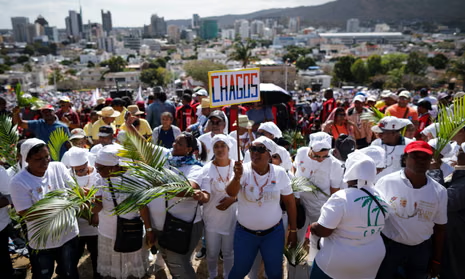
Mauritius's statement was direct and deliberate: sovereignty over the Chagos Archipelago is non-negotiable. It did not perform outrage; it simply stated a legal and political fact and declined to treat the conversation as one it needed to have.
That response is instructive, not because it closed the matter, it did not, but because it modelled something that is often missing in how smaller states respond to great power pressure: the refusal to accept the framing.
Mauritius did not engage with whether a price could be agreed. It rejected the category entirely.
The lesson here extends beyond this particular dispute. When powerful states dangle purchase options, security guarantees, or aid packages as leverage against territorial integrity, the first vulnerability is not the territory itself.
It is the moment a sovereign government begins to treat the offer as a legitimate opening bid. Mauritius has not done that. That context matters to be applauded.
But the deeper question the statement raises is this: why, in 2026, does an independent African nation need to publicly confirm that it is not for sale? The ICJ ruled. The UN General Assembly resolved the case. The international community has, on paper, already answered this question. The fact that Mauritius needed to answer it again, calmly, firmly, in a press statement, tells us that the answer was not universally heard.
And that gap, between what international law says and what powerful states choose to act on, is not a Chagos problem. It is an African problem. It is a Global South problem. It is the distance between a world that endorses sovereignty in principle and one that respects it in practice.