Parliament Greenlights New Supreme Court Justices Amidst Heated Debate
Parliament has approved three Supreme Court nominees—Justice Sophia Rosetta Bernasko Essah, Justice Edward Amoako Asante, and Anthony Forson Jnr—despite significant protests from the Minority Caucus over the fast-tracked vetting process. The Majority justified the expedited procedure by citing the court's workload and precedent, while the Minority argued against it due to the absence of a vacancy. This approval clears the way for their appointment to the apex court.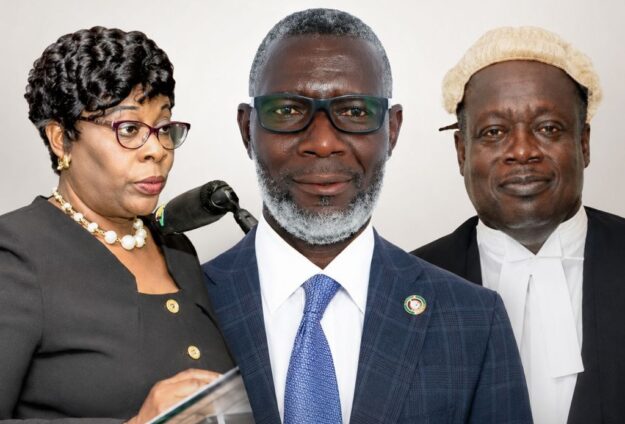
Parliament has officially approved the nominations of Justice Sophia Rosetta Bernasko Essah, Justice Edward Amoako Asante, and private legal practitioner Anthony Forson Jnr for appointment as Justices of the Supreme Court. This significant development follows the adoption of a report by Parliament’s Appointments Committee, which endorsed all three nominees. The approval clears the path for these individuals to complete the constitutional process, leading to their formal appointment to the country’s apex court. President John Dramani Mahama initiated these nominations in consultation with the Judicial Council, subsequently referring them to Parliament for its consideration.
However, the parliamentary approval was not without considerable contention, marked by strong objections and a walkout by the Minority Caucus. The Minority, led by Minority Leader Alexander Afenyo-Markin, vocally challenged the decision to fast-track the vetting process. Mr. Afenyo-Markin argued that the accelerated procedure was unnecessary, asserting that there was no existing vacancy on the Supreme Court bench that required immediate replacement. He clarified that the Minority's objection was directed at the procedural aspects and the timetable adopted by the committee, rather than being a personal attack on the nominees or an challenge to the President's constitutional authority to make such nominations. Despite these protests, the committee chairman, Bernard Ahiafor, dismissed the Minority’s objections as “flimsy,” “hollow,” and “baseless,” ruling that the vetting should proceed. This led to Mr. Afenyo-Markin leading Minority members out of the Appointments Committee, allowing the Majority side to continue with the exercise.
In response to the Minority's claims, Majority Chief Whip Rockson-Nelson Dafeamekpor strongly rejected the notion that the expedited vetting was unjustified due to a lack of vacancies. Speaking on Joy FM’s Top Story, Mr. Dafeamekpor clarified that the nominees were not put forward to replace any justice who had retired, died, or left office. Instead, he explained that the nominations were a direct response to the escalating workload confronting the Supreme Court. He further stated that the President’s decision to nominate the three justices was based on recommendations from the Judicial Council, aiming to significantly strengthen the capacity of the apex court. Mr. Dafeamekpor also highlighted that the nominations were part of the specific business for which Parliament was recalled, alongside the passage of an urgent bill and the vetting of two ministerial nominees.
Mr. Dafeamekpor questioned the Minority’s perceived inconsistency, noting their acceptance of the suspension of applicable rules for the ministerial nominees while opposing a similar arrangement for the judicial nominees. He stressed that the decision to expedite the process was not a unilateral move by the Majority, but rather a collective proposal from the business committee, which includes representatives from both sides of the House. He pointed out that concerns raised by the Minority Leader during plenary were debated but ultimately did not garner majority support. To further support the Majority’s position on expedited processes, Mr. Dafeamekpor cited the 2024 vetting of then Energy Minister-designate Herbert Krapa, whose nomination and approval process was completed within a few days. He argued that the same principle was being applied in the current situation and accused the Minority Leader of inconsistency, recalling that two Supreme Court nominees approved under the previous administration had their reports allegedly not laid before Parliament for consideration, questioning the Minority's current procedural concerns.
The three distinguished nominees bring a wealth of extensive experience from both the Judiciary and private legal practice. Justice Sophia Rosetta Bernasko Essah, a respected Justice of the Court of Appeal, possesses considerable judicial experience. Her current nomination is particularly notable as she was previously nominated for the Supreme Court in 2024 but did not complete the appointment process due to a change in administration. Justice Edward Amoako Asante, also a Justice of the Court of Appeal, brings significant regional judicial experience, having previously served as the President of the ECOWAS Court of Justice before his return to Ghana's Court of Appeal. Anthony Forson Jnr, a highly regarded private legal practitioner and former President of the Ghana Bar Association, contributes extensive experience from his legal practice to the proposed Supreme Court bench, ensuring a diverse and strong addition to the country's highest court.