OPINION: Should Education Be Free To All?
This in-depth analysis examines the promise and pitfalls of tuition-free learning, from breaking cycles of poverty to fears of declining quality. With examples from Finland to sub-Saharan Africa, it explores how nations can balance equity, funding, and excellence in an age where knowledge is the key to progress.

Few debates ignite as much passion as the question of whether education should be free for everyone. Advocates frame it as a fundamental human right, essential for individual empowerment and societal progress. Critics counter that free education is neither financially sustainable nor the best way to guarantee quality. Beneath the rhetoric lies a deeper conversation about justice, opportunity, and the role of the state in shaping the future.
Education as a Fundamental Human Right
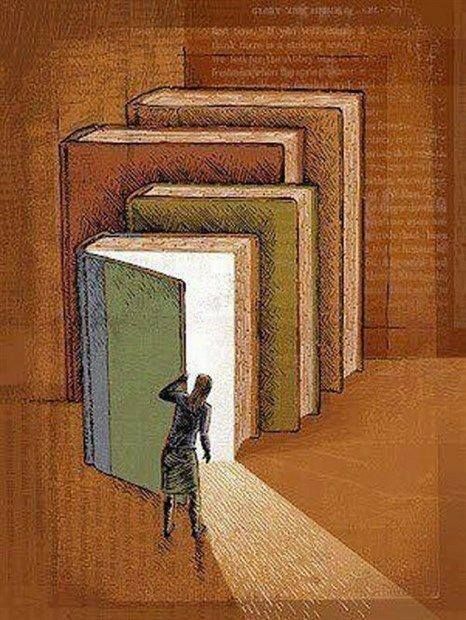
image credit: pinterest
The idea that education is a right, not a privilege, has been enshrined in international agreements such as the Universal Declaration of Human Rights (1948), which states in Article 26 that “everyone has the right to education” and that “education shall be free, at least in the elementary and fundamental stages.” This principle underpins the belief that knowledge and skills should not be restricted by a person’s birth circumstances.
In practical terms, free education ensures that children from low-income households have the same opportunity to learn as their wealthier peers. According toUNESCO, over 251 million children and youth worldwide are still out of school, with poverty being a primary barrier. Free education could directly address this gap, breaking the cycle of intergenerational poverty and fostering social mobility.
Economic and Social Returns of Free Education
Economists frequently point to the positive externalities of education. A well-educated population tends to be healthier, more productive, and more innovative. The World Banknotes that each additional year of schooling raises a person’s income by an average of 10%, while also contributing to national economic growth.
Free education is not just a moral imperative; it can be an economic strategy. Countries like Finland, which offer free education at all levels, consistently rank among the world’s most competitive economies. Their example suggests that investing in human capital can yield long-term dividends far exceeding the initial public expenditure.
Moreover, education plays a crucial role in fostering civic engagement and political stability. OECD research shows that higher levels of education correlate with greater voter participation, stronger support for democratic institutions, and a reduced likelihood of conflict. By removing tuition barriers, states can encourage a more informed and active citizenry.
The Quality Challenge
One of the strongest criticisms of free education policies is that they may compromise quality. Critics argue that when governments stretch resources to cover tuition for all, the result can be overcrowded classrooms, underpaid teachers, and outdated learning materials. For example, in some countries with free higher education—such as certain public universities in Latin America—students face years-long delays in graduation due to underfunding and bureaucratic inefficiency.
Here, it is important to distinguish between “free” and “fully funded.” The former simply means that students do not pay tuition, while the latter requires governments to invest sufficiently in infrastructure, teacher training, and curriculum development to maintain high standards. UNICEF warns that without sustained investment, free education can become “empty access”—where students attend school but learn very little.
Who Pays for Free Education?
image credit: pinterest
Critics often point out that “free” education is never truly free; someone must bear the cost. In most cases, the funding comes from taxpayers. This raises the question of fairness: should people without children, or those who choose private schooling, subsidize public education for others?
Supporters counter that public education benefits society as a whole, not just individual students. A more educated population drives economic growth, reduces crime rates, and lessens reliance on social welfare programs. These collective benefits justify the redistribution of resources.
The Nordic countries—Denmark, Norway, Sweden, and Finland—illustrate this approach. They maintain some of the highest tax rates in the world, yet their citizens enjoy free education, universal healthcare, and strong social safety nets. Public support for these systems remains high because the population recognizes the shared advantages.
Equity Beyond Access
Offering free education is not enough to guarantee equal opportunity. Marginalized groups—such as children in rural areas, ethnic minorities, and students with disabilities—often face additional barriers, from lack of transportation to discriminatory attitudes.
For example, in sub-Saharan Africa, even in countries that have abolished tuition fees for primary school, many families still cannot afford uniforms, textbooks, or the opportunity cost of keeping children out of the labor force. The African Development Bank stresses that true equity in education requires targeted support policies: school feeding programs, conditional cash transfers, and investment in rural infrastructure.
Free education must therefore be part of a broader framework that addresses these structural inequalities. Without this, tuition abolition risks benefiting primarily middle-class families while leaving the most disadvantaged still excluded.

The Higher Education Question
While free primary and secondary education enjoys widespread support, free university education is more contentious. Detractors argue that it disproportionately benefits wealthier students, who are more likely to attend university in the first place. Additionally, tuition fees can help universities generate revenue to improve facilities, attract top faculty, and conduct research.
However, the counterargument is that higher education is increasingly essential in a knowledge-based economy. Restricting access to those who can afford it deepens inequality and wastes potential talent. Germany’s policy of free university tuition for domestic and EU students is often cited as a successful model. The country maintains strong research output and economic competitiveness, proving that tuition-free higher education can coexist with academic excellence—provided there is adequate funding.
Technological Shifts and Lifelong Learning
The 21st-century labor market demands constant skill upgrading, making lifelong learning a necessity. If education remains expensive, adults who need retraining to adapt to technological changes may be unable to afford it, leading to structural unemployment.
Here, free or low-cost access to vocational training, online courses, and community colleges becomes vital. Singapore’s SkillsFuture programme, for example, offers citizens credits to pursue approved courses throughout their lives, effectively making continuing education a public good.
A Balanced Approach
Making education free for all is an ambitious goal, but it does not have to be an all-or-nothing proposition. Governments could adopt progressive models, where tuition is free for those below a certain income threshold, while wealthier students contribute. Another option is income-contingent repayment schemes, where graduates begin paying back the cost of their education only once their earnings surpass a set amount.
These approaches can preserve accessibility while ensuring financial sustainability. They also recognize that education is both a personal investment and a collective benefit.
Conclusion: More Than a Policy Choice
The debate over free education ultimately reflects competing visions of society. Is education a commodity to be purchased, or a public good to be guaranteed? The evidence leans towards the latter: countries that invest in broad access to quality education tend to be more prosperous, equitable, and stable.
Free education alone will not solve all inequalities, but it is a powerful tool for levelling the playing field. Paired with adequate funding, targeted support for marginalized groups, and policies that prioritize quality as well as quantity, it can transform lives and societies.
In an era where knowledge is the currency of progress, denying education on the basis of cost is not just economically short-sighted—it is morally indefensible. The real question, then, is not whether we can afford free education for all, but whether we can afford to live without it.