OPay At 8: Five Things Nigerians Wanted From Banks That OPay Delivered Differently
Eight years after entering Nigeria, OPay has changed how Nigerians access everyday financial services. But what problems did it actually help solve? And how did that change the banking experience?

For years, Nigerians had banks everywhere and somehow still struggled to access basic financial services without stress. There were branches, ATMs, mobile apps, USSD codes, and POS terminals, yet getting cash or completing a simple transfer could still turn into an unnecessarily long episode.
Then fintechs started changing the relationship between Nigerians and their money. OPay, which launched in Nigeria in 2018, became one of the most visible companies in that shift. It did not invent digital payments or agent banking.
The Central Bank of Nigeria had already been pushing financial inclusion through these channels for years. But OPay took several of those ideas and embedded them in everyday Nigerian life.
Eight years later, its story is less about replacing banks and more about changing what customers began to expect from financial services.
1. We Wanted Their Bank To Be Close To Them
One of the biggest frustrations with traditional banking was physical access. If there was no branch or working ATM nearby, getting access to your own money could become a journey.
The CBN had already pointed out physical distance from financial access points as a barrier to financial inclusion, particularly for people in underserved communities, which was one reason it promoted agent banking.
OPay leaned heavily into that model. Instead of relying primarily on conventional branches, it built a large network of agents operating from shops and small businesses in neighbourhoods.
Customers could use these agents for withdrawals, deposits, transfers, airtime and bill payments.
The idea of an agent providing financial services was not new. What OPay did differently was make the model highly visible and deeply woven into everyday commerce.

The financial institution did not always have to be a building with a bank sign anymore. Sometimes, it was the POS stand around the corner.
For customers, that changed the meaning of convenience. You no longer necessarily needed to travel to where the bank was. In many cases, the financial service had come closer to where you already lived and worked.
2. We Wanted To Move Money Without The Stress
Money moves constantly in Nigeria. Salaries are transferred, parents send money to children, customers pay businesses, friends split bills and small businesses receive payments throughout the day.
Nigerians do not wake up thinking about "electronic payment infrastructure." They simply want to send Urgent ₦5,000 and have the other person receive it without drama.
Banks had already introduced mobile banking and USSD before the fintech boom, but fintech companies made simple digital transactions a central part of the customer experience.
OPay built its service around everyday payments and transfers, making the process feel less like a formal banking activity and more like something you could do casually from your phone.
That shift may sound ordinary now because Nigerians have become accustomed to it. But it helped change expectations around what financial services should feel like.
Customers increasingly expected to be able to move money wherever they were, rather than arranging their day around a branch or banking hall.
3. We Wanted Cash Without Having To Find A Bank
Digital payments may be growing rapidly, but Nigeria remains a cash-heavy economy. People still need physical cash for transport, markets, small businesses, emergencies and countless everyday transactions.
So while fintech companies were pushing digital payments, they also had to solve a very Nigerian problem: how do you get cash when you need it?

OPay's agent network became a major part of that answer. Instead of relying entirely on bank branches and ATMs, customers could walk into an agent location and withdraw money.
For people living or working in areas where traditional banking infrastructure was limited, that could make a significant difference.
Something interesting happened along the way. POS agents stopped looking like a temporary solution and became part of the permanent financial landscape.
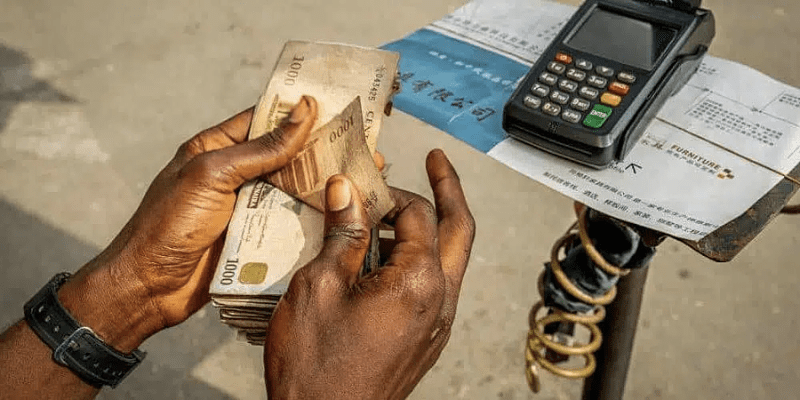
They appeared in markets, residential areas, beside shops and along busy roads. In some places, asking for directions could involve an OPay or POS stand as naturally as a petrol station or supermarket.
The financial system had moved into the neighbourhood.
4. We Wanted To Get Help Without Going To The Bank
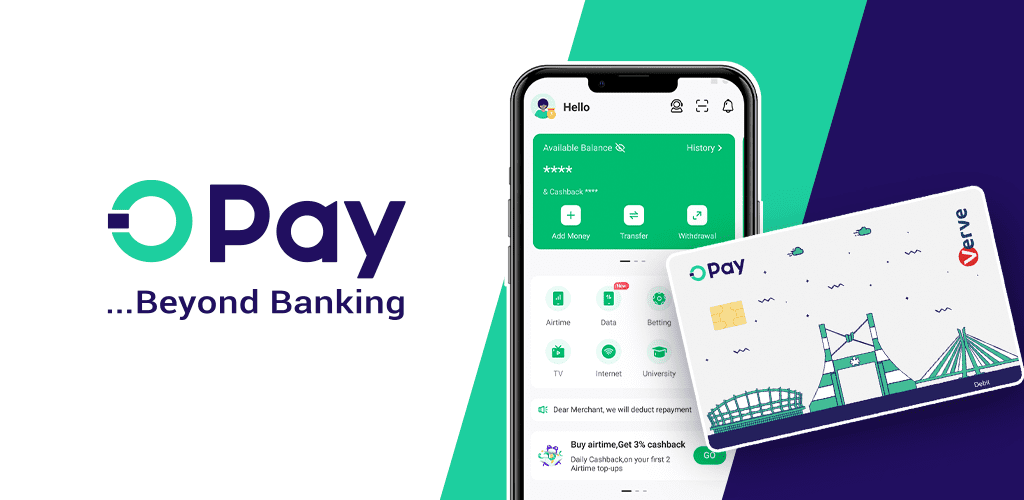
One thing OPay made easier was customer service. If there is a problem with your account or a transaction, you can contact OPay directly through the app, live chat or their customer care line.
With many traditional banks, getting help can mean going to the branch, filling forms and waiting for someone to attend to you. Sometimes, you just want to ask one simple question and somehow you are preparing for a full day at the bank.
OPay made it possible to handle many complaints from your phone. You can report a failed transaction, complain about a transfer, raise an issue with your card and track the complaint without first going to a banking hall.
For a generation that already does almost everything from their phones, this was a big part of the appeal.
The bank was no longer just somewhere you went when there was a problem. You could reach it from wherever you were.
5. We Wanted A Way To Fix Mistaken Transfers
If you have ever sent money to the wrong account, you already know the first thing that happens.
Your heart will leave your body for a few seconds.
And unfortunately, there is no magic “undo transfer” button.
For inter-bank transfers, there is a process for trying to recover money sent to the wrong account. Once the mistake is reported, the sending bank can contact the receiving bank and request a recall.
If the money is still in the recipient's account, the receiving bank can place a hold, known as a lien, on the amount while the refund process is handled. If the person has already withdrawn or spent the money, getting it back becomes much harder.
OPay also gives customers a way to report these issues directly through its support channels and the transaction on the app. But it is important to be clear: OPay cannot simply take money from another person's account because you transferred it there by mistake.
The recovery still follows the rules around inter-bank transfers and the cooperation of the receiving institution and, in some cases, the recipient.
What OPay changed was how easily customers could start that process.
You could find the transaction on your phone, report the problem and contact support without first travelling to a branch.
A lot of the systems OPay uses were not invented by OPay. Nigeria already had banks, digital transfers, agent banking and payment regulations.
What OPay did was put many of these services closer to the customer and inside the phone.
That is why its impact is bigger than just being another fintech company.