Unveiling The Blood Sugar Secret Of Oatmeal with Almond Butter
Discover how the combination of oatmeal and almond butter can help stabilize blood sugar levels, preventing unwanted spikes. This article delves into the roles of fiber, protein, and healthy fats, explaining how different oat types and proper portion control contribute to a balanced, energy-sustaining meal. Learn essential tips to optimize your oatmeal and almond butter for better metabolic health.:max_bytes(150000):strip_icc()/Health-GettyImages-1299511559-07aefb117b75446c87254bd0e7c12cb1.jpg)
Combining oatmeal with almond butter is an effective strategy for stabilizing blood sugar levels, particularly compared to consuming carbohydrates alone.
The benefit stems from the interplay of fiber, protein, and healthy fats, which collectively slow digestion and regulate the rate at which glucose enters the bloodstream.
However, the type of oats selected and strict portion control are critical to achieving optimal results. Without these considerations, the carbohydrate load can still trigger unwanted blood sugar spikes.
Oats vary significantly in their glycemic impact depending on processing. The Glycemic Index (GI), measured on a scale of 0 to 100, indicates how quickly foods raise blood sugar; values below 55 produce gradual increases, while those above 70 can cause rapid spikes.
Steel-cut oats have a GI of about 53, and rolled oats average around 55, making both suitable for steady glucose release. In contrast, instant oats, with a GI near 79, are more rapidly digested due to extensive processing.
Oats also contain beta-glucan, a soluble fiber that slows carbohydrate absorption and promotes satiety, helping reduce post-meal glucose fluctuations and unnecessary snacking.
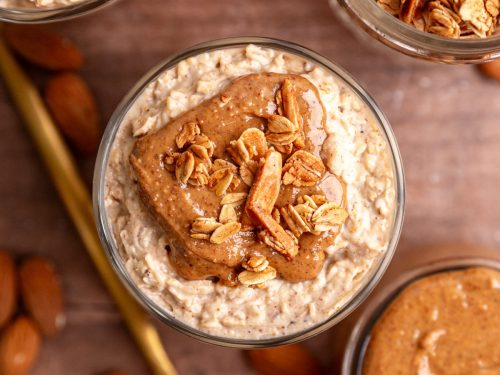
Almond butter complements oatmeal by adding minimal carbohydrates alongside protein, healthy fats, and micronutrients. A one-tablespoon (16 g) serving contains roughly 3.4 grams of carbohydrates, 3.3 grams of protein, and 8.4 grams of fat.
Research in individuals with prediabetes has shown that consuming almonds before meals can significantly blunt postprandial blood sugar spikes.
This effect is attributed to fiber slowing glucose uptake, fats delaying gastric emptying and potentially improving insulin sensitivity, and minerals such as magnesium and zinc supporting glucose metabolism.
When combined in appropriate portions—½ cup of dry oats with 1 tablespoon of almond butter—the meal provides approximately 253 calories, 30 grams of carbohydrates, 8.6 grams of protein, 13.7 grams of fat, and 5.5 grams of fiber.
This macronutrient balance slows carbohydrate digestion and promotes sustained energy release rather than sharp glucose fluctuations.
To maximize benefits, choose minimally processed oats, avoid added sweeteners, select natural almond butter without added sugars or oils, and adhere to portion sizes.
Individuals with prediabetes or diabetes may further benefit from monitoring blood glucose before and two hours after the meal to assess personal metabolic response.