Nobel Laureate James D. Watson, Co-Discoverer of DNA, Passes Away at 97
James D. Watson, the Nobel laureate credited with co-discovering the double helix structure of DNA, has died at 97. While celebrated for his monumental scientific contributions, his later career was overshadowed by controversial remarks on race, leading to widespread condemnation and the revocation of his honorary titles.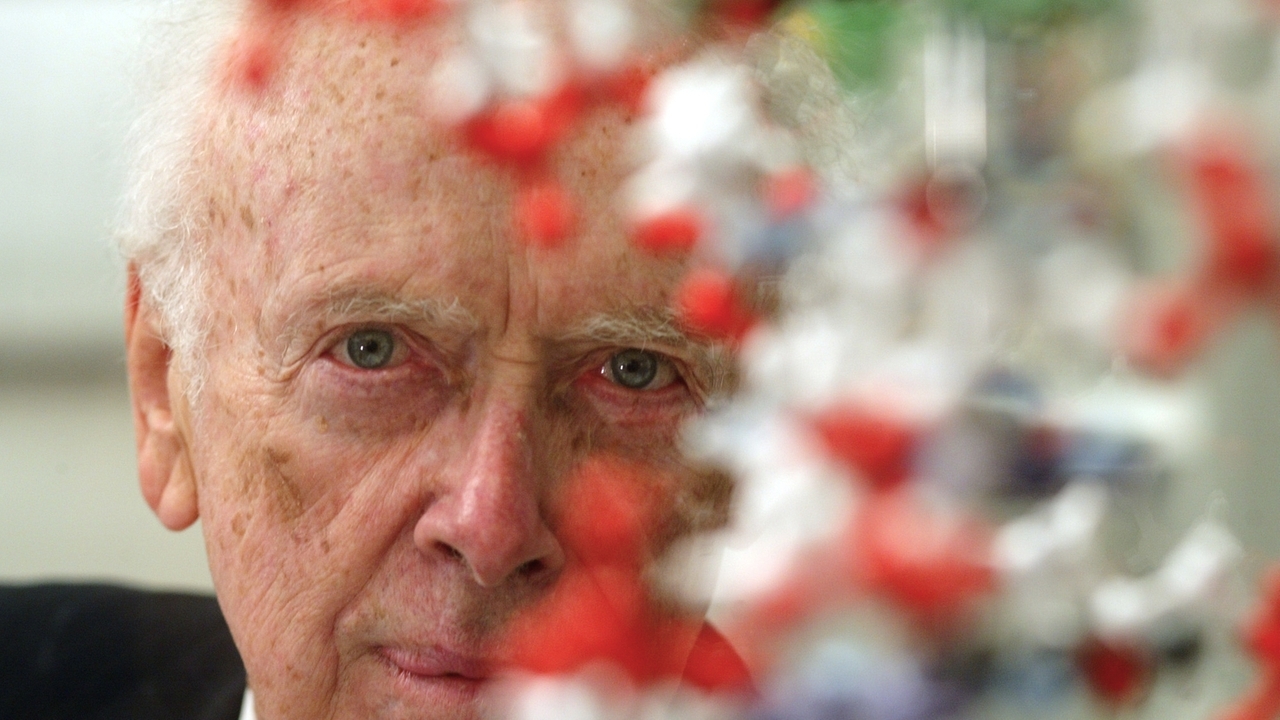
James D. Watson, the Nobel Prize-winning molecular biologist and geneticist, best known for his pivotal role in proposing the double helix structure of the DNA molecule, has died at the age of 97. His passing was confirmed by Cold Spring Harbor Laboratory (CSHL), where he once served as director and significantly shaped its research trajectory.
Watson's groundbreaking 1953 paper, co-authored with British molecular biologist Francis Crick, unveiled the elegant twisted-ladder structure of deoxyribonucleic acid (DNA). This discovery, made when Watson was just 24, instantly provided a mechanism for how hereditary information is stored and how cells duplicate their DNA, igniting a revolution across medicine, crimefighting, genealogy, and ethics. For this monumental achievement, Watson, Crick, and Maurice Wilkins were jointly awarded the Nobel Prize in 1962. The double helix quickly became an instantly recognizable symbol of scientific progress worldwide.
The implications of the double helix extended far beyond basic biology, opening doors to advancements such as genetic engineering, gene therapy for treating diseases, identifying human remains and criminal suspects through DNA samples, and tracing family trees. However, it also prompted profound ethical questions, particularly concerning the alteration of the body’s genetic blueprint for cosmetic reasons or in ways transmissible to offspring. Watson himself once remarked on the unprecedented impact of their discovery, stating, "Francis Crick and I made the discovery of the century, that was pretty clear," and that "There was no way we could have foreseen the explosive impact of the double helix on science and society."
Following his landmark discovery, Watson continued his scientific career, spending two years at the California Institute of Technology before joining the faculty at Harvard in 1955. At Harvard, he was instrumental in establishing the university’s molecular biology program. In 1968, he became director of Cold Spring Harbor Laboratory while still a professor at Harvard. He later served as CSHL's president in 1994 and chancellor 10 years later, remaining in leadership roles until 2000 and on the faculty thereafter. During his extensive tenure, Watson transformed CSHL from a smaller institution into one of the world's leading research institutes, focusing on DNA viruses linked to cancer, guiding the ambitious Human Genome Project, writing influential textbooks, and shaping science policy.
Despite his towering scientific achievements, Watson's later years were marred by a series of highly controversial and offensive remarks that led to widespread condemnation and professional censure. In 2007, he gained unwelcome attention when he was quoted saying he was "inherently gloomy about the prospect of Africa" due to perceived intelligence differences among races, comments he reiterated in 2019, stating his views had "not at all" changed. He also made earlier inflammatory suggestions linking sex drive to skin color and supporting abortion based on a fetus's potential sexuality. These statements, which were widely deemed "reprehensible," "unsupported by science," and "profoundly misguided and deeply hurtful," led to his suspension from his chancellor position at CSHL in 2008, followed by his retirement a week later. In 2020, after his reaffirmation of these views in a television documentary, CSHL revoked his Emeritus status and severed all connections with him.
Watson's personal life also influenced his scientific endeavors; his support for the Human Genome Project was partly motivated by his son Rufus's hospitalization with a possible schizophrenia diagnosis, hoping that a complete understanding of DNA would aid in understanding and treating such diseases. James D. Watson was born in Chicago on April 6, 1928, and inherited an early interest in ornithology and a reliance on reason from his birdwatcher father. He developed an interest in genetics at 17 after reading a book on the subject. He died in hospice care after a brief illness, as confirmed by his son and former research lab.
His legacy remains complex, forever defined by the duality of his brilliant scientific insights that reshaped our understanding of life, and the profound ethical and social transgressions caused by his prejudiced remarks, particularly those concerning race. Colleagues like Dr. Francis Collins, director of the National Institutes of Health, lamented that "Jim’s views on society and humanity could not have matched his brilliant scientific insights."