Nigerian Music Legend King Sunny Adé Marks 80 Years of Global Influence
King Sunny Adé, celebrating his 80th birthday, has dedicated over six decades to influencing Nigerian jùjú music and achieving global acclaim. His career highlights a unique blend of cultural tradition and musical innovation, transforming jùjú into a medium for social commentary and cultural identity. Adé's legacy as a pioneer and cultural ambassador continues to shape African popular music worldwide.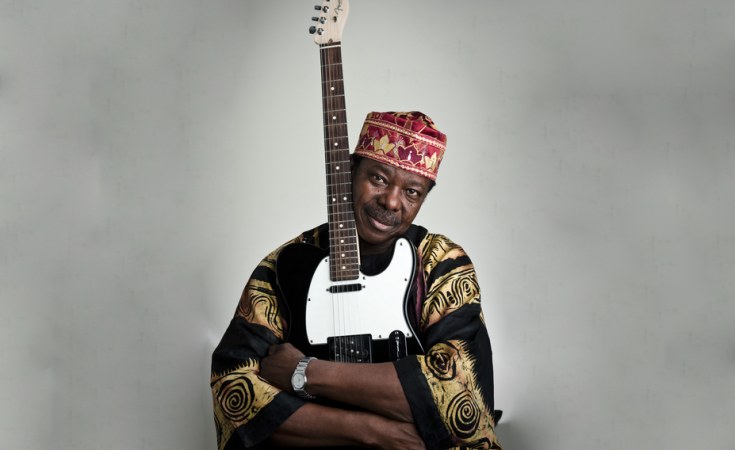
Sunday Adeniyi Adegeye, globally celebrated as King Sunny Adé, marks his 80th birthday this year, capping over six decades of profound influence on Nigeria's popular music scene and the global promotion of jùjú music. Jùjú, a unique Nigerian musical tradition, masterfully combines intricate rhythms, percussion, guitars, talking drums, call-and-response patterns, and rich Yoruba oral culture. Far beyond mere entertainment, jùjú serves as a powerful conduit for cultural identity, transmitting ancestral proverbs, praise traditions, and incisive social commentary. Sunny Adé's illustrious career epitomizes an exceptional fusion of deep cultural grounding, pioneering musical innovation, astute entrepreneurial vision, and widespread global recognition. From his formative years in Lagos to his ascension as the universally acclaimed "King of Jùjú," his personal narrative is intricately woven into the broader tapestry of contemporary African popular music's evolution.
As a social philosopher, many regard Sunny Adé's music as a potent instrument for social change. It adeptly transforms cultural expression into a profound medium for moral reflection and active social engagement. His compositions consistently communicate essential values such as communal responsibility, respect, humility, peace, diligence, and integrity. Simultaneously, his work incisively draws attention to the pressing social problems confronting Nigerian society. It has been argued that Sunny Adé's music directly addresses societal challenges, diligently preserves Yoruba identity, and actively promotes civic awareness, national unity, and moral renewal.
Born on September 22, 1946, in Òṣogbo, Sunny Adé hails from a Yoruba family with royal lineage tracing back to Ondo and Akure, two significant towns in Ondo State, south-west Nigeria. Òṣogbo itself is renowned as a vibrant hub of arts, music, and culture. His father was a church organist, and his mother worked as a trader, immersing his childhood in both religious and traditional musical environments. These early experiences, particularly exposure to performances intrinsically linked to Yoruba cultural and royal events, laid the essential groundwork for his distinguished career. Despite a family background and education that could have steered him toward a more conventional professional path, Sunny Adé developed an undeniable and profound attraction to music. He attended St Charles Grammar School, Òṣogbo, from 1960 to 1963 before relocating to Lagos. This move granted him access to a dynamic musical scene where highlife and jùjú music flourished, despite a music career being traditionally deemed unsuitable for royalty. In Lagos, Sunny Adé honed his skills as a guitarist and percussionist, collaborating with esteemed musicians such as Moses Olaiya Adejumo's Federal Rhythm Dandies, a prominent highlife band. He also drew significant inspiration from the groundbreaking jùjú artist Tunde Nightingale, gaining invaluable insights into the vast creative potential within Nigerian popular music.
Sunny Adé's career took a decisive and transformative turn in the 1960s. He initially formed Sunny Adé and His High Society Band in 1965, which later evolved into the Green Spots in 1967, and subsequently became known as the African Beats, and then Golden Mercury. Establishing his own band empowered him to cultivate a distinct and recognizable musical identity. His early recordings swiftly cemented his status as a pivotal figure in Nigerian jùjú, while his energetic and often extended live performances rapidly cultivated a substantial and devoted following. In the mid-1970s, he further asserted control over his artistic destiny by establishing his own record label, Sunny Alade Records, granting him greater autonomy over his recordings and career trajectory. His burgeoning popularity soon transcended Nigeria's borders through extensive tours, including significant performances in Britain, with his first UK appearance occurring in 1975. By the close of that decade, he had firmly established himself as one of the preeminent figures in jùjú music.
Perhaps the most internationally significant chapter of his career commenced in 1982 when he signed with Island Records. The release of his landmark album, Juju Music, that same year introduced his distinctive sound to a vastly expanded global audience. This was swiftly followed by Synchro System in 1983 and Aura in 1984. Synchro System notably earned a Grammy nomination in 1983, a historic first for a Nigerian artist. Although his relationship with Island Records concluded in 1985, the immense international exposure he had garnered fundamentally altered global perceptions of popular African music. His 1998 album, Odu, received yet another Grammy nomination, reaffirming his enduring artistic prowess and global appeal. His continued success powerfully demonstrates that African musicians can achieve international recognition without compromising the rich cultural foundations of their art.
King Sunny Adé's most profound artistic achievement lies in his instrumental role in the evolution and global expansion of modern jùjú music. He masterfully maintained its core traditional elements while seamlessly incorporating new instruments, innovative arrangements, and contemporary production methods. His music integrated electric guitars, talking drums, pedal-steel guitar, synthesizers, and various other instruments, forging a sound that was simultaneously contemporary and timeless. He brilliantly showcased how musical practices could evolve dynamically while steadfastly preserving their cultural essence. The talking drum remained central to his signature sound, with guitars intricately intertwining with percussion to forge the layered, polyrhythmic quality that became synonymous with his performances. His lyrics, predominantly sung in Yoruba, skillfully integrated praise singing, traditional proverbs, incisive social commentary, and multifaceted aspects of Yoruba oral heritage. A quintessential feature of his artistry was his distinctive approach to live performances. Sunny Adé earned widespread acclaim for expertly directing large musical ensembles and orchestrating vibrant, marathon shows that could extend for hours. His exceptional guitar skills, captivating dancing, charismatic onstage presence, and deep engagement with his band transformed each concert into a jubilant festivity of rhythm and collective involvement.
Sunny Adé's profound impact extends far beyond the impressive quantity of albums he has produced or the numerous accolades and nominations he has amassed. His most significant accomplishment may well be his pivotal role in demonstrating the global potential of African popular music. He unequivocally proved that Yoruba musical traditions could captivate interest on prominent international platforms while resolutely preserving their unique identity, thereby opening unprecedented opportunities for subsequent generations of African artists. His enduring influence is also manifest in his unwavering dedication to nurturing musical institutions and mentoring younger generations. He established the King Sunny Ade Foundation, an initiative linked to providing resources for music education, performance, and the development of aspiring young musicians. Furthermore, he has made a notable impact within Nigeria's music industry through his active participation in copyright advocacy and his involvement with the Musical Copyright Society of Nigeria.
As he reaches his 80th year, King Sunny Adé continues to stand as an enduring emblem of Nigeria's creative spirit and cultural pride. He did not merely inherit a musical tradition; he profoundly broadened it, rigorously tested its boundaries, and successfully transmitted it across diverse cultural and geographical divides. His music seamlessly linked deep Yoruba traditions with global popular culture, and his remarkable career stands as compelling proof that African artists can actively engage in the global music landscape without ever compromising their intrinsic cultural identity. The "King of Jùjú" remains a highly revered musician and an esteemed cultural ambassador whose profound impact continues to resonate globally.