Nigeria's Health Crisis: New Report Reveals Dire Challenges
Nigeria has become the first African nation to release a comprehensive health report, the CHSSP, exposing critical challenges like poor infrastructure, underfunding, and weak governance. While the report warns of missed health SDGs and UHC targets, the government is actively implementing multi-billion dollar reforms and initiatives to strengthen the healthcare system and address these issues nationwide.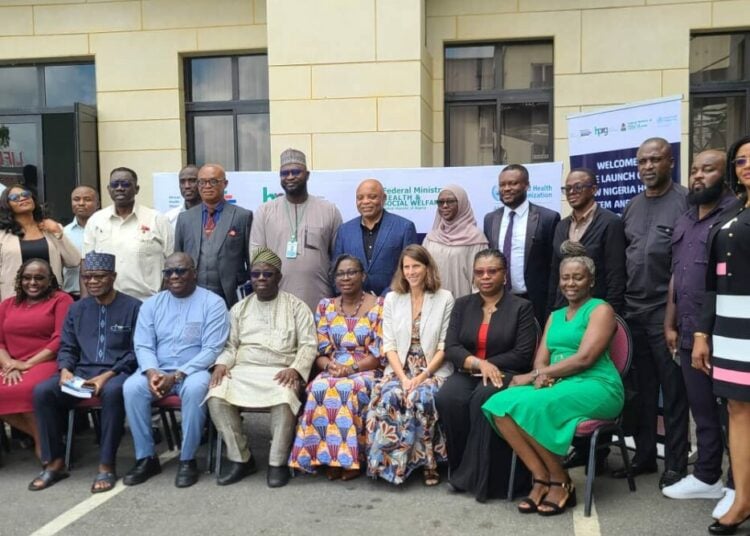
Nigeria has achieved a notable milestone by becoming the first African nation to publish a comprehensive Country Health System and Services Profile (CHSSP). This 295-page report, a collaborative effort between the WHO African Region and the University of Nigeria’s Health Policy Research Group (HPRG), meticulously outlines the deep-seated challenges plaguing the country’s healthcare sector. These include critically poor infrastructure, chronic underfunding, significant weaknesses in governance, and persistent inequalities in access to quality care across the population.
The CHSSP report delivers a stark warning: without immediate and substantial reforms, Nigeria risks failing to achieve the health-related Sustainable Development Goals (SDGs) and universal health coverage (UHC) targets by 2030. During the report's unveiling in Abuja, the Federal Ministry of Health and Social Welfare acknowledged the outlined challenges, with Minister of Health, Professor Ali Pate, asserting their surmountability. Dr. Kamil Shoretire, representing Minister Pate, further emphasized that addressing these issues necessitates multi-stakeholder efforts, which align with President Bola Tinubu’s administration's Nigeria Health Sector Renewal Investment Initiative (NHSRII).
The report's critical assessment indicates that Nigeria’s health system operates at only 45 percent efficiency, falling below the African regional average of 56 percent. While there have been improvements in the last decade regarding access to, demand for, and quality of health services, these gains remain insufficient to meet the 2030 UHC objectives. A concerning finding is that private health providers, despite owning only 35 percent of health facilities, deliver an overwhelming 70 percent of all health services. Furthermore, approximately 80 percent of Nigeria’s health infrastructure is dysfunctional, which significantly impedes service delivery and contributes to an estimated one billion U.S. dollars in annual losses due to outbound medical tourism. Financial burdens are also considerable, with out-of-pocket expenditure accounting for a staggering 75 percent of total health spending, and only one in ten Nigerians having access to any form of health insurance or risk-pooling scheme.
In response to these critical findings, the federal government has initiated several reforms aimed at rectifying low governmental health expenditure, reducing over-reliance on private facilities, and alleviating high out-of-pocket costs. A significant intervention is the Sector-Wide Approach (SWAp), launched in August 2024 with a 1.2 billion U.S. dollar investment. This initiative promotes a unified strategy—comprising 'One-plan, One-Budget, One-Conversation, One-M&E and One-Report'—to ensure coordinated efforts among government, development partners, civil society, and the private sector, thereby maximizing efficiency and impact.
Demonstrating further commitment towards achieving universal health coverage by 2030, the government has increased enrollment in the National Health Insurance Scheme from 16.7 million to over 19.4 million within the past year. Primary healthcare is also being strengthened through the Basic Health Care Provision Fund, with disbursements rising from N80 billion in 2024 to N298.42 billion in 2025. Additionally, the Presidential Initiative for unlocking the Health Care Value Chain has successfully generated a N5 billion U.S. dollars project pipeline and attracted N2 billion in foreign investments, aiming to revitalize the sector.
Stakeholders have also offered insights into the CHSSP's significance. Professor Obinna Onwujekwe, Director of Nigeria’s National Centre for AHOP and Coordinator of the HPRG, underscored the report’s crucial role in providing robust evidence for informed policy-making. Beth Kveling, Senior Policy Fellow with the London School of Economics (LSE) Department of Health Policy, commended Nigeria’s pioneering leadership in health sector research, suggesting the CHSSP will serve as a foundational baseline for future reforms and progress tracking. She noted that similar reports are underway in Ethiopia, Rwanda, Senegal, and Kenya, and highlighted common African health system challenges like data reliability and the timely delivery of data to decision-makers.
Dr. Emmanuel Sokpo, Country Director for Network for Equity and Development, called for a stronger accountability system. He urged citizens to recognize and demand their right to health, advocating for better services from facilities and holding their representatives accountable. Dr. Sokpo suggested that legal action against government and health workers could serve as a powerful catalyst for improved service delivery, emphasizing that such actions carry consequences and could drive tangible change.