Nigeria's Conscience Challenged: Catholic Bishops' Stance Sparks Political Furor
The Catholic Bishops Conference of Nigeria recently raised critical concerns about Nigeria's economic hardship and insecurity with President Bola Tinubu, sparking a nationwide debate. Prominent figures like Senator Orji Uzor Kalu and Cardinal John Onaiyekan, along with various Catholic bodies, have defended the bishops' moral authority, urging the government to reflect on their counsel rather than dismiss it as political criticism. The discourse highlights the Church's vital role as the nation's conscience in advocating for good governance and national development.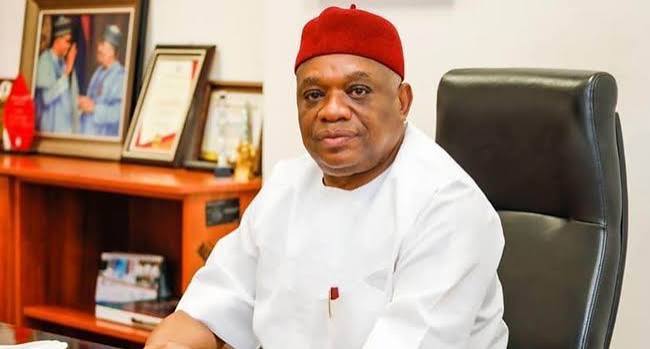
The Catholic Bishops Conference of Nigeria (CBCN) recently engaged President Bola Tinubu at the Presidential Villa in Abuja, a meeting that has since sparked significant public debate and reflection on the state of the nation. Led by CBCN President Archbishop Matthew Ndagoso, the bishops conveyed deep concerns regarding the worsening economic hardship, pervasive insecurity, and the overall trajectory of Nigeria.
In response to the bishops' candid observations, President Tinubu defended his administration's economic reforms, asserting that the national economy was progressively stabilizing. He also highlighted the resolution of prolonged university lecturers' strikes and maintained the Independent National Electoral Commission's (INEC) neutrality, suggesting that his political adversaries were “afraid of their own shadows.”
The post-meeting discourse intensified following remarks by Archbishop Emeritus of Abuja, Cardinal John Onaiyekan, who, in an interview on ARISE NEWS, indicated that President Tinubu appeared displeased with the bishops' stark message that Nigeria was “bleeding” and that economic conditions were severely impacting ordinary citizens. This observation drew criticism from Presidential Special Adviser on Policy Communication, Daniel Bwala, who challenged Onaiyekan's comments, alleging they did not represent all Christians and that the Catholic Church was politically biased towards a particular presidential candidate for the 2027 election.
However, prominent voices quickly rose in defense of the CBCN and Cardinal Onaiyekan, emphasizing the Church's moral authority and its crucial role as the nation's conscience. Senator Orji Uzor Kalu, representing Abia North Senatorial District, lauded the Catholic Bishops as “the conscience of the country,” urging President Tinubu to introspect on their concerns rather than interpret them as political criticism. Kalu stressed that the bishops' interventions aimed to strengthen governance, not undermine the president, stating, “Their advice is just for any sitting president, any sitting leader, to see things the way it should be.” While acknowledging Nigeria's economic challenges, Kalu argued that they couldn't be solely blamed on President Tinubu, noting progress in the macro-economy but persistent issues at the micro-level. He underscored the bishops' moral duty to speak truth, contrasting them with politicians who might present an overly optimistic picture. Senator Kalu also sought to correct a “misconception,” clarifying that Cardinal Onaiyekan is not the president of the Catholic Bishops’ Conference, and advised the President’s team to carefully analyze the bishops' feedback for effective governance.
Echoing Kalu's sentiments, former Deputy Governor of Kaduna State, James Bawa Magaji, urged the federal government to heed the CBCN's counsel, describing the body as the enduring “conscience of society.” Magaji asserted that the Church's observations are intended to promote good governance and national development, reflecting a moral voice that has persisted for over two millennia. He lamented that constructive criticism in Nigeria is often misconstrued as hostility rather than embraced as an opportunity for improvement. Magaji affirmed the Catholic Church's global respect for consistently advocating for justice, peace, and the common good without seeking political gain. He also condemned “disrespectful and derogatory remarks” against Cardinal Onaiyekan, reiterating that sincere advice from credible institutions like the CBCN should be welcomed by leaders, as “No leader is above correction.”
Further solidifying this defense, the Catholic Laity Council of Nigeria (CLCN) firmly stood by Cardinal John Onaiyekan, asserting that his comments stemmed from genuine concern for the country's welfare, devoid of malice or political bias. The CLCN, through its National President Ambrose Obioha and Secretary-General Francis Olayinka Ojo, clarified that Onaiyekan’s intervention was to “call the nation to conscience,” not to embarrass the government. They highlighted the Church’s moral obligation, rooted in the Gospel and Catholic social teaching, to defend the vulnerable, promote justice, and hold leaders accountable for the common good. While respecting confidentiality in private meetings, the CLCN argued that critical discussions concerning the economy, security, and justice must eventually be transparent, as Nigerians deserve to know the direction of national leadership. The council also affirmed that Onaiyekan merely highlighted moral concerns and the government's response, deeming it to be in the public interest. They called for sustained constructive engagement between the Presidency and the Church for national benefit.
Adding another layer to the discourse, Catholic Bishop Amaechi strongly criticized the Presidency's response to the bishops' remarks, deeming it inappropriate to “attack or insult” such highly respected leaders. Speaking on Channels Television's Politics Today, Amaechi equated many Catholic Bishops to state governors in terms of their influence and respect. He emphasized that religious leaders play vital roles in society by addressing issues of welfare, governance, security, and national development. Bishop Amaechi maintained that the Presidency should have focused on addressing the substantive concerns raised by the bishops, rather than engaging in a public confrontation or attempting to “intimidate Onaiyekan,” whom he described as solely pained by “the level of indiscretion, poverty, and corruption in Nigeria.”
Collectively, these interventions underscore a broad consensus among various Catholic leaders and other public figures: the Catholic Bishops Conference of Nigeria serves as a crucial moral compass for the country. Their observations, rooted in a commitment to justice, peace, and the common good, are presented not as political attacks but as invaluable counsel for improving governance and addressing the pressing socio-economic challenges facing Nigerians. The prevailing sentiment is a call for the government to embrace this constructive criticism, reflect on the concerns raised, and collaborate with moral institutions for the nation's progress and the well-being of its citizens.