Nigeria Has Crossed the Red Sea—But Who Is Seeing the Promised Land?
Tinubu says Nigeria has crossed the painful stage of economic reforms—but have Nigerians finally reached the promised land?
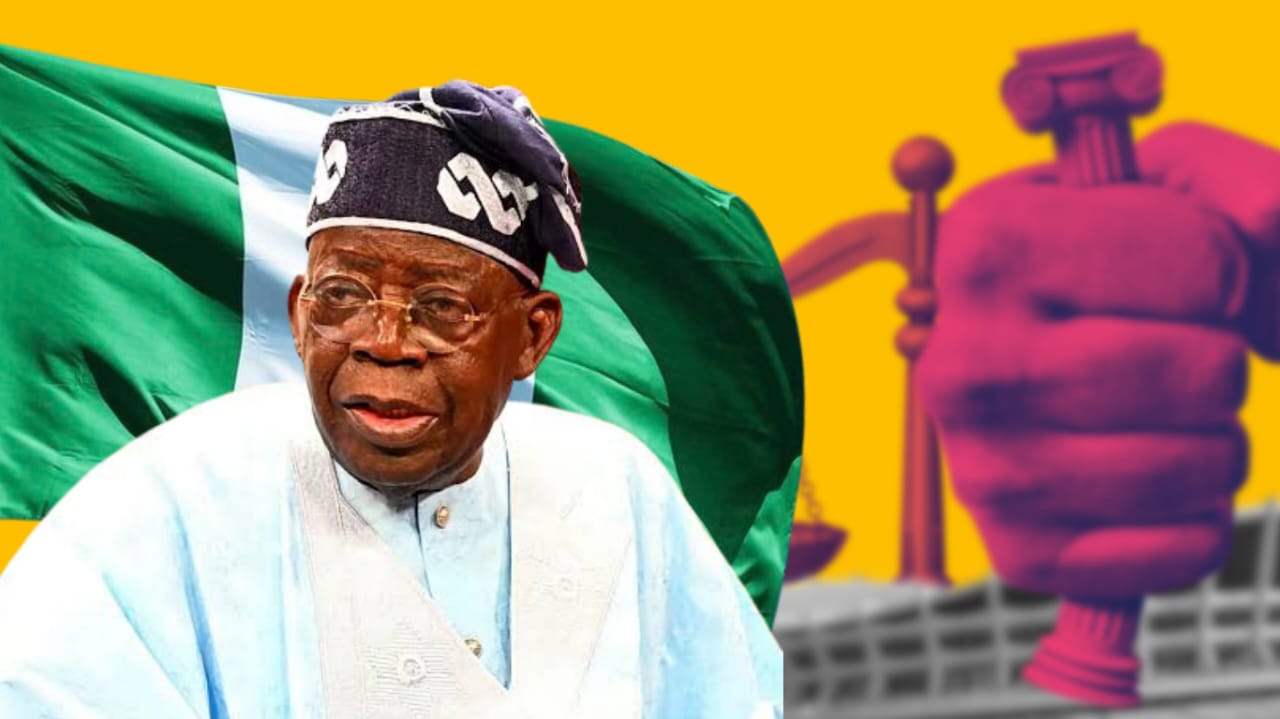
Last week, on October 1st, President Bola Ahmed Tinubu used Nigeria’s Independence Day to address and reflect on the economic reforms introduced under his administration.
He argued that although the reforms have brought significant hardship and difficult adjustments, they are beginning to reduce poverty and move the country towards a new period of economic prosperity.
President Bola Ahmed Tinubu’s Independence Day speech was not the usual “Happy Independence Day, Nigeria” message.
It was almost a story.
There was a sick patient. There was painful medicine. There was the biblical Red Sea. There was a Promised Land. And then came perhaps the boldest declaration of the speech: “The age of reform has done its work. Now begins the age of prosperity.”
The message was clear: Nigeria has endured the worst of the economic adjustment, the difficult reforms have laid the foundation, and the country should now look forward rather than back.
But here is where the conversation gets uncomfortable.
If Nigeria has crossed its Red Sea, how many Nigerians actually feel like they have reached the other side?
That question is not simply political. It is about the difference between economic statistics and the experience of paying for food, transport, rent, electricity, school fees and healthcare.
And almost immediately after the President's speech, opposition voices challenged that prosperity narrative.
Former Vice-President Atiku Abubakar asked, “Bola, where is this prosperity?”, while the PDP went even further, rejecting the President's biblical comparison and describing the administration as the “Pharaoh” rather than Moses.
So, was Tinubu asking Nigerians to be patient—or asking them to believe that the hardest part is already over?

The Pharaoh, the Red Sea and the Painful Medicine
Tinubu's speech tried to explain the economic reforms through a story Nigerians could immediately understand.
According to the President, when his administration took office in 2023, Nigeria was like a cancer patient. The treatment would be painful, but refusing treatment would allow the disease to worsen.
He used that analogy to defend reforms including fuel-subsidy removal and changes to the foreign-exchange system, arguing that previous governments had effectively used “morphine” to hide deeper economic problems rather than treating them.
His message was essentially: the pain was real, but the pain was part of the treatment.
He then took aim at calls to bring back what he described as “addictive subsidies”, warning Nigerians against returning to policies he considers unsustainable.

It is a powerful political message because it creates a simple storyline: Nigeria was sick, the government chose the difficult medicine, Nigerians suffered through the side effects, and now recovery is supposed to follow.
But stories have another side.
The PDP responded that Nigerians were not crossing into prosperity at all, but were instead being pushed through what it called a “Red Sea of economic pain.”
Its publicity secretary, Ini Ememobong, argued that the President's analogy had effectively presented his administration as Moses when, in the party's interpretation, Nigerians were still struggling under the consequences of government policies.
The disagreement is obvious.
One side says: “We suffered because we were fixing the problem.”
The other asks: “If it has been fixed, why does life still feel so difficult?”
That may be the most important question coming out of the speech.

“The Age of Prosperity” Meets the Cost of Everyday Life
Tinubu did not present prosperity as simply a bigger GDP number.
In fact, his speech specifically described what prosperity should mean: farmers producing safely and earning decent returns, factories having reliable electricity, businesses accessing credit, young Nigerians finding productive work, and food, transportation and education becoming more affordable.
That part of the speech is important because it gives Nigerians something concrete to watch.
If prosperity means cheaper food, better transport, more jobs, reliable power and stronger purchasing power, then citizens do not have to understand complicated economic terminology to judge whether they are experiencing it.
They can simply look at their receipts.
Look at the market. Look at their electricity bill. Look at the amount left in their account after paying rent.
That is where the theoretical question becomes very real:
What is the value of economic growth if the average household still cannot comfortably afford the basics?
Atiku's response focused heavily on that distinction. He argued that economic growth and falling inflation alone do not necessarily mean households are better off if the prices of essential goods and services remain difficult to afford. He summarised his argument with another simple line: “Growth must improve lives.”
That does not automatically disprove the government's economic claims. It simply highlights a different way of measuring progress.
The government is pointing to indicators such as economic growth, lower inflation from its peak, stronger foreign reserves and increased non-oil exports. Tinubu said the economy had grown by more than 4% in 2026 and that non-oil exports exceeded $6 billion in 2025.
The disagreement is therefore not only about numbers.
It is about whichnumbers matter most to the person living on a salary.

So, Have Nigerians Actually Reached the Promised Land?
This may be where Tinubu's speech becomes most interesting.
The President did not claim that every Nigerian was already prosperous. In fact, he acknowledged that millions still struggle to afford food, school fees, medical bills and transportation.
He argued that those problems accumulated over decades and could not be erased in four years.
His administration, he said, is building a foundation through infrastructure, agriculture, social programmes, student loans, consumer credit, industrial development and other measures.
That leaves Nigerians with a difficult question.
How long should citizens wait for the promise to become visible?
Three years of reform is one measurement. A family's three years of struggling is another.
For someone running a business, “the economy is stabilizing” may sound encouraging. But if electricity, transport, borrowing costs and raw materials remain expensive, stability may not immediately feel like prosperity.
For a young person looking for work, hearing that millions of jobs are coming is different from actually receiving an employment offer.
And for a parent standing in a market deciding which food item to remove from the shopping basket, a forecast about future prosperity may feel very far away.
This is also why the reactions to the speech have become so heated.
The Makinde/Daura campaign described the address as a “rhetorical exercise bereft of solutions”, while opposition figures including Atiku and the PDP challenged whether the President's economic narrative matches everyday realities.
Those are political assessments, not independent findings, but they show how sharply the speech has divided interpretations of Nigeria's economic direction.
The government, meanwhile, is essentially asking Nigerians to judge the reforms over time rather than by the immediate discomfort they caused.
And that is where patience meets politics.
Because this was not only Tinubu's Independence Day speech. It was also his last Independence Day address before the 2027 general election, giving the prosperity message an obvious political context.
Conclusion
Perhaps the most interesting thing about Tinubu's speech is that both supporters and critics can walk away from it with completely different conclusions.
One person hears “We have crossed the Red Sea.”
Another hears “We are still drowning.” One sees reform as necessary medicine.
Another sees the medicine as having become too painful. One looks at economic growth and improving macroeconomic indicators.
Another looks at the price of dinner. And perhaps Nigeria's real test will be whether those two realities eventually meet.
Because the President has made a very specific promise: the age of reform is ending and the age of prosperity is beginning.
Now Nigerians have something equally simple to ask:
When prosperity arrives, will people recognise it from the statistics—or will they finally feel it in their everyday lives?
“A better economy is not only one that looks stronger on paper; it is one that makes ordinary life feel more possible.”