Nigeria Football Faces Major Reset as FIFA Accepts Gusau’s Resignation
The Nigeria Football Federation (NFF) has debunked claims of FIFA demanding clarification on government interference, clarifying that FIFA accepted resignations of its former principal officers. This announcement coincides with a high-level meeting in Zurich, where FIFA, CAF, and Nigerian stakeholders initiated a comprehensive reform roadmap for the country's football administration, aiming for stability and improved performance amidst national team failures.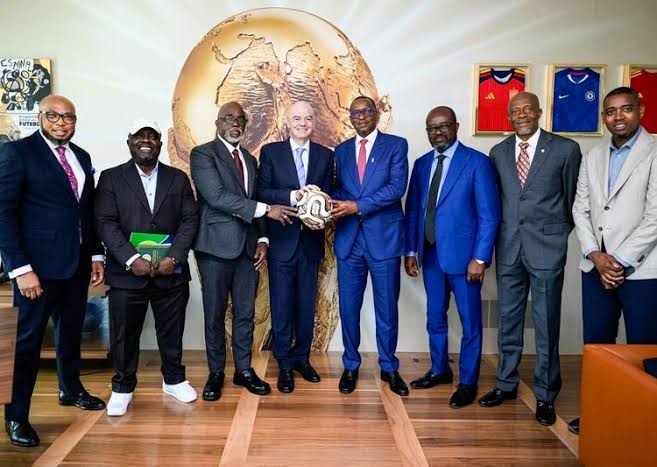
The Nigeria Football Federation (NFF) has dismissed a purported letter claiming that FIFA had demanded an explanation over alleged government interference in the federation and threatened sanctions against Nigeria. The NFF called the document “totally fake” and said FIFA had already accepted the resignations of former NFF president Ibrahim Musa Gusau and other senior officials.
The clarification came as Nigerian sports officials and football stakeholders met FIFA in Zurich on Tuesday to discuss what happens next.
FIFA is backing talks on football reform
The meeting brought together a Nigerian delegation led by National Sports Commission chairman Shehu Dikko and Director-General Bukola Olopade. Former NFF president Amaju Pinnick, acting NFF General Secretary Emmanuel Ikpeme and NFF legal official Okey Obi were also part of the delegation.
They met FIFA President Gianni Infantino and other officials to discuss the leadership changes at the NFF and a broader plan to reform the administration of Nigerian football. CAF was also represented at the discussions.
Rather than threatening Nigeria with suspension, FIFA agreed to continue working with the Nigerian government, the NFF and CAF on a short-, medium- and long-term reform roadmap.
The goal is to establish an NFF that is properly structured, inclusive and able to operate with greater stability.
That makes the Zurich meeting more significant than the fake letter that initially drew attention to it. Nigeria is now having a direct conversation with FIFA about how its football administration should be rebuilt.
Gusau’s resignation opened the door
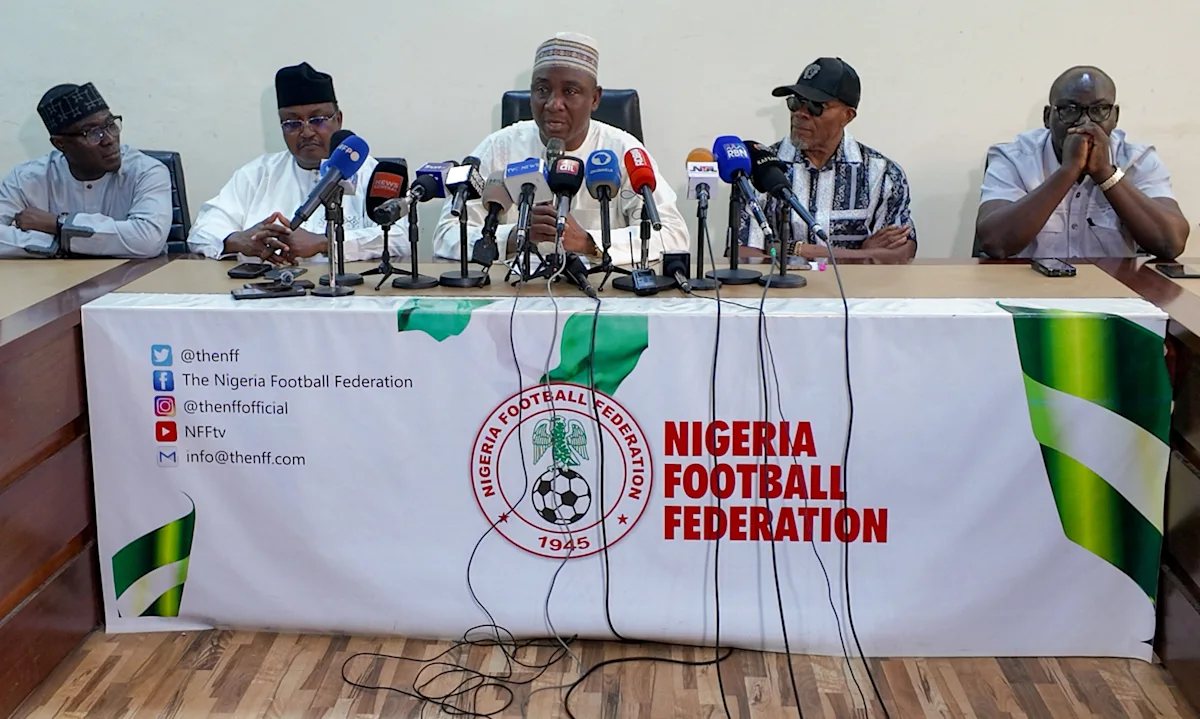
Gusau resigned on August 27, along with NFF General Secretary Mohammed Sanusi and other members of the executive committee.
His resignation came just weeks before the end of his four-year term and followed mounting criticism over the performance and administration of Nigerian football. Reuters reported that the leadership changes came after Nigeria's men's and women's national teams suffered major qualification setbacks.
The Super Eagles failed to qualify for the 2026 FIFA World Cup, while the Super Falcons missed the 2027 Women's World Cup for the first time since the women's tournament began in 1991.
Those results added to growing calls for changes within the federation.
The NFF has since put an interim structure in place, with Emmanuel Ikpeme serving as acting general secretary and Ademola Olajire as interim deputy general secretary.
The “FIFA letter” was not real
The controversy around the purported FIFA letter is important because of what it claimed.
The document suggested that FIFA was concerned about the circumstances surrounding Gusau’s resignation and could consider sanctions, including Nigeria's suspension from international competitions.
The NFF has now rejected that entire account.
According to the federation, FIFA has already accepted the resignations of the former principal officers and members of the NFF Executive Committee. The federation also said discussions on restructuring were already under way.
That distinction matters. Nigeria is not facing the FIFA ultimatum described in the circulating document.
Instead, the governing bodies are discussing how to move Nigerian football forward after a major leadership shake-up.
What happens next?
The immediate challenge is turning the reform talks into something concrete.

The Nigerian delegation stressed that any restructuring should comply with the statutes and regulations of FIFA, CAF and the NFF. That will be particularly important as stakeholders work out the future leadership structure of the federation.
For Nigerian football, this is bigger than replacing a president or filling vacant positions.
The recent failures have exposed problems that go beyond the national teams. Questions around administration, league development, grassroots football, coaching, funding and the relationship between football authorities and government have all become part of the wider debate.
FIFA's willingness to remain involved gives Nigeria an opportunity to address some of those issues with international oversight.
But the hard part will come after the meetings.
Nigeria has had several periods of football reform discussions before. What matters now is whether the latest process produces a federation that is more stable, transparent and capable of supporting the country's teams and domestic game.
For now, the immediate picture is clear: Gusau has gone, FIFA has accepted the resignations, and talks on rebuilding Nigerian football are under way. The viral FIFA ultimatum, however, was fake.