New York Governor Hochul Ends Horseshoe Crab Harvest: Landmark Legislation Signed After Veto Override
New York State has implemented a phased ban on commercial horseshoe crab harvesting, sparking a contentious debate between conservationists and the fishing industry. Governor Kathy Hochul signed the bill, which will gradually reduce and ultimately prohibit harvesting by 2029, aiming to protect the vital marine species despite concerns from fishermen about economic impact.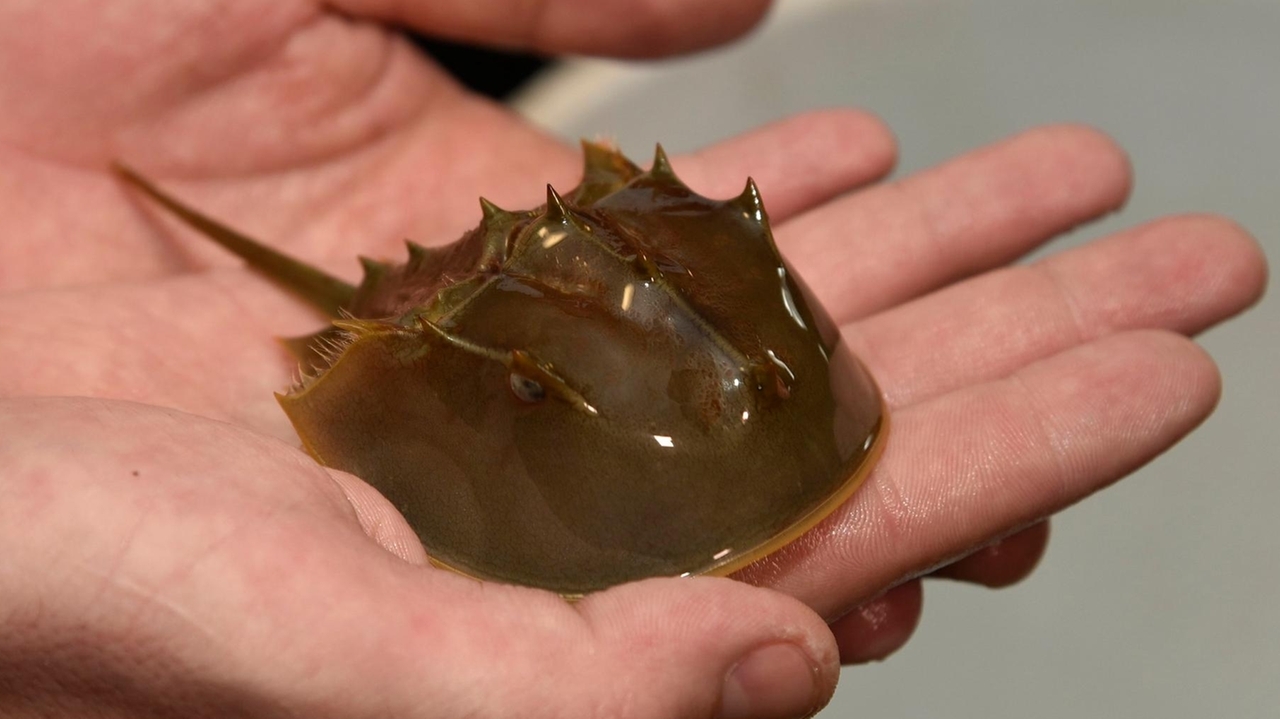
New York State has enacted a gradual ban on the commercial harvest of horseshoe crabs, a decision that has drawn both praise from conservationists and strong criticism from the fishing industry. Governor Kathy Hochul signed an amended bill on Friday, which will completely prohibit the harvest by 2029 following a three-year phasedown period. This approach differs from a previous version of the bill, which Hochul vetoed last year due to its immediate ban, arguing it did not provide sufficient time for the fishing and biomedical industries to transition to alternative practices. She had previously contended that fishery management was best handled by the Department of Environmental Conservation (DEC), which had implemented harvest limits to safeguard horseshoe crabs during their spring and summer spawning seasons.
Under the new legislation, the annual limit for horseshoe crab harvest will be progressively reduced. In 2026, the limit will be set at 75% of the current 150,000-crab annual quota; this will further decrease to 50% in 2027 and 25% in 2028, leading to a full ban for bait harvest by 2029. Currently, fishermen are permitted to take 250 horseshoe crabs per day, with New York's annual quota of 150,000 crabs considered 'voluntary' against a federally allowed quota of 366,000. State figures indicate a steady increase in horseshoe crab harvesting in New York, with more than 141,000 crabs harvested last year, a significant rise from just over 44,000 in 2020.
The ban has been met with dismay by fishermen. Will Caldwell, a Hampton Bays fisherman who has observed abundant crab populations, expressed concerns that the ban would 'hurt a lot of people.' He voiced hope for a future governor who would manage the resource rather than eliminate it. Conversely, John Tanacredi, a professor of earth and environmental sciences at Molloy University and a long-standing advocate for the ban, lauded the move as a 'positive step for horseshoe crab populations on Long Island.' Tanacredi, who conducted decades of annual surveys before his initiative was cut, had consistently reported declining populations.
The scientific data regarding horseshoe crab population health is mixed. A recent study published in the journal Scientific Reports documented a 'severe population decline in multiple locations' within Long Island Sound over more than 20 years, with annual declines averaging between 2.8% and 9.3%. However, fishing advocates counter that the ban contradicts other findings suggesting the relative health of the fishery. The DEC, in a statement to Newsday, noted that while horseshoe crab spawning 'varies geographically across the region,' most regions in New York have shown 'increasing trends in recent years.' Specifically, the South Shore region, which accounts for over 60% of the commercial horseshoe crab harvest, exhibits the highest magnitude of spawning activity and increasing trends in spawning-age adults.
Bonnie Brady, executive director of the Long Island Commercial Fishing Association, vehemently opposed the ban, calling it 'completely unacceptable.' She questioned the value of fisheries-based science and management limits when public opinion, swayed by what she termed a 'fear campaign filled with falsehoods,' could override them. In contrast, David Ansel, vice president of the Center for Water Protection at conservation group Save the Sound, endorsed the ban as a 'necessary step to protect this critical species.' He emphasized the horseshoe crab's ancient lineage and its indispensable role in a healthy Long Island Sound ecosystem, highlighting its importance as a key food source for migratory birds, sport fish, sea turtles, and other marine life.
State legislators had made another attempt to prohibit horseshoe crab harvesting after Governor Hochul’s initial veto. The State Senate gave final approval to the bill, identical to the one vetoed last year, shortly after the Assembly passed it. Adrienne Esposito, executive director of Citizens Campaign for the Environment, argued that 'things have gotten worse' for the crab and its dependent species since the veto. She stressed the horseshoe crab's role as a 'keystone species' and noted the state's addition of the rufa red knot, a shorebird that relies on horseshoe crabs for food, to its endangered species list. State Senator Brad Hoylman-Sigal, the bill's sponsor, highlighted that 'nothing has been done to protect the horseshoe crab' since the veto and mentioned that neighboring states already have bans, which increases pressure on New York's populations. The bill also addresses the limited use of horseshoe crabs for biomedical purposes, in addition to their primary use as bait for eel and whelk traps. The Senate approved the bill with a 43-16 vote, with some Long Island senators voting in favor and others, like State Senators Patricia Canzoneri-Fitzpatrick, Anthony Palumbo, and Steven Rhoads, opposing it due to concerns about further blows to fishermen and advocating for managed use.