New Challenger Emerges: Peter Agada Named YPP Presidential Hopeful for 2027
Architect Peter Agada has been officially declared the Young Progressive Party's (YPP) presidential candidate for the 2027 general elections. His platform, centered on "governance with GPS," aims to tackle poverty, insecurity, and unemployment by focusing on policy implementation and leveraging the potential of young Nigerians. Agada advocates for decentralized electricity and a transformation into a food-producing nation.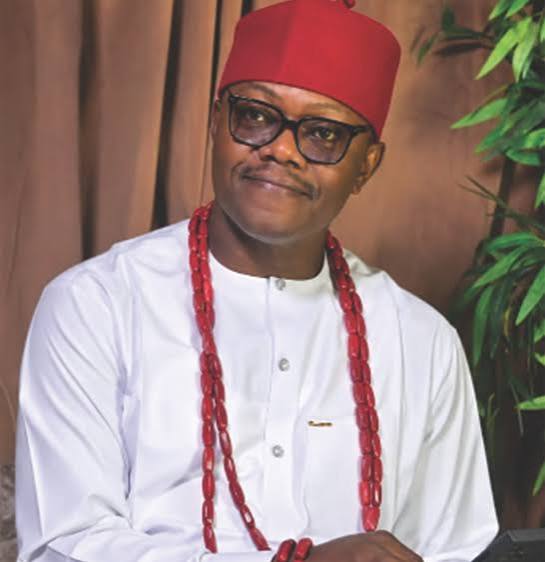
Architect Peter Agada has officially emerged as the presidential candidate of the Young Progressive Party (YPP) for the upcoming 2027 general elections. His nomination followed a substitution presidential primary held in Abuja, where Agada secured a decisive victory with 71 votes out of 83 cast, while 12 delegates voted against his candidacy. Barrister Vidiyeno H. Bamaiyi, the returning officer and National Secretary of the YPP, formally declared Agada as the party's duly nominated presidential candidate.
In his acceptance speech, Agada underscored that his emergence transcended personal ambition, representing instead the aspirations of millions of Nigerians grappling with pervasive issues such as poverty, food insecurity, displacement, unemployment, and widespread insecurity. He highlighted the escalating number of citizens living below the poverty line, the increasing need for food assistance during the 2026 lean season, the plight of internally displaced persons, and the lack of adequate opportunities for young Nigerians entering the job market. Agada affirmed his acceptance of the mandate, asserting that Nigerians are weary of abandoned projects, insufficient electricity, hunger, insecurity, and a political system that consistently prioritizes political expediency over genuine competence and performance. He characterized the YPP as a party founded on ideas, ideology, and a commitment to delivery, emphasizing its role in bringing competence and capacity to the forefront of national leadership.
Unveiling his comprehensive campaign agenda, Agada articulated his vision for Nigeria, centered on what he termed “governance with GPS.” This approach, he explained, would focus meticulously on identifying and addressing the fundamental root causes of poverty, rather than merely managing its symptoms. He specifically identified insecurity as a significant impediment to economic development, observing that citizens cannot effectively engage in farming, trade, education, or business ventures when their safety and security are compromised.
Agada further drew upon his extensive experience in policy development, having dedicated approximately two decades to crafting policies and solutions across diverse sectors through the Congress of Nigerian Professionals. He pinpointed a critical challenge facing Nigeria: not the absence of sound policies, but rather the consistent failure to translate these policies and ideas into tangible, implementable projects. Consequently, his campaign document is meticulously designed around practical solutions aimed at converting policies into concrete projects and ensuring their effective implementation.
Addressing the crucial issue of national security, Agada revealed his prior involvement in developing proposals for a robust national security infrastructure. This proposed framework is engineered to enhance surveillance capabilities across highways, national borders, and grazing routes, while also fostering improved coordination among the armed forces and intelligence agencies. He stressed that this integrated security architecture would facilitate more effective intelligence sharing and operational coordination among relevant agencies.
Agada also voiced strong criticism against political promises that lack clear, actionable implementation strategies, positing that the fundamental distinction between a mere idea and a workable solution lies in the structural framework for its delivery. Drawing an analogy from architecture, he explained that designing an aesthetically pleasing building is insufficient without a solid structural foundation to support it. Therefore, his political platform is committed to providing the detailed “how” for implementing proposed policies. He also committed to transforming Nigeria from its current status as a largely agricultural economy into a productive, self-sufficient, food-producing nation capable of feeding its entire population and generating agricultural exports.
A core tenet of Agada’s administration would be placing young Nigerians at the epicenter of national development. He argued forcefully that young people have been systematically excluded from mainstream wealth creation and access to crucial funding opportunities. Regarding electricity, he advocated for a decentralized power generation system, asserting that Nigeria must reduce its over-reliance on the national grid, which he described as inherently vulnerable to frequent disruptions, vandalism, and systemic failures. He likened the proposed decentralization of electricity generation to the successful development of borehole systems, which have significantly alleviated water supply challenges in numerous communities.
The YPP presidential candidate concluded by outlining a commitment to a broad restructuring of governance, security, and development systems. This restructuring would emphasize practical implementation, harness technological innovation, and create significantly greater opportunities for young Nigerians. Agada issued a passionate call to all Nigerians, particularly the youth, urging them to embrace a new political direction and actively participate in shaping the country’s future.