National Assembly Shakes Up Election Timeline: Proposes Nov 2026 for Presidential Polls
Nigeria's Senate and House of Representatives have proposed extensive amendments to the 2022 Electoral Act, including a shift of presidential and gubernatorial elections to November 2026. These reforms aim to accelerate the resolution of election litigations before winners are sworn in and introduce measures like early voting and mandatory electronic transmission of results. The proposals have received strong support from key stakeholders, including INEC.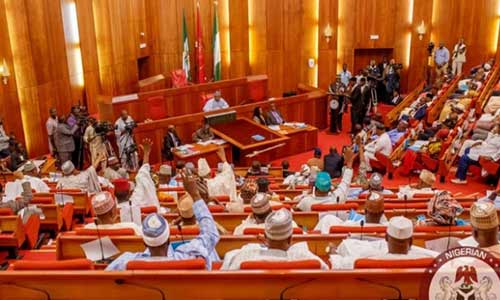
Ahead of the forthcoming 2027 general election, significant amendments to the 2022 Electoral Act have been proposed by Nigeria's Senate and House of Representatives. These comprehensive proposals, which came to public attention during a public hearing organized by the joint committee on Electoral Matters, aim to fundamentally restructure key aspects of the electoral process, particularly concerning election timelines and the resolution of post-election disputes.
A central and far-reaching proposal is the adjustment of the election schedule for presidential and gubernatorial offices. The draft amendments stipulate that these elections should be conducted in November 2026, a notable shift from the traditional February or March of the election year. Specifically, the proposal dictates that elections for the President and State Governors must be held not later than 185 days before the expiration of the incumbent's tenure, which is statutorily May 29. A careful calculation of 185 days prior to May 29, 2027, precisely places the election window in November 2026. This revised timeline is also extended to federal and state legislative elections, with Section 4(5) of the proposed amendment stating that elections into State Houses of Assembly and the National Assembly shall be held not later than 185 days before their respective dissolution dates.
The primary motivation behind this substantial timeline adjustment, as articulated by Hon. Adebayo Balogun, Chairman of the House of Representatives Committee on Electoral Matters, is to provide ample time for the complete disposal of election litigation before the swearing-in of declared winners. To actualize this, complementary amendments to the 1999 Constitution are also being sought. Section 285 and Section 139 of the Constitution are slated for amendment to facilitate these changes. Furthermore, the joint committee has proposed a significant reduction in the duration for judicial processes: the period for tribunal judgments will be reduced from 180 days to 90 days, while appellate court judgments, up to the Supreme Court, will be concluded within 60 days instead of the usual 90 days. These revised judicial timelines are designed to collectively ensure that all election litigations are dispensed with within the 185-day window.
Addressing potential constitutional impediments, the joint committee has introduced amendments to sections 76, 116, 132, and 178 of the Constitution. These changes seek to transfer the authority for determining election timelines from the Constitution to the Electoral Act, as reflected in the re-designation of Section 28 to Section 27 (5-7) in the proposed draft. This strategic move aims to provide greater flexibility and legislative control over the electoral calendar.
Beyond the timeline adjustments, the proposed amendments encompass other critical reforms aimed at enhancing the integrity and efficiency of the electoral process. These include the introduction of early voting, as detailed in Section 2 of the draft bill. This provision mandates a date set aside for early voting not later than 14 days before the general election. Categories of Nigerians eligible for this pre-poll exercise include security personnel, officials of the Independent National Electoral Commission (INEC), accredited domestic observers, accredited journalists, and ad-hoc staff of the commission. Another pivotal amendment is the mandatory electronic transmission of election results, stipulated in Section 60(5) of the Electoral Act. This aims to ensure that presiding officers transmit results, including the total number of accredited voters, electronically and manually to the next level of collation. The draft also proposes criminal penalties for presiding or collation officers who fail to distribute unstamped ballot papers and results sheets, with offenders facing a one-year jail term, a fine of N1 million, or both. Additionally, the proposals mention the non-compulsory use of permanent voters' cards, though details on its implementation were not further elaborated.
Significantly, the proposed amendments have garnered broad support from various stakeholders who made presentations at the public hearing. This includes the representative of INEC, Professor Abdullahi Zuru, indicating a consensus around the necessity and direction of these electoral reforms.