Middle East on Edge: Iran-US Confrontation Intensifies with New Strikes and Threats
Tensions between the US and Iran have escalated, with Iran threatening to close the Strait of Hormuz and other key shipping routes following renewed American military strikes. The US Central Command confirmed targeting Iranian military infrastructure to degrade its ability to attack commercial shipping, while oil prices surged amid stalled tanker traffic in the vital strait.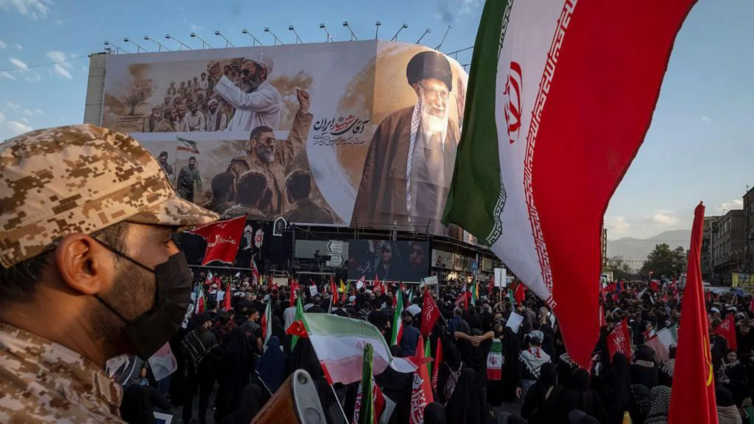
Escalating hostilities between the United States and Iran have plunged the region into further tension, as Iran threatened to block crucial trading routes following renewed US military strikes. Iran's Islamic Revolutionary Guard Corps (IRGC) declared that the strategically vital Strait of Hormuz would remain closed until the US ceased its "acts of aggression," further warning of potential closures of other regional oil and gas export channels.
The US military's Central Command (Centcom) confirmed multiple strikes against Iranian targets, including an operation on Wednesday morning and another overnight. Centcom stated these strikes "further degraded Iran's ability to attack commercial shipping in the Strait of Hormuz." Specifically, a 90-minute wave of attacks targeted Iran's coastal defenses and cruise missile storage and launch sites on Greater Tunb Island. Alongside these military actions, US forces also reportedly redirected two vessels that attempted to breach its newly reimposed blockade of Iranian ports.
The Strait of Hormuz, a critical choke point for global oil transit, has seen its strategic importance underscored by the ongoing conflict. The renewed attacks have triggered a sharp rise in international oil prices, with tanker traffic through this essential shipping route virtually stalling. The US blockade, which prevents vessels from transiting to and from Iranian ports and coastal areas, was reinstated on Tuesday evening. This move came despite a previous "memorandum of understanding" deal struck last month between the two countries, which had aimed to de-escalate the months-long conflict and had temporarily lifted the blockade.
In response to the renewed US blockade, the IRGC warned the US to "expect the closure of other oil and gas export routes that serve the interests of the United States and its allies," though specific routes were not elaborated upon. Concurrently, Iran's state-run broadcaster reported that the country's army had carried out separate attacks on US targets located in Jordan, Kuwait, and Bahrain. US allies in the region confirmed intercepting drones and missiles launched from Iran.
Adding to the heated rhetoric, US President Donald Trump had previously vowed to strike Iran's bridges and power plants in the coming week if Iran did not return to negotiations. He also stated his intention to eventually target energy infrastructure. This escalation followed Trump's earlier announcement that a threatened 20% toll in the Strait of Hormuz would be replaced by "massive" trade and investment deals with Gulf states. Past threats by Trump to bomb Iran's civilian infrastructure, made in April, had drawn strong condemnation from UN human rights chief Volker Türk, who labeled such actions as war crimes under international law.
From Iran's perspective, Mohammed Bager Qalibaf, the country's top negotiator with the US, emphasized on Wednesday that Iran's national security was dependent on maintaining "Iranian arrangements" in the Strait of Hormuz. Qalibaf asserted that both negotiation and war were integral parts of Iran's strategy of resistance in what he described as an "existential" conflict with the United States.
Details regarding the extent of damage and any casualties resulting from the recent strikes have not been officially confirmed. Similarly, the IRGC's claims of launching missiles against US military bases across the Middle East as part of its latest operations, accompanied by released images, have yet to be independently verified. These developments unfold amidst an expanding US military campaign specifically targeting Iranian military infrastructure.