Andy Burnham's Bold Promise: Unveiling Labour's Future Under His Leadership
Andy Burnham is set to become Labour leader and Prime Minister, following a landslide win and Sir Keir Starmer's resignation. He pledges a radical devolution of power, with a focus on 'No 10 North' and a distinctively Labour program for economic renewal and community empowerment, facing immediate criticism from opposition parties over scrutiny.
Andy Burnham is on the cusp of a significant political ascent, set to become the Labour leader and, subsequently, the Prime Minister of the United Kingdom.
The Makerfield MP, who secured a resounding by-election victory last month, is slated to be officially named party boss at a special conference on Friday, July 17.
His leadership was clinched with overwhelming support from Labour MPs and affiliated organizations, paving the way for him to address the public at midday from the Trades Union Congress headquarters in London.
The former Mayor of Greater Manchester, Mr. Burnham, is poised to succeed Sir Keir Starmer and enter No 10 Downing Street on Monday, July 20, becoming Britain’s seventh Prime Minister in a decade.
This transition follows Sir Keir Starmer's resignation on June 22, after just two years in office. Starmer, who had won a landslide election in July 2024, decided to step down amid controversies and significant losses for Labour in local elections in May, where the party lost nearly 1,500 council seats nationwide.
Burnham’s return to the House of Commons was facilitated by Josh Simons, the incumbent Makerfield MP, who vacated his seat to allow the former Greater Manchester mayor to run.
Simons expressed his belief that Burnham was the individual to 'drive the change our country is crying out for.'
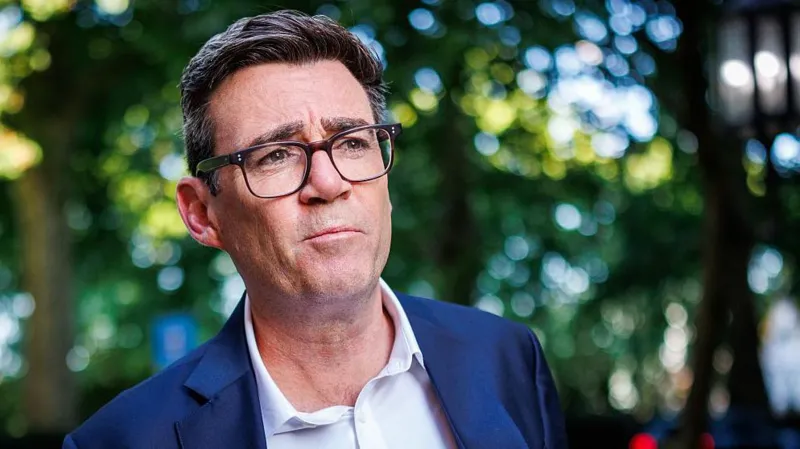
Burnham’s by-election victory on June 19 saw him win with a majority of 9,231 votes over the Reform UK candidate, Robert Kenyon, a margin larger than his predecessor's.
His path to leadership was solidified after he garnered the necessary 349 nominations from fellow MPs, making it impossible for any other candidate to secure the 81 endorsements required to stand in the contest.
Burnham had already been nominated by 80 percent of the parliamentary Labour Party the previous week, and additional endorsements on Monday, July 13, pushed him over the threshold.
The window for MP nominations officially closed at 6pm on Wednesday, July 15, and this notable supporters included Communities Secretary Steve Reed, who initially delayed his nomination due to a by-election in his constituency.
And this was backed by Burnham on Monday, as well as Junior Ministers Chris Bryant and Mike Tapp, Former Safeguarding Minister Jess Phillips, and Richard Burgon of the Socialist Campaign Group.
Chairs of Labour’s National Executive Committee, Shabana Mahmood and Anna Turley, and Sir Keir Starmer, as the outgoing leader, by convention, did not make nominations.
Graham Stringer and Phil Brickell were the only Greater Manchester MPs who did not endorse Burnham.
The final nomination stage, requiring the support of three Labour affiliates, including at least two trade unions, was described as a formality, with Burnham having secured this backing for some time.
He will be formally appointed Prime Minister by King Charles on Monday, who will then invite him to form a government.
As Parliament entered recess on July 16, Mr. Burnham will not address MPs as the new Prime Minister until they reconvene at the beginning of September.
This lack of immediate parliamentary scrutiny and scarcity of media interviews has drawn criticism from the opposition.
The Conservative Party leader, Kemi Badenoch, criticized Labour for 'scrapping the Conservative vote to force Andy Burnham to come to Parliament to answer questions when he becomes PM on Monday,' asserting that 'the honeymoon will be over the minute he has to tell us his plans.'

Similarly, Liberal Democrat leader Sir Ed Davey labeled Burnham as 'the least scrutinised prime minister in [his] lifetime.'
Burnham has pledged to govern with a distinct approach, promising a radical devolution of power and money away from London.
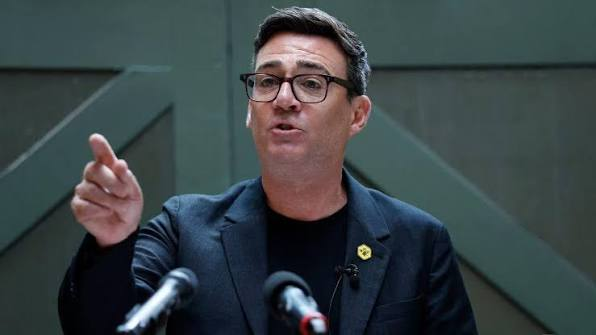
His 'No 10 North' plan proposes moving part of the Prime Minister's office to Manchester. In his maiden speech as Labour leader, scheduled for July 17, he is expected to pay tribute to Sir Keir Starmer, crediting him with Labour's return to government and securing a historic election victory.
Burnham will also praise Starmer’s government for its achievements, including improvements to the NHS, investment in public services, and the passing of the Hillsborough Law, a cause he has long championed.
Setting out his vision for a 'renewed' Labour government, Burnham will emphasize 'driving growth in every postcode' and 'returning power to communities.'
He aims to lead a government with the ‘courage to fix the big things that politics has neglected.’
The ‘conviction to argue for our plans,’ asserting that only a 'confident' Labour government can 'lift Britain up' by 'putting people and places back at the heart of national decision-making.'
This is reflecting on recent history, he is expected to suggest that Britain 'took a series of wrong turns in the 1980s' and requires a 'new path' to build a country that 'works for all people and places.'
Sources indicate that his government will be authentically Labour, offering a 'confident alternative' with a ‘distinctively Labour’ program focused on economic renewal, increased public control, reindustrialisation, and empowering local communities.
He is set to promise that his leadership will be ‘unashamedly Labour' in its priorities and decisions, fostering a 'more united' party open to collaboration rather than internal division.
He will also commit to leading the entirety of 'this great country,' including Scotland, Wales, Northern Ireland, and both the North and South of England.
Speculation surrounds the formation of his new cabinet, which sources suggest will be appointed only after he enters No 10. Rachel Reeves appears unlikely to continue as Chancellor.
Current Home Secretary Shabana Mahmood is rumored to be a potential successor, following reports that Ed Miliband was blocked for the role due to concerns from some trade unionists and city traders about his net zero policies.
Ms. Mahmood reportedly prefers to remain Home Secretary to continue her asylum reforms, which have received Burnham's support.
Additionally, David Miliband is a rumored candidate to return to frontline politics as Foreign Secretary, potentially with a seat in the Lords, after having held the post under Gordon Brown before leaving politics in 2013 to lead an aid agency.