Mahama's Fierce Campaign for Africa's Stolen Heritage and Reparatory Justice
President John Dramani Mahama has called for the immediate, unconditional return of African human remains and cultural heritage, emphasizing dignity and historical justice at the UN General Assembly. He highlighted the significance of restitution for strengthening African identity, rejecting capacity concerns, and advocating for a permanent international system beyond piecemeal efforts.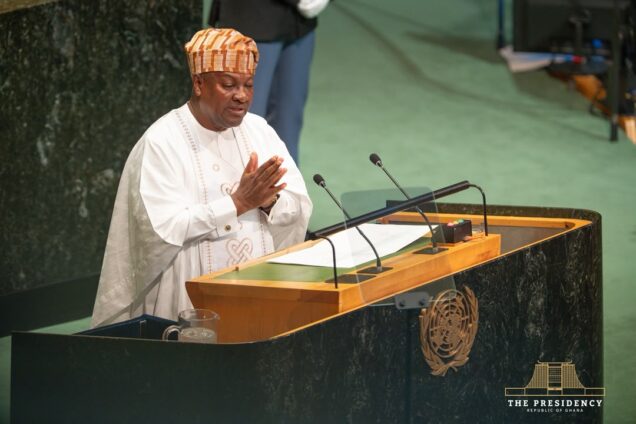
President John Dramani Mahama has passionately advocated for the immediate and unconditional return of African human remains and cultural properties held in museums and institutions outside the continent.
Speaking at a high-level side event on the return and restitution of cultural properties and heritage during the 81st United Nations General Assembly in New York, President Mahama underscored that their continued possession is a fundamental question of human dignity and historical justice.
Regarding human remains, President Mahama firmly stated that they must not be treated as mere museum objects or scientific specimens.
He powerfully declared, "Human remains are not collectibles. They are not specimens. They are our ancestors."
He cited the poignant case of King Badu Bonsu II of Ahanta, who was executed by Dutch authorities in 1838. The king's head was taken to the Netherlands, preserved in formaldehyde for approximately 170 years, before its eventual return to Ghana in 2009.
President Mahama insisted that the return of human remains should serve as an immediate starting point for a broader international framework on restitution, emphasizing that legal and administrative barriers should not impede African countries from recovering their ancestors' remains.
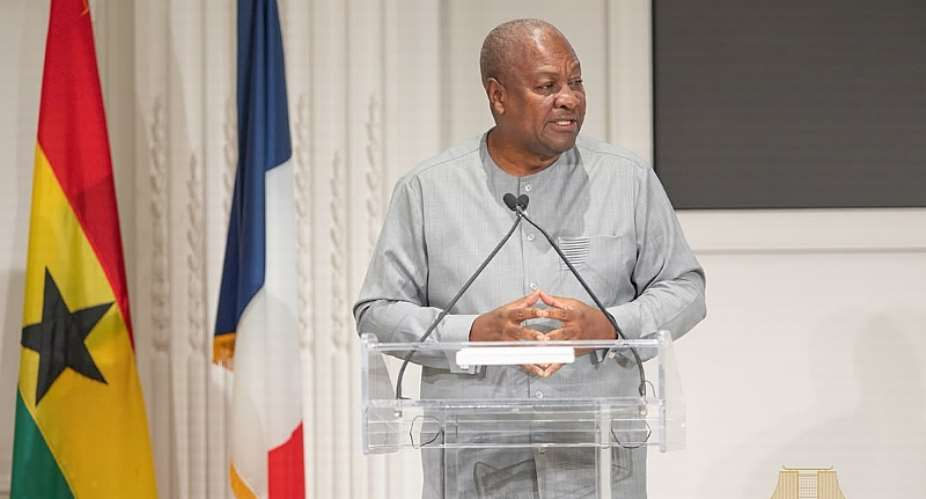
President Mahama also detailed the extensive history of colonial looting and destruction, referencing the British forces' devastation of Kumasi and the looting of the Asantehene's palace in 1874.
He highlighted that Ghana's experience was not unique, drawing parallels to the looting of cultural heritage in Benin City, Ethiopia's Maqdala, and Abomey in present-day Benin.
He emphasized that these removals separated communities from crucial elements of their history, identity, and traditions. However, he showcased the 2024 return of a portion of Asante heritage, including the sacred Mpomponsuo sword to Ghana, as compelling evidence of the importance of restitution.
He explained that the Mpomponsuo sword is more than a historical artifact; it remains connected to active traditional institutions and living communities, proving that restitution reconnects historical objects with living traditions.
A core aspect of President Mahama's call is the profound impact restitution would have on future generations of Africans. He argued that the return of cultural objects would provide young Africans with direct access to tangible proof of their ancestors' brilliance and achievements, thereby strengthening identity, education, confidence, and social development.
"When a young African child enters a museum on her own continent and touches the tangible proof of her ancestors’ brilliance, she learns that her history did not begin with subjugation," he articulated.
He urged a shift in focus from the history of colonial conquest and cultural loss to learning about the empires, political systems, metallurgical achievements, and artistic traditions developed by African ancestors.
"Our young people must inherit more than the story of what Africa lost. They must inherit the story of what Africa created," he added.
Addressing common counter-arguments, President Mahama vehemently rejected the notion that African countries must first develop modern museums and conservation facilities before cultural artifacts are returned.
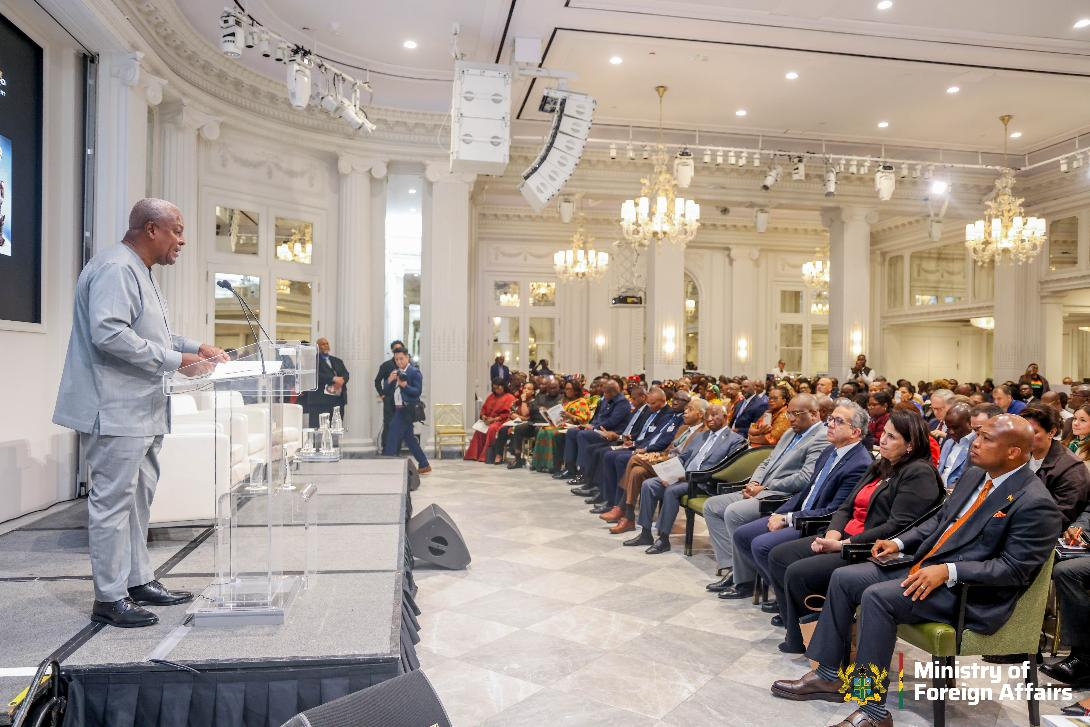
He asserted, "Capacity constraints must never be used as a justification for continued possession. Capacity must serve as a bridge to return, not a barrier to justice."
He pointed to Africa's ongoing efforts, including the African Union’s proposed Great African Museum and the AU-EU Museum Partnership, as evidence of the continent's commitment to developing institutions capable of preserving, researching, and interpreting returned cultural treasures.
He called for international partners to support African cultural institutions through investment in digitization, conservation technology, and professional training.
President Mahama urged the international community to move beyond individual, voluntary acts of restitution.

He acknowledged positive steps taken by European countries, thanking the Netherlands for cataloguing 2,000 Ghanaian artifacts for possible return, recognizing Germany's engagement with Ghana's Kpando traditional area, and noting France's legislative initiatives and the return of the Djidji Ayokwe talking drum to Côte d’Ivoire.
However, he stressed that "moral justice cannot rely on piecemeal generosity or isolated acts of goodwill."
Instead, he called for the establishment of a permanent international system under the United Nations to facilitate the return of African cultural properties.
Such a system would standardize legal and diplomatic procedures, improve provenance research, enhance access to archives, and reduce legal barriers, transforming restitution from an exceptional event into a predictable process.
Ghana's position, he concluded, is anchored in the belief that restitution is not merely about recovering physical objects but about restoring historical memory and dignity to communities whose heritage was removed.