Maduro's Arrest: US Operation Ignites Global Outcry & African Sovereignty Concerns
A U.S. military operation resulted in the capture of Venezuelan President Nicolás Maduro and his wife, sparking a global crisis over state sovereignty and international law. The controversial 'Donroe Doctrine' and claims of a 'narco-state' justify the action, while most nations condemn it as a violation of international norms. The event triggers profound diplomatic and geopolitical repercussions, with Starlink also providing free internet services amidst the turmoil.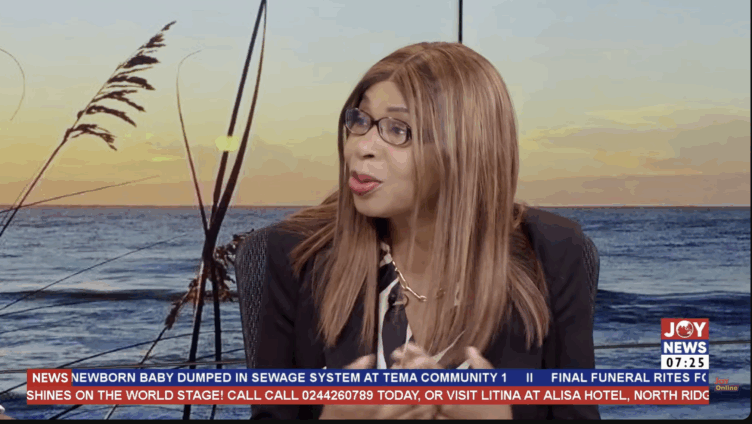
A recent U.S. military operation in Venezuela, which reportedly led to the capture of President Nicolás Maduro and his wife, Cilia Flores, has ignited a profound international crisis, challenging established norms of state sovereignty and global diplomacy. Confirmed by President Donald Trump, the mission, dubbed “Operation Absolute Resolve,” saw Maduro and Flores extracted from Venezuelan soil and transported to the Metropolitan Detention Centre in Brooklyn to face charges. This dramatic event has triggered widespread condemnation and debate across the globe, with many fearing a return to imperialist aggression and a destabilization of the post–World War II rules-based international order.
The operation unfolded after President Trump issued a final private ultimatum to Maduro a week prior to the raid. Upon Maduro's refusal to step down, the U.S. launched a high-risk mission involving 150 aircraft. Trump subsequently announced the successful large-scale strike on Venezuela and the capture of its leader. Following his capture, Maduro was flown to New York, awaiting a court appearance to face a superseding indictment from U.S. Attorney General Pam Bondi, charging him and First Lady Cilia Flores with Narco-Terrorism Conspiracy. Washington has characterized the operation as a necessary law enforcement action to dismantle a "narco-state," with Bondi declaring they would "soon face the full wrath of American justice on American soil."
Beyond law enforcement, President Trump introduced the "Donroe Doctrine," asserting absolute U.S. dominance in the Western Hemisphere and justifying direct intervention to secure resources. He confirmed that the U.S. would temporarily "run the country" to oversee a transition and seize control of Venezuela’s energy sector to reimburse military operation costs. This "oil-for-reimbursement" strategy has sparked intense debate, especially in Africa, where leaders fear a precedent for "resource-driven regime change." Separately, on Christmas Day, President Trump had also ordered strikes on militants in Nigeria in response to the persecution of Christians, while publicly signaling a message of "Peace on Earth" during a New Year’s Eve party.
The operation has faced significant criticism domestically and internationally. Former Vice President Kamala Harris described the raid as "unlawful and unwise," arguing it was motivated by oil interests rather than national security and warning of "wars for regime change or oil that are sold as strength but turn into chaos." U.S. Senate Minority Leader Chuck Schumer echoed concerns, calling the move "reckless" and warning against an "endless war" without congressional authorization.
Within Venezuela, Vice President Delcy Rodríguez, flanked by military leaders, issued a fiery condemnation, calling the capture a "barbaric kidnapping" and demanding the immediate release of Maduro and Flores. She accused the U.S. of seeking to "enslave" the nation and asserted Venezuela would never again be a colony. Following a Venezuelan Supreme Court order, Rodríguez officially assumed the powers of acting President. Conversely, opposition leader and Nobel Laureate María Corina Machado celebrated the move, declaring "The hour of freedom has arrived!" and calling for the recognition of Edmundo González Urrutia as the legitimate leader.
Internationally, the reaction has been largely critical and apprehensive. Ghanaian private legal practitioner Victoria Bright, speaking on the JoyNews AM Show on January 5, described the operation as "deeply troubling," questioning its legal basis and stressing that sovereignty is a foundational principle of international relations. She also pointed to potential wider geopolitical repercussions, including for Cuba and Europe's interest in Greenland. Latin American leaders expressed shock and historical apprehension; Brazilian President Luiz Inácio Lula da Silva condemned the capture as crossing "an unacceptable line," while Mexican President Claudia Sheinbaum highlighted the UN Charter's prohibition of force against territorial integrity. Colombian President Gustavo Petro alerted the world to "missile" strikes and warned of an "escalation of tension," deploying security forces to the border.
The United Nations has also voiced "deep alarm." UN Secretary-General António Guterres warned that the unilateral use of force sets a dangerous precedent that could destabilize other regions and noted that the raid likely violates Article 2(4) of the UN Charter, which prohibits the use of force against the territorial integrity of any state. The diplomatic battleground moved to New York, where Somalia, holding the rotating presidency of the UN Security Council, scheduled an emergency session for Monday, January 5.
The 55-member African Union (AU) issued a searing communiqué from Addis Ababa, characterizing the military raid as an "abduction" and a direct assault on international law, framing it as a violation of the UN Charter and emphasizing that Venezuela's internal challenges must be addressed through "inclusive political dialogue among Venezuelans themselves." The government of Ghana formally condemned the U.S. military invasion as an "unauthorised invasion" and a threat to global stability, specifically rejecting the "Monroe Doctrine and plans to control Venezuelan oil," describing them as "reminiscent of the colonial and imperialist era." South Africa’s Department of International Relations and Cooperation (DIRCO) joined the AU in condemning the "unlawful, unilateral force," urging the UN Security Council to convene immediately, arguing it erodes the principle of equality among nations. Several South African political, civil society, and trade union organizations, including the SACP, Africa4Palestine, SAFTU, and NUMSA, condemned the U.S. action as a "criminal military invasion," "international piracy," and "naked aggression," asserting its aim was "imperial regime change in order to seize the strategic resources of Venezuela." Vicky Bright, a lawyer and entrepreneur, additionally called for stronger African institutions and improved governance to protect the continent from foreign intervention, citing Venezuela as a cautionary tale.
Responses from U.S. allies varied. British Prime Minister Keir Starmer clarified the UK's non-involvement but signaled London would not defend the ousted leader, affirming the UK’s view of the Maduro administration's illegitimacy. Reform UK leader Nigel Farage offered a pragmatic defense, suggesting that while unorthodox, the actions might make China and Russia "think twice." Israeli Prime Minister Benjamin Netanyahu congratulated Trump on "bold and historic leadership." In Germany, Chancellor Friedrich Merz called the legal assessment "complex," noting Maduro led his country "into ruin," but emphasized the objective must be an "orderly transition to a government legitimised by elections." European Commission President Ursula von der Leyen stressed that "any solution must respect international law and the UN Charter," while still supporting a "peaceful and democratic transition." Conversely, Russia and China issued the harshest rebukes, with Beijing describing the raid as a "hegemonic act" that "seriously violates international law," and Moscow condemning "armed aggression." Ukraine’s Foreign Minister Andrii Sybiha offered a pointed defense, stating, "The Maduro regime has violated all principles of democracy and human rights… The people of Venezuela must have a chance for a normal life."
In the aftermath of the strikes, parts of Caracas and the states of Miranda, Aragua, and La Guaira reported power and internet outages. Amid this disruption, Elon Musk’s Starlink is offering free broadband internet service in Venezuela through February 3, proactively adding service credits to accounts. While Starlink’s availability map lists Venezuela as "coming soon," some users were already active, and the temporary provision could help restore connectivity. Marko Papic, global GeoMacro strategist at BCA Research, commented that "Starlink will likely become available, for free, everywhere where the U.S. is involved in an antagonistic relationship with the regime." This highlights Starlink’s expanding role in global conflicts, echoing its deployment in Ukraine and use in bypassing censorship in Iran. Concerns persist over the influence of a single private company over essential communications, prompting global efforts by China and the European Union to support domestic satellite broadband alternatives. The military operation also sent shockwaves through the aviation industry, forcing the FAA to ground hundreds of flights in the Caribbean, though restrictions were later lifted for Caribbean airspace, Venezuela itself remains a no-fly zone for commercial carriers.
The capture of Nicolás Maduro has shattered long-standing norms of 21st-century diplomacy, pushing the international community to a crossroads. The fundamental question remains: Does the pursuit of justice for criminal allegations justify the dismantling of national sovereignty? For the Global South, the "Monroe Doctrine," now rebranded as the "Donroe Doctrine," represents a terrifying revival of interventionism and "resource-driven regime change." For Washington and some allies, it is portrayed as a necessary, if unorthodox, action to address a "narco-state." The coming days at the UN Security Council and in diplomatic arenas worldwide will likely define whether the world returns to a "law of the jungle" or finds a new path for international order, firmly rooted in the principles of international law and sovereign equality.