LeBron James to 76ers? NBA World Buzzes Over Superstar's Next Chapter
LeBron James has officially joined the Philadelphia 76ers, making a monumental free agency decision driven by his pursuit of a fifth NBA championship. This move creates a formidable new super team with Jaylen Brown, Joel Embiid, and Tyrese Maxey, poised to contend for a title. The decision carries significant implications for team dynamics, league finances, and the strategies of other contending franchises.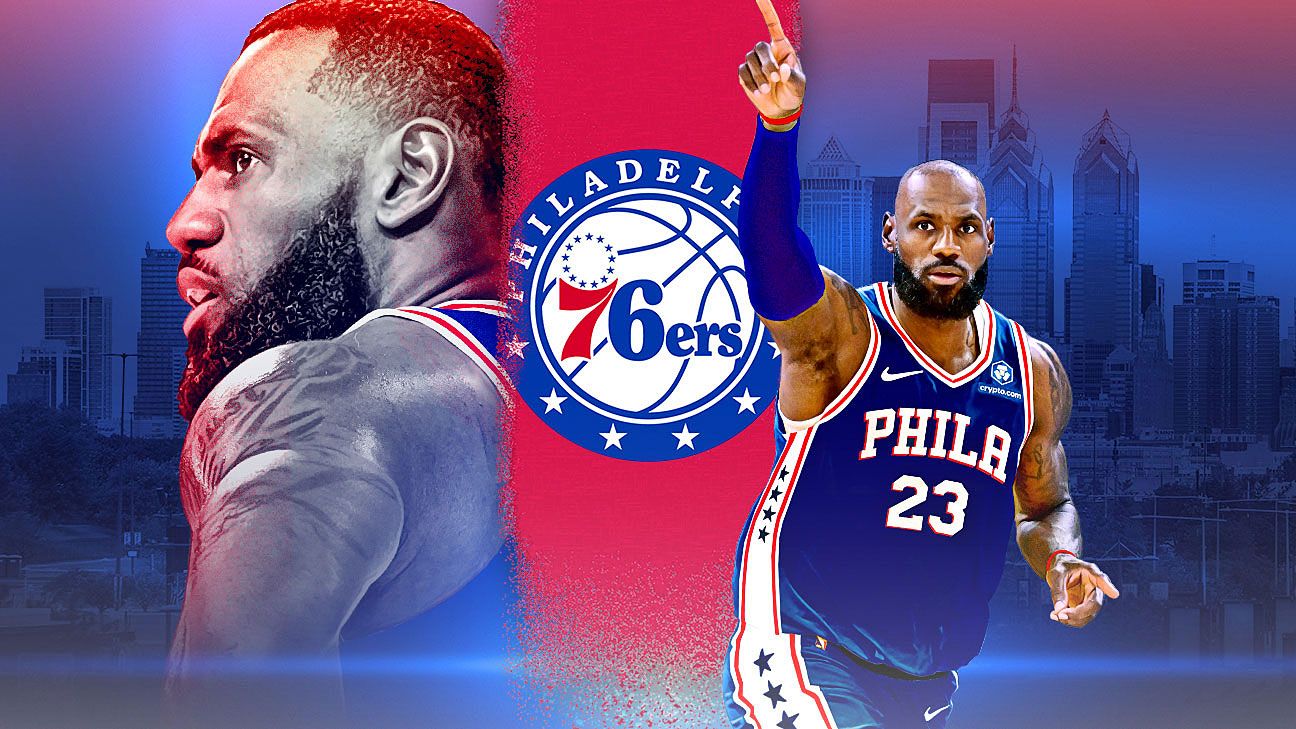
LeBron James, the NBA's leading career scorer, made a significant move on Friday, deciding to join the Philadelphia 76ers after announcing his free agency on June 30. This decision comes nearly a month after he informed the Los Angeles Lakers of his intention to play elsewhere next season, during which he was linked to several teams including the Golden State Warriors, Miami Heat, Cleveland Cavaliers, and Philadelphia 76ers. James' arrival marks the 76ers' second major addition of the summer, following their trade with the Boston Celtics for Jaylen Brown, in exchange for Paul George and a collection of draft picks. This blockbuster signing raises considerable questions about how James will integrate with an already talented roster featuring Joel Embiid, Tyrese Maxey, and VJ Edgecombe, and what the implications are for teams like the Warriors who failed to secure the offseason's biggest free agent.
Sources close to James indicate that his choice to sign with the 76ers was primarily driven by his relentless pursuit of a fifth NBA championship. After carefully evaluating his options, Philadelphia emerged as the optimal environment for achieving this goal. Bob Myers, president of Harris Blitzer Sports & Entertainment, which owns the Sixers, actively courted James by emphasizing Philadelphia's championship potential during an appearance on Rich Paul's "Game Over" podcast. Myers stated, "If he was here, I'd say, 'I honestly believe this is your best chance to win.'" This direct appeal was further reinforced by a concerted campaign from Maxey, Brown, and Embiid, who maintained consistent contact with James over three weeks through texts and phone calls, collectively selling him on the prospect of playing in Philly. An additional factor adding to Philadelphia's appeal was the reported possibility for James to reside in New York City and commute to Camden for practices and Philadelphia for games, as suggested by ESPN's Shams Charania. This lifestyle flexibility, coupled with the opportunity to potentially win a long-awaited title for a dedicated fanbase, resonated with James. Rich Paul had previously noted that had the New York Knicks not won the championship in June, it would have made James' decision to join New York an "easy choice," hinting at the appeal of the region.
The integration of James into the 76ers' lineup brings exciting prospects, particularly for their offense. If all key players remain healthy, the 76ers are poised to possess the most potent offensive attack in the league. VJ Edgecombe, in his rookie season, demonstrated his capability as a primary option post-All-Star break. James is expected to be utilized primarily as a master facilitator, leveraging his exceptional court vision to create opportunities, allowing Brown and Maxey to attack the basket aggressively. While questions about offensive hierarchy existed before James' arrival, given Brown's high usage as a No. 1 option during Jayson Tatum's Achilles rehab and Maxey ranking 15th in usage, James has shown a willingness to take a back seat as a primary scoring option during his time with the Lakers alongside Luka Doncic and Austin Reaves. All players, however, will be required to make sacrifices for collective success. A critical question remains regarding Joel Embiid's fit and health, as he has played only 57 games in each of the last two seasons due to various injuries. When the 76ers opt for small-ball lineups, their wings offer significant athleticism and speed, enabling a dynamic fast-break offense, a strength that James, who led the league in fast-break points last season, could greatly amplify.
Expectations for this star-studded 76ers team are justifiably high, with a clear championship ceiling, a goal Philadelphia has not reached since their last Eastern Conference finals appearance in 2001. The new front office has assembled an impressive array of talent, featuring All-NBA caliber players in James, Embiid, Brown, and Maxey when healthy, complemented by the promising VJ Edgecombe, who looked like a future All-Star during his rookie campaign. On paper, Philadelphia appears to have all the necessary components for a title run: a formidable front line, a balanced backcourt, multiple skilled playmakers, invaluable championship experience, and a robust second unit including Anfer Simons and Dean Wade. Nevertheless, significant variables could impede their full potential, notably James' age and Embiid's recurring health issues. Addressing potential fit questions among the team's proven scorers will be crucial, with coach Nick Nurse likely to position James in a pass-first role, similar to how USA Basketball utilized him as a cerebral point forward during the Paris Olympics. While James previously expressed dissatisfaction as a third option for the Lakers, the 76ers hope this role will align with his championship aspirations. Beyond health, the team's defensive versatility could pose their biggest challenge, as both James and Embiid no longer cover ground with the same agility they displayed in their respective primes. Despite these concerns, the organization's aggressive pursuit of Brown and James underscores their unwavering commitment to winning their first championship since 1983, setting an extremely high bar for expectations.
From a financial perspective, James' signing required careful maneuvering by the Philadelphia front office. Due to having only the veterans minimum exception available, James will sign a two-year contract worth $8 million. His $3.9 million salary represents a mere 2.35% of the salary cap, a notable figure for a player of his caliber. Given that this is a multiyear agreement, Philadelphia does not receive salary cap relief from the NBA, unlike a one-year contract which would count $2.4 million. Consequently, the 76ers will need to waive one of their non-guaranteed contracts, such as Jabari Walker or Dalen Terry, or execute a minor trade to clear sufficient salary space to fit James' contract below the first apron. The team is currently hard-capped because of the signing of Dean Wade for more than $6.1 million of the non-tax mid-level exception. Should a player like Terry be waived or Johni Broome be traded, while it opens a roster spot, Philadelphia would be unable to sign another player until the early stages of the regular season.
LeBron James' decision sends ripple effects across the NBA, immediately impacting his former suitors. The Cleveland Cavaliers can now shift their focus to pursuing James Harden, while the Golden State Warriors are free to negotiate a new deal with Draymond Green. The Miami Heat, having missed out on James, will need to explore other options to add a playmaker alongside Giannis Antetokounmpo. Beyond these immediate consequences, attention will likely turn to the restricted free agent market, where players like Jalen Duren, Peyton Watson, and Bennedict Mathurin have been in limbo awaiting major free agency dominoes to fall. It is important to remember, however, that James' decision was not the sole factor holding up the league's business; the ongoing Kawhi Leonard investigation continues without resolution, complicating matters for the LA Clippers, Toronto Raptors, and any teams interested in engaging in transactions with them.
The reasons behind James' decision to forgo the Golden State Warriors are multifaceted. The Warriors presented a more limited roster and a significantly tougher path to contention compared to other options, particularly given the strength of Western Conference teams like the Oklahoma City Thunder and San Antonio Spurs. The input content describes, "Jimmy Butler III, their second-best player, is rehabbing an ACL tear," when referring to the Warriors, which would indicate a significant roster limitation. If James' primary objective remains a fifth championship, pursuing a title in the Eastern Conference offered a more feasible route than joining an aging and hobbled Warriors core that finished the previous season with only 37 wins. While the Warriors could have offered the allure of a legendary pairing with Stephen Curry, the convenience of living near his family in Los Angeles, and the prospect of a relaxed environment with longtime friends, these factors ultimately proved insufficient. Furthermore, the Warriors did not execute any significant offseason trades to make their proposition more appealing. The Warriors organization had reportedly been aware for weeks that James was trending towards a decision elsewhere.