Lagos at Crossroads: Is it Africa's Fintech Capital or a Looming Infrastructural Disaster?
Lagos is rapidly emerging as Africa's fintech capital, attracting billions in funding and hosting hundreds of startups. However, this growth is increasingly threatened by severe infrastructure challenges, including inadequate power supply, patchy internet, high real estate costs, and an exodus of talent, raising questions about the sustainability of its booming tech sector.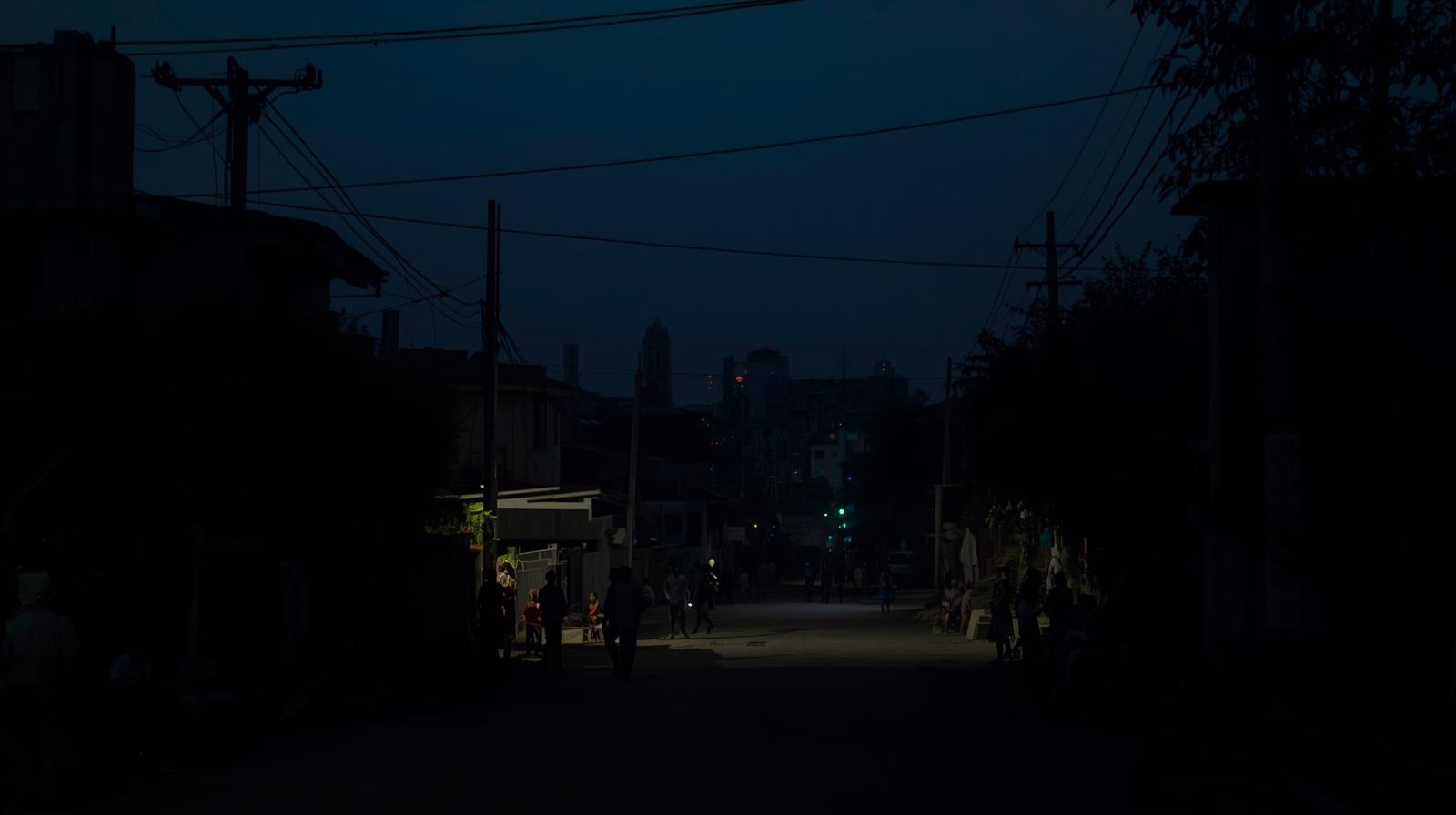
Lagos is rapidly establishing itself as Africa’s undeniable fintech capital, moving beyond its traditional role as Nigeria’s megacity. A 2025 survey by StartupList Africa reveals that Lagos boasts 503 active fintech startups, more than doubling its closest continental rival. The city has seen a remarkable surge of 256 new fintech entities since 2020, with 78 firms now employing 50 or more people, indicating a maturation of its ecosystem from early-stage ventures to significant scale. This growth is further underscored by its startups collectively attracting $6.03 billion in funding, a level of capital flow that many global cities would envy. However, this impressive ascendancy is built upon a foundation of cracking infrastructure, where daily power outages, patchy internet connectivity, and escalating costs threaten to undermine its progress.
The evidence of Lagos’s fintech dominance is compelling, showcasing rapid maturation driven by a combination of capital, scale, and supportive policy. Between 2019 and 2024, the city drew over $6 billion in direct foreign funding for startups, cementing its status as the preferred hub for investors backing African innovation, with most of Nigeria’s tech-investment inflows channeled through Lagos. In 2024 alone, Lagos-based startups raised approximately $158 million, even amidst a challenging global funding landscape. A key highlight was Moniepoint, which achieved unicorn status after securing $110 million in a late-2024 Series C round, propelling its valuation past the $1 billion mark and firmly placing Lagos on the global unicorn map. Policy levers have significantly facilitated this growth, with the Lagos State Government proposing a ₦31 billion (~$20–25 million) Innovation Fund dedicated to startups, research, and infrastructure development, including hubs, tech parks, and risk capital pools. At the national level, regulators have introduced sandbox frameworks and sustained the long-standing cashless policy, both of which have lowered entry barriers for fintech entities to launch digital financial services, payment solutions, mobile wallets, and app-based banking. This powerful blend of investment capital, enabling regulation, and a population eager for improved financial services paints a picture of a robust fintech ecosystem.
Despite this vibrant growth, the logistical, power, and connectivity infrastructure underpinning Lagos’s fintech boom is under severe strain, raising critical questions about the sustainability of current growth levels. The city’s electricity system is grossly inadequate, receiving only about 1,000 MW from the national grid against a demand of 9,000 MW, fulfilling merely 11% of its needs. Consequently, over 80% of homes and businesses depend on expensive generators or off-grid sources, with private generation costing roughly ₦130/kWh compared to ₦50/kWh from the grid, imposing an estimated annual additional cost of ₦5.3 trillion on Lagosians. Entrepreneurs frequently report daily outages; a tech-sector survey indicated that the average firm endures over 30 power cuts per month, each lasting 2–5 hours. Over half of tech firms consider reliable power a “major” obstacle, and about one-third report that outages reduce sales by more than 20%. This forces startups to allocate substantial budgets for diesel generators, solar panels, and UPS systems, thereby eroding profitability and hindering innovation.
Internet and connectivity, fundamental to digital services, also present challenges. While Lagos is Nigeria’s primary digital hub, hosting all eight of the country’s submarine internet cables and radiating fibre backbones, this masks a significant urban-rural divide. Only about 30% of rural Nigerians have electricity compared to 91% in urban areas, and roughly half the country lacks broadband access. Within Lagos itself, despite enjoying fibre ISPs and 4G/5G coverage in many urban areas, “last mile” reliability remains a persistent issue for businesses outside established hubs like Victoria Island and Yaba. In more remote corners, high latency, unstable broadband, and connectivity gaps limit the reach of digital services beyond core business districts.
Real estate and workspace costs further burden the fintech sector. Lagos ranks as Africa’s most expensive city for prime office rent, at approximately $55/m², surpassing even Abuja. This high cost reflects strong demand from finance and technology companies despite the infrastructural weaknesses. Although the city anticipates adding around 95,000 m² of new Grade-A office space across 10 projects by 2027, startups, particularly fintech entities concentrated in areas like Yaba, Ikeja, Victoria Island, and Lekki, still face fierce competition for affordable space. These exorbitant rents, combined with the city’s significant logistics woes, including being ranked the world’s most congested city in 2025 with an average 70-minute one-way commute, severely impact founders. Long commutes drain productivity and morale, often making remote or hybrid work a necessity.
The cumulative pressures on infrastructure are driving a concerning exodus of young professionals and tech talent. Surveys indicate that many graduates and tech workers are relocating to smaller cities that offer lower costs of living and shorter commutes. Housing rents in key Lagos areas have escalated by over 100% in recent years, often outstripping income growth, with one-bedroom apartments costing ₦200k+ compared to ₦50–80k in cities like Ibadan or Jos. Commutes that typically last 1–2 hours in Lagos are often reduced to 20–30 minutes in regional hubs. The increasing feasibility of remote work and improved infrastructure in secondary cities have facilitated this relocation. Both local and international media confirm this talent flight, with many developers citing high costs, pollution, and persistent power failures as reasons to leave. This trend compels startups to offer higher wages or risk losing skilled staff, highlighting a critical threat to Lagos’s fintech boom if infrastructure weaknesses persist.
Lagos thus presents a paradox: it is Africa’s fastest-growing tech city and a magnet for talent, yet its underlying infrastructure seems to belong to a different era. The fundamental question arises: can Lagos fintech sustain its competitive advantage if its power grids, internet pipes, and urban logistics fail to modernize and catch up? Without significant improvements, the current trajectory risks higher operational costs, fragile payment systems, and increased investor caution, as exemplified by Microsoft’s 2024 footprint recalibration in Lagos. To secure its future as a true fintech capital, Lagos needs comprehensive and decisive action: deploying more microgrids, solar solutions, and targeted power upgrades; expanding data centers and fibre networks while enabling satellite backup; decentralizing growth to other Nigerian cities to spread fintech innovation; ensuring regulatory stability and streamlining KYC processes; and crucially, improving workspace affordability, commuting conditions, and overall living standards to retain its invaluable talent pool.