Kitale Film Week: Cultivating Cinema in Western Kenya
In the quiet landscapes of Western Kenya, where maize fields stretch towards the horizon and hills cradle small communities, a new cultural seed has been planted—Kitale Film Week. Far from the bustling hubs of Nairobi or Mombasa, this festival redefines how cinema can grow in spaces often overlooked by mainstream culture. It is more than a celebration of film; it is a declaration that creativity does not belong only to cities of power. Here, young storytellers carry cameras instead of ploughs, capturing the rhythm of village life, the humor of daily survival, and the struggles of identity in a modernizing Africa. Kitale Film Week is not just a stage for polished filmmakers—it is a classroom, a workshop, and a vision for what cinema can mean in places where cultural voices have long been muted. In Kitale, film becomes a language of empowerment, and Western Kenya steps into the screenlight of Africa’s growing cinematic journey.
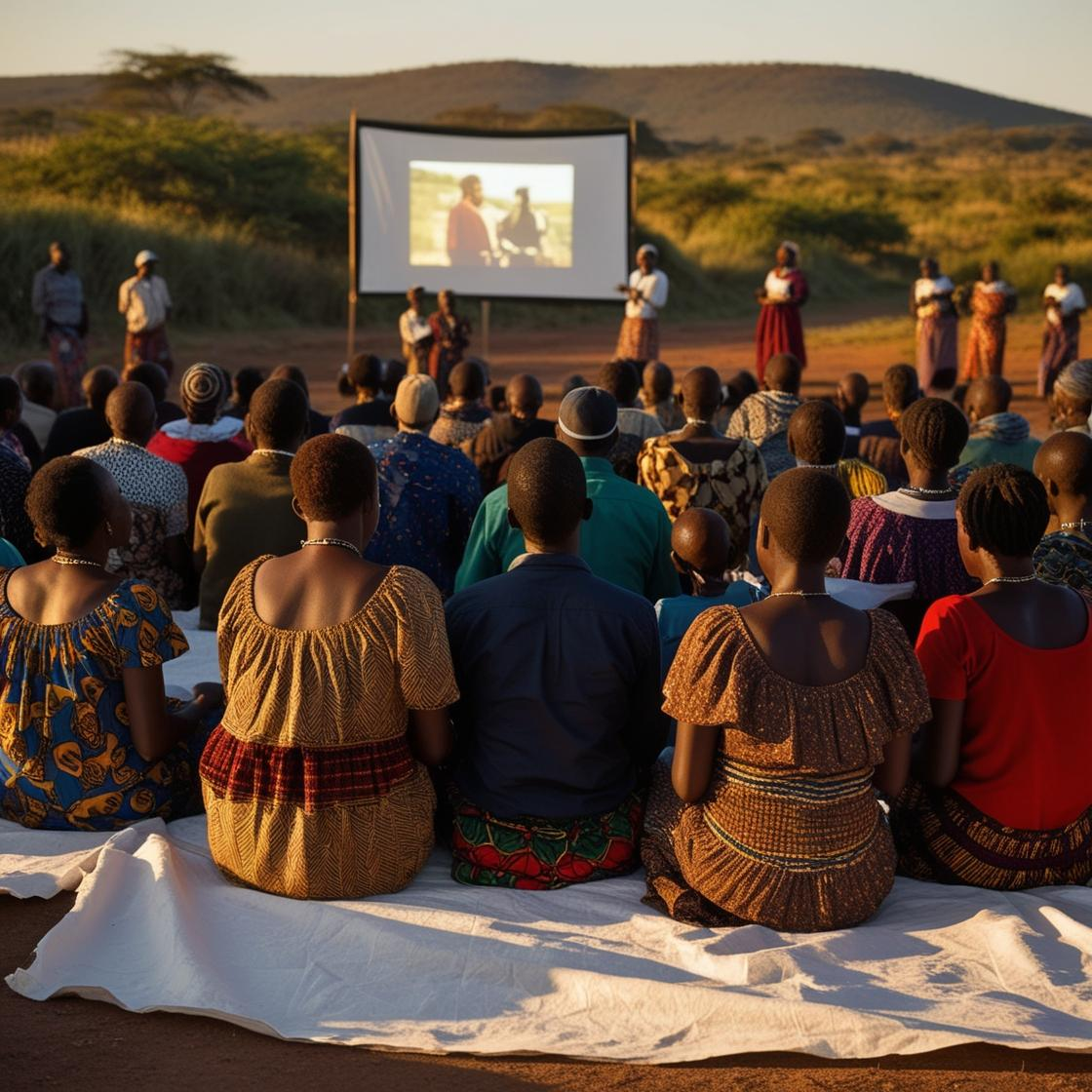
In the undulating landscapes of western Kenya, where maize fields stretch towards the horizon and the rhythms of rural life blend with the bustle of growing towns, a quiet revolution is taking shape. It is not a revolution of politics or protest, but one of light, lens, and storytelling. Kitale, a town long known as an agricultural hub, has now begun to plant new seeds—seeds of cinema, nurtured through the annual Kitale Film Week.
This gathering of filmmakers, students, storytellers, and ordinary lovers of art is far more than just a festival. It is an affirmation that the moving image can belong not only to Nairobi, Lagos, or Johannesburg but also to smaller towns that are often overlooked in Africa’s creative narrative. In Kitale, cinema has become a bridge—between past and future, between tradition and modernity, between global influences and deeply rooted African identity.

SOURCE: thekitafilmweek

A Film Festival Born of Necessity
The story of Kitale Film Week begins with the realization that while Kenya has long been associated with cinema—from the sweeping landscapes immortalized in Out of Africa to the grittier portraits of Nairobi’s urban life—many regions beyond the capital were left untouched by this creative wave. Film training schools, production companies, and festivals were clustered in Nairobi, leaving towns like Kitale on the margins of Kenya’s cinematic conversation.
Yet, Western Kenya has always been rich in storytelling traditions. Oral literature, music, dance, and communal narratives form the backbone of daily life. The absence of film infrastructure did not mean the absence of creativity—it only meant there was no platform to capture it in cinematic form. Out of this necessity, Kitale Film Week was conceived, to bring the art of cinema closer to communities that had long lived in its shadow.
Cinema as a Seed in Agricultural Soil
Kitale’s identity as a farming town provides a poetic backdrop to its film week. Just as farmers nurture seeds with patience and care, so too are filmmakers learning to cultivate ideas, stories, and scripts until they blossom on the screen. The festival serves as fertile ground for nurturing this growth.
Workshops in directing, scriptwriting, editing, and sound bring together local youths who may have never held a camera before but who carry within them worlds of imagination. They are taught that cinema is not a foreign artifact to be imported—it is a living language they can master to tell their own truths. In this sense, Kitale Film Week is not just about showing films; it is about growing filmmakers.
The Power of Local Stories
One of the striking features of the festival is its insistence on local narratives. While international films are screened to expose audiences to global standards, the real treasures are the homegrown stories. Films exploring the complexities of rural livelihoods, intergenerational conflict, love, faith, and the struggles of youth in small towns find their way onto the screen.
For many locals, seeing their lives represented in film is a profound experience. Cinema, which once seemed distant—something set in foreign cities or alien cultures—suddenly becomes a mirror. The laughter of a mother scolding her children, the dignity of a farmer battling drought, the aspirations of a young student dreaming beyond the village—all find expression on the big screen in Kitale.
A Meeting of Worlds
Kitale Film Week also functions as a cultural exchange. It draws participants not only from Kenya but across East Africa and beyond. Ugandan directors bring their tales of Kampala, Tanzanian cinematographers add their visions of Dar es Salaam, while visitors from further afield share lessons from Europe, Asia, and America.
Yet, the spirit of the festival remains rooted in Africa. Unlike global film gatherings where African films are often treated as exotic curiosities, in Kitale they are central. International guests do not come to dominate but to exchange, to listen, and to learn. In this way, Kitale Film Week embodies a Pan-African spirit of collaboration while still maintaining its distinct local heartbeat.

Cinema as Education and Empowerment
For the youth of Kitale, the film week is more than entertainment—it is empowerment. Schools often organize visits for students to attend screenings or workshops. Some discover new passions, finding that the camera offers them a voice in ways the classroom could not. For others, it is an introduction to an industry they never knew existed.
The festival also promotes dialogue on pressing social issues. Films dealing with gender-based violence, climate change, and youth unemployment spark debates among the audience. In this way, cinema becomes a classroom without walls, a tool for reflection and transformation. Kitale Film Week is not escapism; it is engagement.
Challenges Along the Way
Of course, the journey has not been without difficulties. Funding remains a constant struggle. Unlike festivals in major cities with corporate sponsors and government backing, Kitale Film Week relies on grassroots support, small grants, and the dedication of volunteers. Technical challenges—such as limited projection equipment and unreliable electricity—also test the resilience of organizers.
Yet, these challenges have not deterred the festival. If anything, they have strengthened its spirit. Each year, despite the hurdles, the screens light up, the chairs fill with eager audiences, and the applause rises after the credits roll. The determination to keep cinema alive in Kitale is itself a testament to the transformative power of art.
Towards a Future of Rural Cinema
The significance of Kitale Film Week lies not only in its immediate achievements but in the future it represents. It challenges the assumption that creativity flourishes only in big cities. It suggests that smaller towns, with their own textures of life, can produce stories that resonate just as powerfully with global audiences.

SOURCE: thekitalefilmweek

If nurtured properly, Kitale could become a model for rural-based film festivals across Africa. From Bobo-Dioulasso in Burkina Faso to Kisangani in the Democratic Republic of Congo, small towns hold untold stories waiting for platforms. Kitale Film Week shows that it is possible to decentralize cinema, to democratize storytelling, and to give voice to places long neglected in the continent’s creative economy.
Cinema as a Harvest of Dreams
Perhaps the greatest achievement of Kitale Film Week is not the number of films screened, nor the celebrities it attracts, but the dreams it cultivates. For a young girl in Kitale who once thought filmmaking was only for Hollywood, it plants the idea that she, too, can be a director. For a farmer who sees his struggles reflected on screen, it affirms the dignity of his life. For a student who attends a workshop, it opens a path toward a career in storytelling.
Cinema, in Kitale, has become a harvest of dreams—one that does not erase the town’s agricultural identity but enriches it. The maize fields remain, the farmers continue their work, but alongside them grows a new crop: films, filmmakers, and a culture of storytelling that connects Kitale to the world.
Conclusion: A New Dawn in Western Kenya
Kitale Film Week is more than a festival. It is a declaration that rural towns, often forgotten in the march of modernity, can also be homes of innovation, art, and creativity. It shows that cinema does not belong to distant metropolises alone; it belongs to every village, every storyteller, every dreamer.
As the lights dim and the screen flickers to life in Kitale each year, one can sense that something profound is happening. The town is not just watching films—it is watching itself, reclaiming its voice, and projecting it onto the canvas of the world. In doing so, Kitale Film Week becomes not only a cultural event but a symbol of Africa’s broader journey: to tell its own stories, in its own places, with its own power.
In the heart of Western Kenya, cinema has taken root. And like the seeds planted in its fertile soil, it promises a harvest that will nourish not just Kitale, but the entire African imagination.