Kenya's Drug War Heats Up: Murkomen Oversees Fiery Destruction of Sh8.2 Billion Meth Haul
Interior Cabinet Secretary Kipchumba Murkomen witnessed the destruction of an Sh8.2 billion methamphetamine consignment in Mombasa, signaling Kenya's intensified war on drugs. Murkomen warned traffickers of aggressive pursuit of assets and networks, while urging community cooperation and announcing plans for drug rehabilitation facilities across the nation. The move underscores the government's comprehensive strategy to combat drug abuse and trafficking.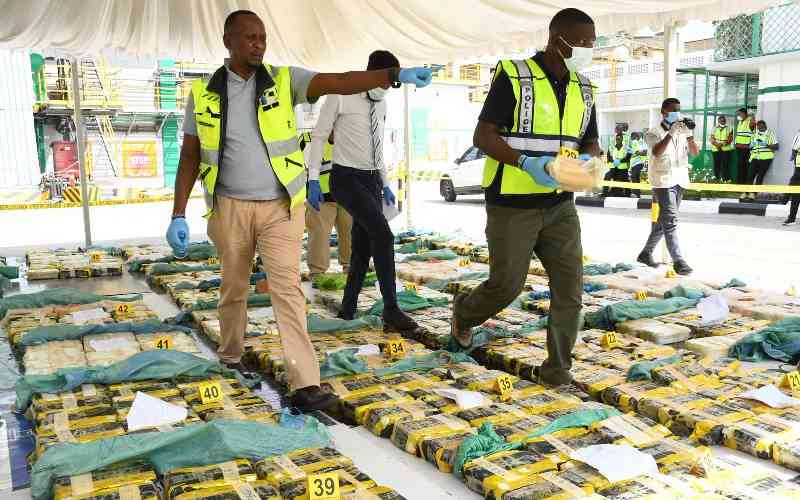
In a decisive blow against illicit drug trade, multi-agency officers in Mombasa, Kenya, on September 24, 2026, oversaw the destruction of a massive Sh8.2 billion consignment of crystal methamphetamine. The operation was personally witnessed by Interior Cabinet Secretary Kipchumba Murkomen at the Bamburi Cement Company, despite a prior controversy surrounding the drug haul which was initially seized in the Indian Ocean in October 2025.
CS Murkomen used the occasion to issue a stern warning to drug traffickers and their financiers, declaring the government's unwavering commitment to not only seize narcotics but also to relentlessly pursue the money, property, and intricate networks that underpin the illicit trade. He underscored the exercise as a significant stride in the government’s intensified war against drugs and illicit alcohol, directly referencing President William Samoei Ruto's directive to aggressively combat these twin menaces.
The comprehensive destruction involved a formidable coalition of agencies, highlighting the multi-faceted approach to addressing drug-related crimes. These included the National Police Service, Kenya Defence Forces, National Intelligence Service, NACADA, Financial Reporting Centre, Kenya Revenue Authority, Kenya Bureau of Standards, Anti-Counterfeit Authority, Assets Recovery Agency, Office of the Director of Public Prosecutions, and the Kenya Coast Guard Service. This collaboration aims to tighten enforcement at borders, target trafficking networks, and deepen cooperation with the Judiciary.
Murkomen emphasized Kenya's precarious position as both a market and a transit country for narcotics, which escalates the threat severity. He stressed the imperative for stronger enforcement mechanisms, which must be complemented by robust prevention, treatment, and rehabilitation programs. The CS also called upon communities, urging Kenyans to actively report individuals involved in drug trafficking and to shield young people from the devastating consequences of substance abuse.
Statistics cited by Murkomen painted a grim picture of drug abuse prevalence in Kenya. The Coast region, particularly Mombasa, registers an alarming prevalence rate of 34.4 percent. Furthermore, one in six Kenyans aged between 15 and 45 has reportedly used at least one type of drug, underscoring the monumental challenge confronting the nation. To address the widespread addiction, plans are underway to establish 164 drug rehabilitation facilities across the country, with 11 counties already expressing their readiness to participate in this vital initiative.
The government's strategy extends to dismantling the financial infrastructure of drug lords. Murkomen explicitly warned that assets acquired through drug proceeds would be aggressively pursued, asserting that seizures would not be limited to the substances themselves. He stated, “We are not just taking drugs off the streets, we are taking the profits off the pockets of the beneficiaries.” Furthermore, premises used for storing or manufacturing illicit substances will also be targeted, with threats of land and factory confiscation. Government officials found colluding with drug dealers face immediate dismissal and prosecution.
Reflecting on the past year's efforts, Murkomen reported that 3,331 individuals had been arrested in connection with drugs and illicit brew nationwide, and 675,535 litres of illicit alcohol had been seized. He concluded by reiterating the government's dual commitment: to relentlessly hunt down traffickers while simultaneously supporting and rehabilitating victims of drug abuse. The CS highlighted that the devastating effects of drugs transcend socio-economic boundaries, affecting even children from affluent families and those in positions of authority, necessitating sustained political will and unwavering cooperation from all citizens to win this critical fight.