John B. Watson Deliberately Taught A Baby To Fear The World. Should Scientific Knowledge Come At The Expense Of A Child's Wellbeing?
In 1920, a psychologist deliberately taught a baby to fear things that had never frightened him before. Little Albert became one of psychology’s most controversial experiments, but did anyone ever undo what they had done to him?
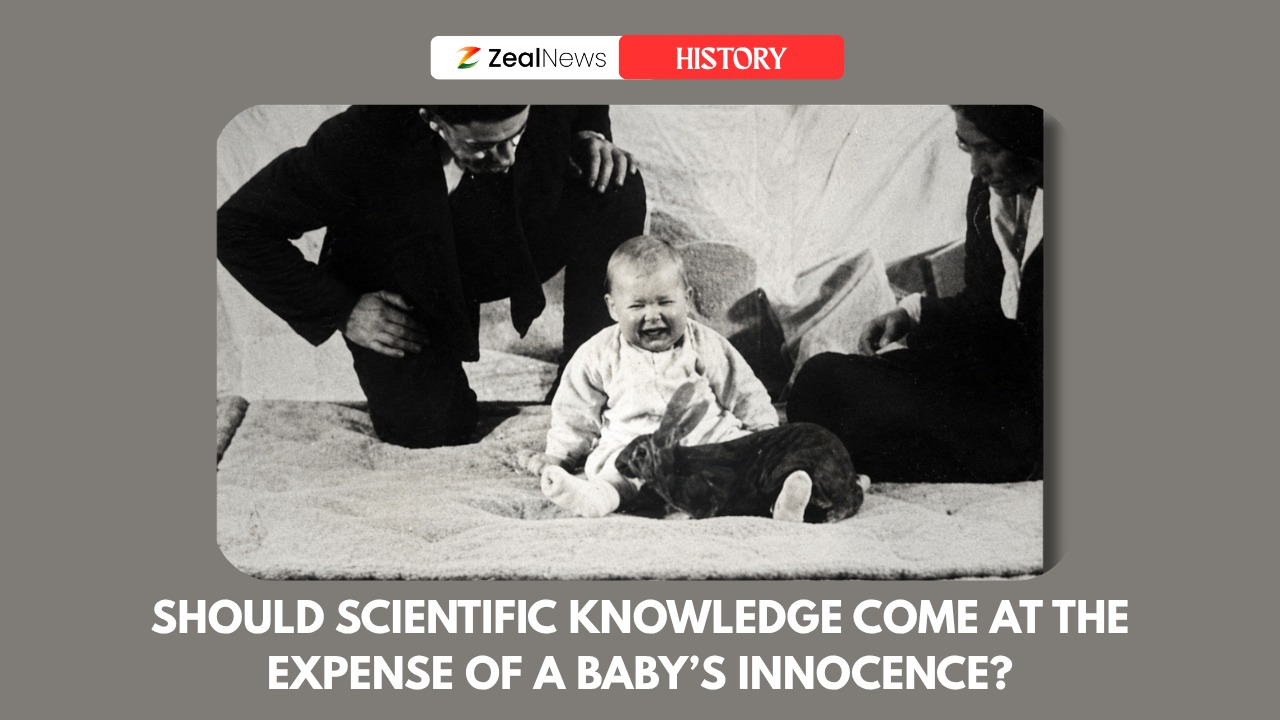
Imagine being a baby who has barely begun to understand the world. You have no words to explain what frightens you, no way to understand why something frightening keeps happening, and no power to ask the adults around you to stop.
Now imagine that the people responsible for your care deliberately teach you to fear something that never frightened you before, simply because they want to prove a scientific theory.
That is the story behind one of psychology's most controversial experiments. In 1920, American psychologist John B. Watson and his research assistant, Rosalie Rayner, conducted an experiment on an infant known to history as Little Albert. Their objective was to investigate whether fear could be learned through experience.
The study became famous, but the questions surrounding it have never entirely disappeared. What happened to the baby after the experiment? Did the researchers ever reverse the fear they attempted to create? And how much can we actually establish about the life of a child whose identity remained a mystery for decades?
The answers reveal a troubling chapter in psychology's history, where scientific ambition collided with the responsibility adults have towards children who cannot protect themselves.
Who Was Little Albert, And Why Did Researchers Choose Him?
The experiment took place at Johns Hopkins University in Baltimore, Maryland, under Watson, a leading figure in behaviourism, a psychological approach that emphasised observable behaviour and learning through experience.
Watson believed that environmental experiences played a powerful role in shaping human behaviour. Working with Rayner, he wanted to investigate whether an emotional response such as fear could be deliberately conditioned in an infant.
Their research paper, published in the Journal of Experimental Psychology in 1920, identified their participant as Albert B. According to their account, he was approximately nine months old when initial observations began. The researchers described him as healthy, calm and generally unafraid of the objects presented to him.
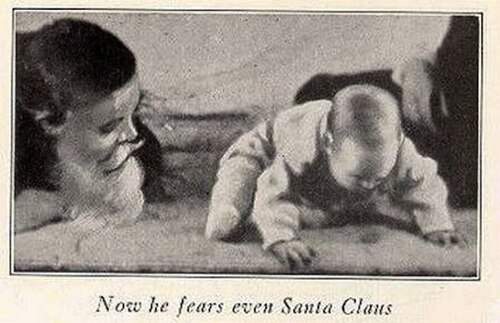
Albert lived at the Harriet Lane Home for Invalid Children, where his mother worked as a wet nurse. His circumstances made him accessible to the researchers, but he was far too young to understand what participation in an experiment meant.
Before attempting to condition fear, Watson and Rayner presented Albert with several objects, including a white rat, a rabbit and a dog. They reported that he showed no initial fear of these animals.
For the researchers, this provided an opportunity to investigate whether a previously harmless object could become frightening through association with an unpleasant experience.
For Albert, however, the experiment was about to become an experience he had no means of understanding or consenting to.
How Did Watson And Rayner Attempt To Teach A Baby Fear?
Little Albert had no reason to be afraid of a white rat. As far as he knew, it was just another unfamiliar thing in a world he was still learning to understand.
When the researchers first introduced the animal, he reportedly reached towards it without showing fear. Nothing about the encounter suggested that the rat would soon become a source of distress.
History
Rewind the Stories that Made Africa, Africa
A Journey Through Time, Narrated with Insight.
But John B. Watson and Rosalie Rayner wanted to find out whether they could change that.
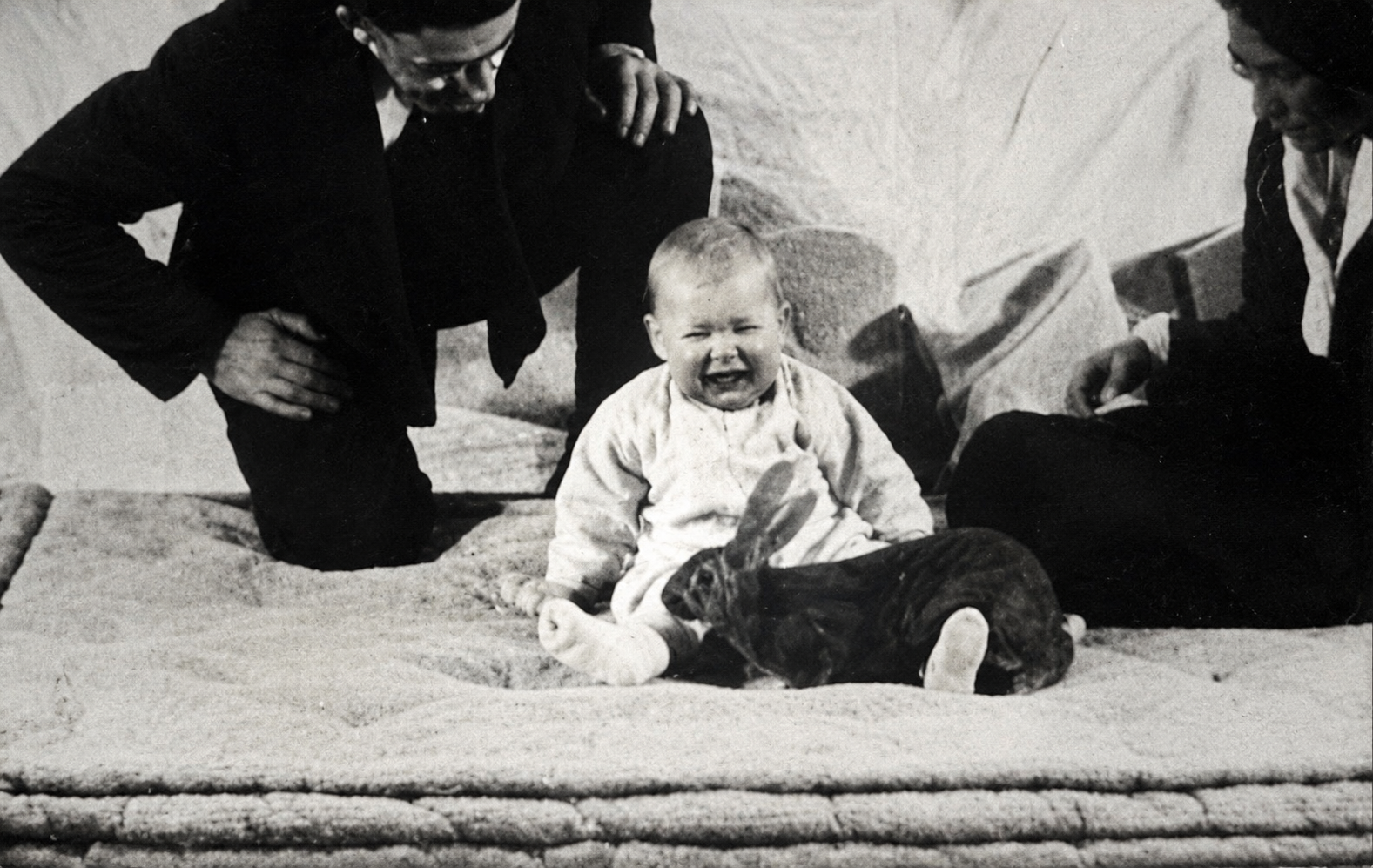
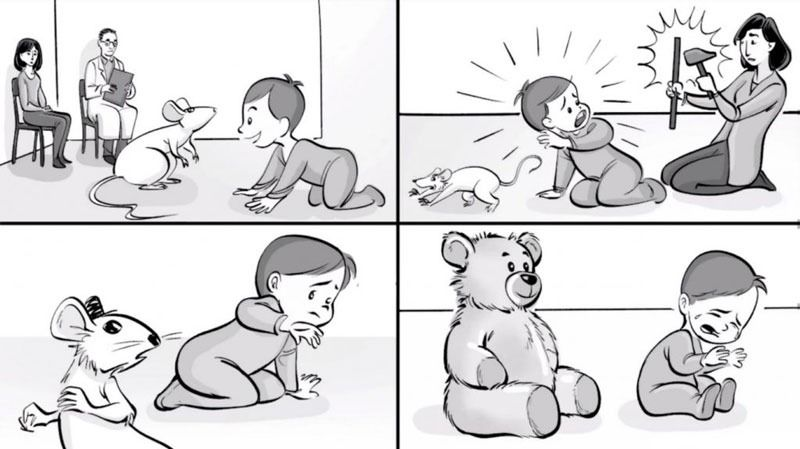
Whenever Albert reached for the rat, they struck a metal bar behind his head, producing a sudden, frightening noise. The sound startled him. Imagine being an infant, reaching for something out of curiosity, only to be met repeatedly with a noise that frightens you.
The researchers continued pairing the rat with the sound. Eventually, they presented Albert with the animal without making the noise.
According to their published account, he became distressed. Albert’s response had changed.
And then things became even more troubling. Watson and Rayner reported that Albert also reacted fearfully to other furry objects, including a rabbit, a dog and a fur coat. The fear they had associated with one object appeared to spread to others.

Think about that for a moment. Albert was too young to understand what the researchers were doing or why these experiences kept happening. He could not tell them what he was feeling, ask them to stop or understand that the objects themselves were not responsible for the frightening noise.
For Watson, the experiment supported his belief that fear could be learned through experience. Psychologists call this process classical conditioning, in which an association between experiences influences how someone responds to a particular stimulus.
The experiment became one of the most famous studies in psychology. But the story is not as straightforward as it is often presented.
When researchers revisited the surviving footage and original records decades later, they questioned whether Watson and Rayner had successfully conditioned Albert's fear to the extent traditionally claimed. A 2021 analysis argued that the procedure was largely ineffective and that some of Albert's reactions could have had other explanations.
That means we cannot confidently claim that Watson permanently made Albert afraid of furry objects, let alone that the child remained frightened for the rest of his life.
But the central ethical problem remains: the researchers deliberately exposed an infant to frightening experiences to see whether they could influence his emotions.
And once they had conducted their experiment, one question became particularly important: what happened to the fear they had reportedly created?
Did Little Albert Ever Recover, And What Happened To Him?
This is the part that makes Little Albert's story even more heartbreaking: Watson and Rayner never documented successfully reversing the fear they had reportedly taught him. When Albert left the hospital, the experiment ended without a clear answer about what happened to those fears.
But did he spend the rest of his life afraid of furry animals? We do not know. The surviving evidence cannot tell us whether his reactions lasted or whether he eventually overcame them.
And then there is the mystery of his identity.
History
Rewind the Stories that Made Africa, Africa
A Journey Through Time, Narrated with Insight.
In 2009, researchers proposed that Little Albert was Douglas Merritte, who died in 1925 at approximately six years old. However, that identification was challenged. A later investigation proposed another candidate, William Albert Barger, who died in 2007 at the age of 87.
Neither identification has been universally accepted, meaning we cannot confidently establish which man was Little Albert or what happened to him after the experiment.
Think about that. More than a century later, we still cannot confidently tell the complete story of the child at the centre of one of psychology's most famous experiments. We do not know whether his reported fears persisted, and we cannot establish their long-term effects.
Watson wanted to understand how fear could be learned. But the story also leaves us asking whether the pursuit of scientific knowledge should ever come at the expense of a child who cannot understand or consent to what is being done to him.