Japan Elects Its First Woman Prime Minister: Sanae Takaichi, The 'Iron Lady 2.0'
Sanae Takaichi becomes Japan's first woman prime minister, a staunch conservative focused on defense and economic security. Leading a minority government amidst LDP struggles, she faces challenges including economic revitalization and gender imbalance, while vowing to increase women's representation in her cabinet.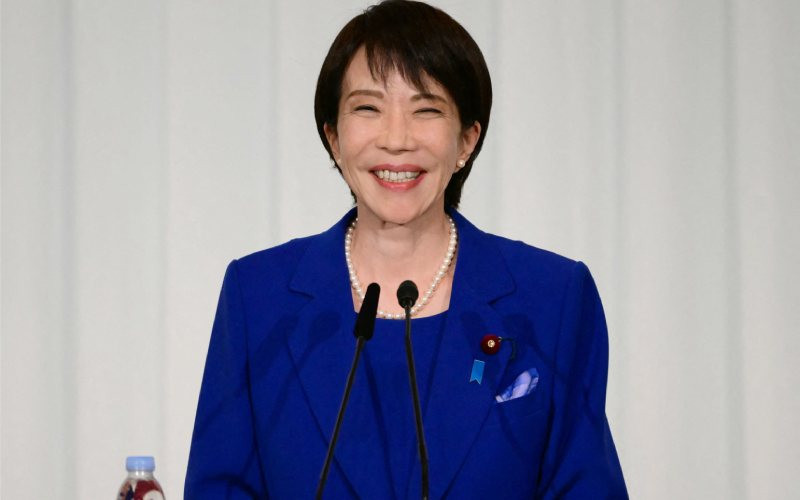
Sanae Takaichi has made history as Japan's first woman prime minister, assuming office on Tuesday following her victory in the ruling Liberal Democratic Party (LDP) leadership contest earlier this month. The 64-year-old staunch conservative, an admirer of former British Prime Minister Margaret Thatcher, was appointed by parliament, becoming Japan's fifth head of government in as many years. While her election marks a significant step for women's participation in politics, analysts suggest it does not necessarily signal a feminist triumph, given her pronounced hardline stance on defense and economic security.
Takaichi has positioned herself as a strong leader focused on national interests. A former economic security minister, she has been a vocal critic of China's military expansion in the Asia-Pacific and a staunch supporter of Taiwan, emphasizing the importance of strengthened security cooperation between Taipei and Tokyo. Historically, she has also been a regular visitor to the controversial Yasukuni Shrine, which honors war dead including convicted war criminals and is viewed by some Asian nations as a symbol of Japan's militarist past. However, in a recent shift, she reportedly toned down her rhetoric on China and abstained from visiting the shrine during a recent festival.
Her ascension to power comes at a challenging time for the LDP, which has seen voters deserting the party due to inflation and a recent slush fund scandal. The anti-immigration Sanseito party has simultaneously been gaining ground, influencing Takaichi's tough stance on immigration and foreign tourists, which were prominent issues during the LDP leadership race. After a previous coalition partner, Komeito, withdrew due to discomfort with her conservative views and the LDP scandal, Takaichi forged a last-minute alliance with the reformist, right-leaning Japan Innovation Party (JIP). This new minority government will face the daunting task of pushing legislation through both houses of parliament and has a bulging in-tray, including a scheduled visit from US President Donald Trump.
Despite her historic appointment, Takaichi's views on gender place her on the right wing of the already conservative LDP. She staunchly opposes revising a 19th-century law that mandates married couples share the same surname, a rule that predominantly results in women adopting their husband's name. She also advocates for male-only succession within the imperial family. While she has spoken candidly about her personal experience with menopause and vowed to raise awareness about women's health struggles, her overall conservative approach to gender norms is noted. Nevertheless, in her campaign, she pledged to elevate the gender balance in her cabinet to "Nordic" levels, a significant ambition given Japan's ranking of 118 out of 148 in the World Economic Forum's 2025 Gender Gap Report, primarily due to the underrepresentation of women in government and corporate boardrooms.
Economically, Takaichi echoes the "Abenomics" policies of her political mentor, former Prime Minister Shinzo Abe, supporting aggressive monetary easing and substantial fiscal spending. If reinstituted, these policies could potentially impact markets. She has also expressed strong concerns regarding crime and the economic influence of foreigners in Japan, advocating for stricter regulations—a move seen as an attempt to appeal to voters who have shifted towards nationalist, anti-immigration parties. On international trade, Takaichi has stated her readiness to renegotiate deals with the United States if they are perceived as detrimental or unfair to Japan.
Public sentiment towards the new premier is varied. While some citizens appreciate her clear, strong-minded approach, others hope she will introduce policies specifically from a woman's perspective, such as support for childcare and women returning to work after childbirth. Her administration faces significant challenges, including reversing Japan's declining population, revitalizing a flatlining economy, and restoring the LDP's standing after a series of poor election results. Many, like pensioner Satoshi Sakamoto, hope she will be a prime minister who can "clearly say 'No' when needed," especially in international negotiations.