Influenza Strain In Ghana; Readiness Under The Lens.
Ghana Health Service (GHS) has confirmed an outbreak of Influenza A (H3N2 and H1N1) in several regions.

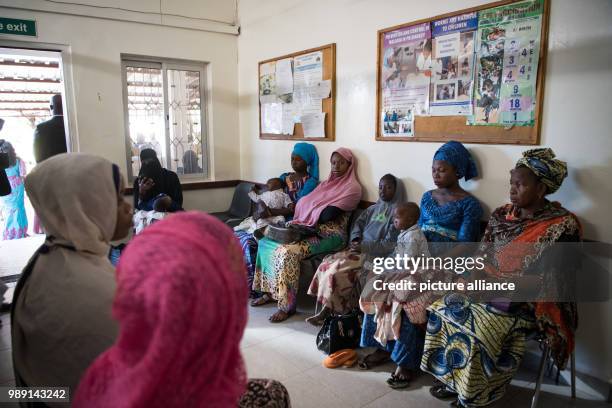
There is a rich scent of sanitiser and a constant hacking cough that permeates the air within the waiting area of the Mamprobi Polyclinic in Accra.
Parents nervously adjust masks on the faces of their children, glancing at the line of bodies stretching towards the triage nurse.
This scene, repeated from Cape Coast to Kumasi, is the human face of a silent crisis: the Ghana Health Service (GHS) has confirmed an outbreak of Influenza A (H3N2 and H1N1) in several regions.
This spike isn't just a brief annoyance; it's an immediate stress-test of the nation's disease surveillance capacity, forcing a question of whether the nation's last pandemic adequately prepared the country for the next microbe menace.
The Anatomy of the Surge.
The epidemic in question is characterized by a seeming peak in Influenza-Like Illness (ILI) cases, wherein laboratory proof identifies the H3N2 and H1N1 strains specifically.
The largest numbers are being seen in places like Greater Accra, Central, Bono, and Eastern, demonstrating how urban and peri-urban regions become a vector due to their interconnectivity.
Such a peak occurs after Ghana's typical seasonal respiratory cycle; the cooler, typically dustier seasons provide a convenient window for transmission. However, the intensity of the speed of spread is arousing suspicion.
Areas like crowded tro-tros (public transport buses), market stalls, and most importantly, schools, are now centers. Data from GHS sentinel sites indicate the scale of the problem.
For instance, Greater Accra alone recorded over 40 laboratory-confirmed cases in a recent fortnight, a number public health specialists regard as the tip of an iceberg owing to underreporting.

Ghana's System of Surveillance– What It Is Like.
Ghana's influenza surveillance has its roots in a sentinel network– meticulously chosen clinics and hospitals that pick up patients with symptoms of ILI on a systematic basis and subsequently refer them for laboratory confirmation.
The system is not new; it proved its elasticity when it was rapidly adapted into the response to COVID-19 for the tracking of various respiratory pathogens.
Despite this advancement, the system is inherently defective. It operates in significant measure in reactive mode, depending on collection from these sites rather than producing proactive, predictive signals.
Further, there are no clearly defined, evidence-based influenza epidemic levels, and therefore the response comes too late when case numbers are already high.
The greatest long-term challenge may prove to be sustainability. A significant portion of the system’s operational capacity– from specialised lab supplies to data infrastructure– remains dependent on external donor funding.
Dr. Keziah Sarpong, a public health specialist working with a local think tank, points out the precarious balance: "We’ve made tremendous strides in data collection rigor. But the moment donor dollars tighten, the entire pipeline from sample transport to timely reporting gets congested. Progress is being maintained externally, not intrinsically."
The Human Factor: Frontline Stress.

The flu pandemic is quickly being experienced in terms of real stress in key services. School enrollment is dropping as teachers and children become infected, and the Ghana Education Service has been forced to issue notices.
Hospital nurses and doctors are dealing with full wards of patients, differentiating between COVID-19, flu viruses, and other respiratory illnesses with limited resources.
"If they are symptomatic, we instruct them to wear a mask and avoid public chop bars," a Central Region health officer replied, refusing to divulge his name. "The advice is simple, but we cannot provide rapid, bulk testing to confirm each case. We encourage vigilance and hygiene because that is the most long-lasting defence we have at our disposal."
This emphasis echoes the GHS's advice of citizens wearing masks when ill, frequent handwashing, and immediate self-isolation for symptomatic individuals.
Actions Taken– and Their Limits.
In order to counteract the situation as it escalates, the GHS has rolled out various tactical measures. They include increased surveillance at points of entry and among populations, increased RDT at strategic locations, and the dissemination of updated clinical guidelines for the management of serious ILI cases.
Coordination with the GES is intended to create set protocols for responding to classroom outbreaks. These initiatives are yielding dividends. Additional testing is providing a clearer image of transmission pathways. But the overall response structure is still manual in large part.
While there is increased capacity to collect data, aggregation, analysis, and dissemination of such data for real-time decision-making is sluggish.
If transmission accelerates very quickly, this lag can prove to be critical, i.e., with higher levels of activity, the response is still largely after the fact.
What This Means for Ghana's Health Security.
Ghana's response to the early stages of the COVID-19 pandemic showed an excellent ability to respond and mobilise at a national level. The current flu surge shows, however, that there are structural weaknesses within key health infrastructure intact.
This has broader implications for Ghana's long-term health security. The crisis is not the flu itself but the lack of an independently funded, fully digitized, and real-time reporting system.
To be so dependent on foreign aid for normal system functioning, as is the case now, poses a fundamental sustainability risk.
Future pandemics or future outbreaks will necessitate speed that only locally financed, self-sustaining, and anticipatory systems can deliver. The stress of the seasonal flu is a low-risk signal of a high-risk future.
Public Responsibility and Communication.
Effectiveness in controlling an outbreak is teamwork. In Ghana, public awareness has a mammoth responsibility, especially in undoing the impact of misinformation, the tardiness in seeking professional care, and the common tendency towards self-medication.
Sensitisation through public awareness campaigns on radio, TV, and social media is the most important. For a native-digital population, the effectiveness of the response depends on how much citizens believe official public health communication.
If messages are concise, consistent, and empathetic, compliance with critical health interventions like testing or self-quarantine goes up manifold.
Lessons in Vigilance
The flu epidemic, although a seasonal phenomenon that can be forecast, is a high-drama stress-test for Ghana's entire health security apparatus.
It reminds everyone– from Accra policymakers to the dispensary nurse in rural areas– that disease surveillance is as robust as the continued data and local investment that underpin it. Having an adaptive system is not enough; the system must be robust enough to forecast.
The World Health Organization Ghana Country Director just restated the critical message: "The burden of any surge is reduced by the speed of the public health response. That speed is a function of preparedness, not reaction."
Ghana's public health problem isn't just a matter of curing the cough; it's a matter of bu
ilding the entire national monitoring system so the next one won't become a catastrophe.