Hyundai Plans 58 New Vehicles for the U.S. by 2030. Here’s What’s Coming
Hyundai and Genesis are set for a major product expansion in the U.S., launching 58 new vehicles by 2030. This blitz includes the 2028 Santa Fe EREV with 600 miles of range, new body-on-frame SUVs, and an array of N performance models, alongside advanced battery technology and autonomous vehicles.
Hyundai and Genesis are preparing one of their biggest product expansions in the United States, with 58 new vehicles planned for the market by 2030.
The strategy covers much more than electric cars. The companies are preparing new hybrids, extended-range electric vehicles (EREVs), off-road SUVs, performance models and commercial vans as they try to compete across more parts of the American auto market.
Hyundai alone plans to introduce 36 new vehicles in the U.S. during the period, while its luxury brand, Genesis, will add the rest.
The plan was announced by Hyundai Motor Company President and CEO Jose Muñoz during the company's 2026 CEO Investor Day in Seoul.
An EREV With Up to 600 Miles of Range
One of the most notable vehicles in the pipeline is the 2028 Hyundai Santa Fe EREV, which is expected to arrive in the first half of 2027.
An EREV is different from a conventional hybrid. Its electric motors drive the vehicle, while a petrol engine works mainly as a generator to recharge the battery when needed.
Hyundai says the Santa Fe EREV could offer up to 600 miles of range, making it particularly interesting for drivers who want electric driving without worrying as much about charging infrastructure.
The vehicle is expected to use a dual-motor setup, potentially giving it all-wheel drive, alongside a 1.6-liter four-cylinder engine serving as the range extender.
Hyundai is also developing a new battery cell for its upcoming electrified vehicles. The company says the technology will have twice the energy density of its current nickel-cobalt-manganese batteries while also being lighter and faster to charge.
If those claims translate into production vehicles, the technology could become an important part of Hyundai's next generation of EVs.
Hyundai Is Also Going After the Off-Road Market
Electric vehicles are only one part of the company's U.S. strategy.
From 2028, Hyundai plans to enter the body-on-frame SUV market, putting it in direct competition with vehicles such as the Ford Bronco, Jeep Wrangler and Toyota 4Runner.
The company has already shown concepts that point toward this direction.
The Hyundai Boulder is designed as a traditional off-road SUV, while the Crater takes a more performance-oriented approach with rally-inspired styling.
Latest Tech News
Decode Africa's Digital Transformation
From Startups to Fintech Hubs - We Cover It All.
Hyundai's use of shared platforms could eventually lead to several vehicles based on the same architecture, including a pickup truck.
That would represent a significant expansion for a company that has traditionally relied heavily on crossovers and unibody SUVs in the U.S.
More Hybrids, Performance Cars and Vans
Hyundai is also updating some of its existing models.
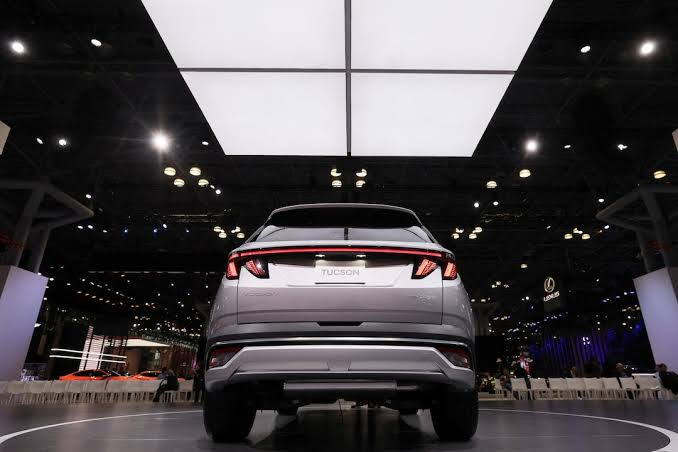
The next-generation Tucson is expected to arrive in the U.S. with a larger body and a hybrid powertrain producing 242 horsepower and 280 lb-ft of torque.
The company is also preparing a new Elantra, with a more angular design featuring slim headlights and flared bodywork.

Performance cars will receive attention too.
Hyundai plans to introduce seven new N models by 2030, including a small SUV and another high-performance all-wheel-drive vehicle.
The company is also creating a new N subbrand positioned between its N Line models and its more extreme N performance vehicles. These cars are expected to retain powerful powertrains while offering softer suspension and more comfortable interiors for everyday driving.
Commercial vehicles are another part of the expansion.
Hyundai is targeting the large U.S. van market, where models such as the Ford Transit and Mercedes-Benz Sprinter dominate. Its global Staria and larger Solati van could potentially form part of that push, although Hyundai has not confirmed every model that will make the journey to America.
Hyundai Is Betting on More Than Electric Cars
The breadth of the plan is significant because Hyundai is not betting its U.S. future on a single type of vehicle.
The company is preparing EVs and EREVs alongside hybrids, petrol-powered vehicles, off-road SUVs, performance models and commercial vans.
That approach reflects the changing American market, where demand for electric vehicles has grown but consumers continue to buy hybrids and conventional vehicles in large numbers.
Hyundai is also expanding into autonomous driving. The company says it will begin delivering autonomous Ioniq 5 vehicles built for Waymo this year, adding another piece to its technology strategy.
For Hyundai and Genesis, the next four years will therefore be about much more than adding a few new models.
Latest Tech News
Decode Africa's Digital Transformation
From Startups to Fintech Hubs - We Cover It All.
The companies are trying to build a broader presence across the U.S. market — from family SUVs and electric vehicles to off-roaders, performance cars and commercial vans.
If the 58-vehicle rollout stays on schedule, Hyundai's lineup could look very different by 2030.