How Bokku Found a Billion-Naira Idea In A Grocery Chain That Understood Nigeria Before Nigerians Did
Bokku Mart built almost 200 stores in four years, not by competing with other Supermarkets or Malls but by undercutting the neighbourhood kiosk. An analysis of its pricing strategy, Nigeria's informal market, and what the 95% of Nigerians who never shop in supermarkets actually built without realising it.
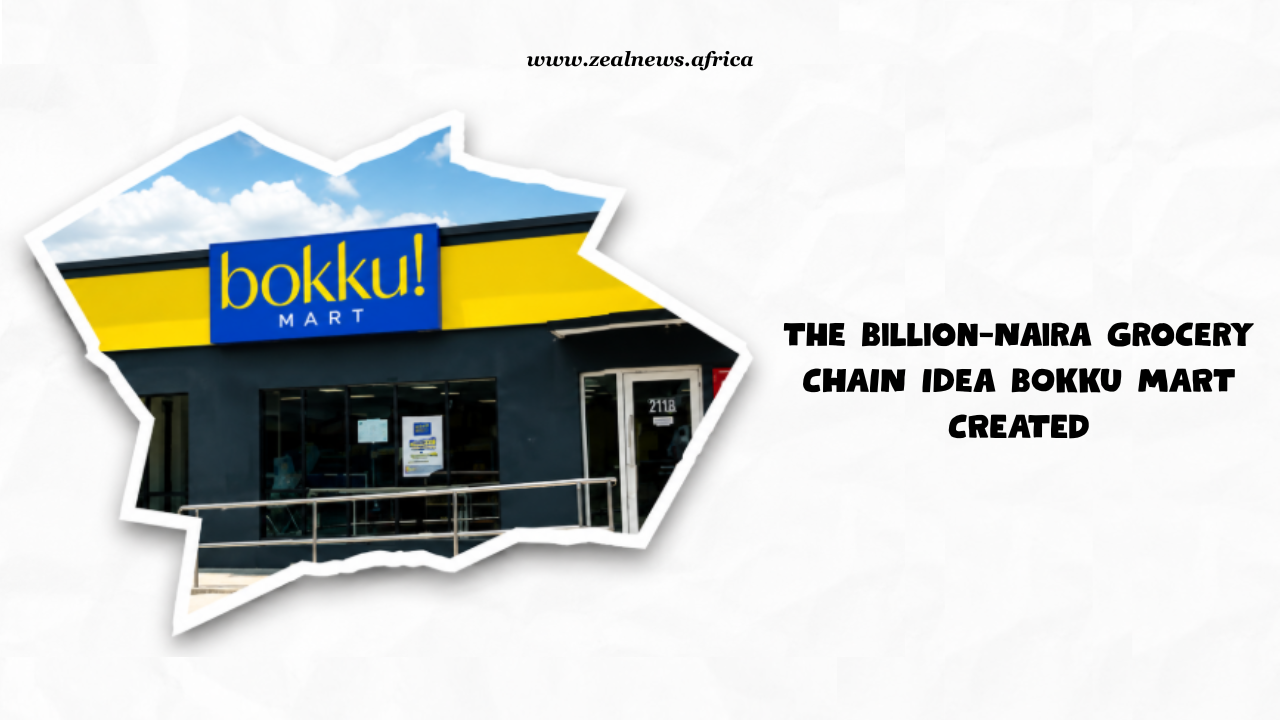
This is not an advertisement or a PR piece for Bokku. It is an honest look at a market idea that found the gap everyone else ignored.
Buying from the shop five poles away from your home rather than the one right next door is never about laziness, disloyalty or even convenience; it has always been a tactic.
Those few extra naira saved on noodles, cooking oil, toothpaste or even a bar of soap did not vanish into nothing; they quietly became transport fare, a child's lunch money, the balance that kept a household from a difficult conversation at the end of the month.
Those extra naira, no matter how small, have been a lifeline, saving many households.
This is because Nigerians have always understood that every naira has a second life somewhere, and they have always been willing to walk further to give it one.
Bokku Mart did not invent that instinct. It simply built a business model around it and, in doing so, quietly became one of the most consequential retail stories in Nigeria in the last four years.
The Sixty Naira That Is Actually Six Hundred
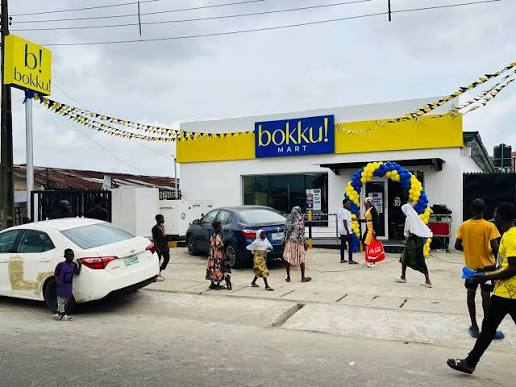
The numbers in the video that sparked this conversation are worth examining carefully. At the time of filming, a single pack of Indomie at Bokku was priced at ₦190.
But take a walk two streets away, at a neighbourhood kiosk or corner store, and the same noodle is sold for ₦250. That is a ₦60 difference per pack, about 20% cheaper.
On a single purchase, that gap sounds modest. Scale it to ten packs, and it becomes ₦600 saved in a single grocery run. Scale it to a month of household cooking, and the number starts to carry real weight.
Note: prices shift with inflation, and Bokku's Indomie pack currently sits closer to ₦250, which narrows the gap compared to the video's figures.
But the principle holds regardless of the exact number: Bokku consistently undercuts its nearest competitors by meaningful margins across hundreds of products, including noodles, cooking oil, pasta, toiletries, and household staples.
A price comparison published by Zikoko confirmed that across 26 everyday items tested in Lagos, Bokku came in cheapest on the majority of core grocery categories.
For a country where households spend approximately 60% of their income on food, compared to around 6.5% in the United States, that margin is not a convenience.
It is a financial strategy. In America, grocery shopping is an errand. In Nigeria, it is a calculation.
The Market Nobody Was Building For
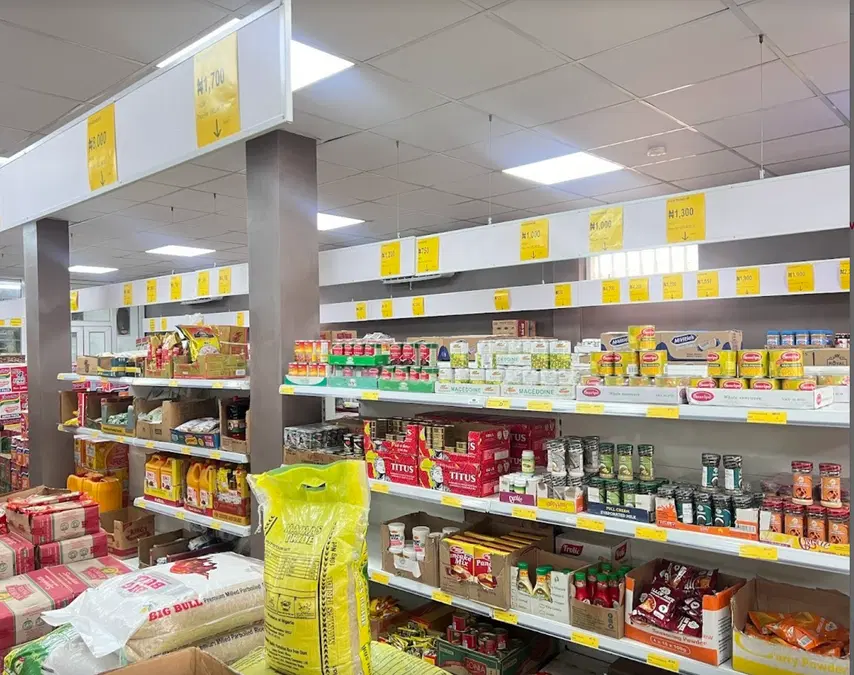
Only about 5% of Nigerians buy groceries from formal supermarkets. The remaining 95% shop at open markets, neighbourhood kiosks, and the woman selling from just outside her gate.
This is not a developing market waiting to graduate to formal retail. It is a mature, deeply embedded system with its own logic, its own trust relationships, and its own economics.
Every major international supermarket chain that entered Nigeria treated that 95% as a problem to be solved, a population to be formally converted. Shoprite, Game, Woolworths, Mr Price, True Value, they arrived with large stores, imported product ranges, and premium positioning, then exited with the quiet defeat of institutions that had misread the room.
Bokku's CEO, Michael Chudi Ejekam, arrived at a different conclusion. A property developer who spent years building projects totalling over $700 million in value, including Ikeja City Mall and Jabi Lake Mall, Ejekam understood retail infrastructure from the supply side before he ever stood behind a counter.

He had long argued publicly that Nigerian supermarkets needed to source locally rather than lean on imports, because every time the naira weakened, import-dependent retailers suffered cascading price increases that their customers could not absorb. He had watched that cycle happen repeatedly. When he launched Bokku, he built the supply chain he had been prescribing from the outside.

Instead of one large store, Bokku opened many small neighbourhood ones, close enough to the kiosk and the corner market to compete on proximity, stocked with locally sourced products that did not collapse in price whenever the naira moved.
Four years later, the chain has quietly built close to 200 stores, making it one of the most widespread grocery networks in the country. It did not compete with Shoprite. It competed with the woman selling from her gate, and it did so by offering the same convenience at a lower price point, consistently.
The Market Move and the Women Who Became the Distribution

The most strategically significant thing Bokku has done is not the noodle pricing. It is the bread. Bokku Bread, sold for between ₦1,100 and ₦1,500 a loaf, has now become a product people seek out specifically, not just something picked up on the way to the checkout.
The bakery operation has grown fast enough that Bokku reportedly hired 200 bakers within a year of launching it. But the sharpest part of the strategy was the distribution model built around it.
Bokku allows market women and informal traders to purchase 15 to 20 loaves at a time for resale outside the stores. In doing so, the company turned its most direct informal competitors into an unpaid distribution network.
The market women who might otherwise have sold customers away from Bokku were instead moving Bokku's product into the streets, taking a margin, and expanding the brand's reach into the exact channels that formal retail has always struggled to penetrate. It is a business model that understands the informal economy well enough to use it rather than fight it.
What Nigerians Were Actually Doing While They Shopped
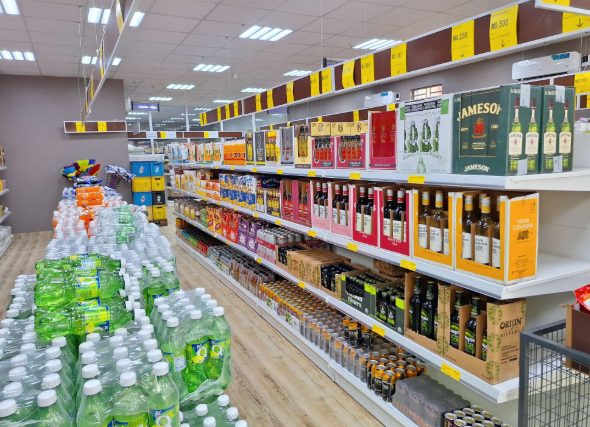
The majority of people who walked into a Bokku store in its first years were not thinking about market disruption or retail economics. They were thinking about the noodles being ₦60 cheaper and what that meant for the rest of the week.
That is the Nigerian consumer in its most honest form, not brand-loyal, not aspirational in the retail sense, but relentlessly rational about where money goes further. Survival first. Everything else after.
What most of them did not realise is that while they were finding a lower price, they were also building a company. Every purchase was a data point that told Bokku which products to stock more of, which neighbourhoods needed another store, which informal channels could be folded into the supply chain. The customers were not just beneficiaries of the model. They were the model.
Companies that departed Nigeria are now reportedly studying Bokku's approach. The lesson being reverse-engineered is one that was visible all along to anyone paying attention to how 95% of the country actually eats: you do not win the Nigerian grocery market by building the most impressive store. You win it by being the closest option with the lowest price, stocked with what people actually cook.
Sometimes the next billion-naira business is not inventing something new. Sometimes it is breaking into a new market and modelling the idea of selling Indomie for ₦60 less, and understanding, before anyone else does, exactly how much that ₦60 is worth to the person buying it.