High-Stakes Trial Set for Venezuelan President Nicolás Maduro and Wife in 2027
A Manhattan federal judge has scheduled the narcoterrorism trial for former Venezuelan leader Nicolás Maduro and his wife, Cilia Flores, for June 1, 2027. They face charges including narcoterrorism, cocaine smuggling, and weapons offenses, stemming from an alleged vast drug trafficking operation led by Maduro. The defense plans to argue diplomatic immunity, while the charges also touch upon Maduro's contested legitimacy as Venezuela's leader and claims of election rigging.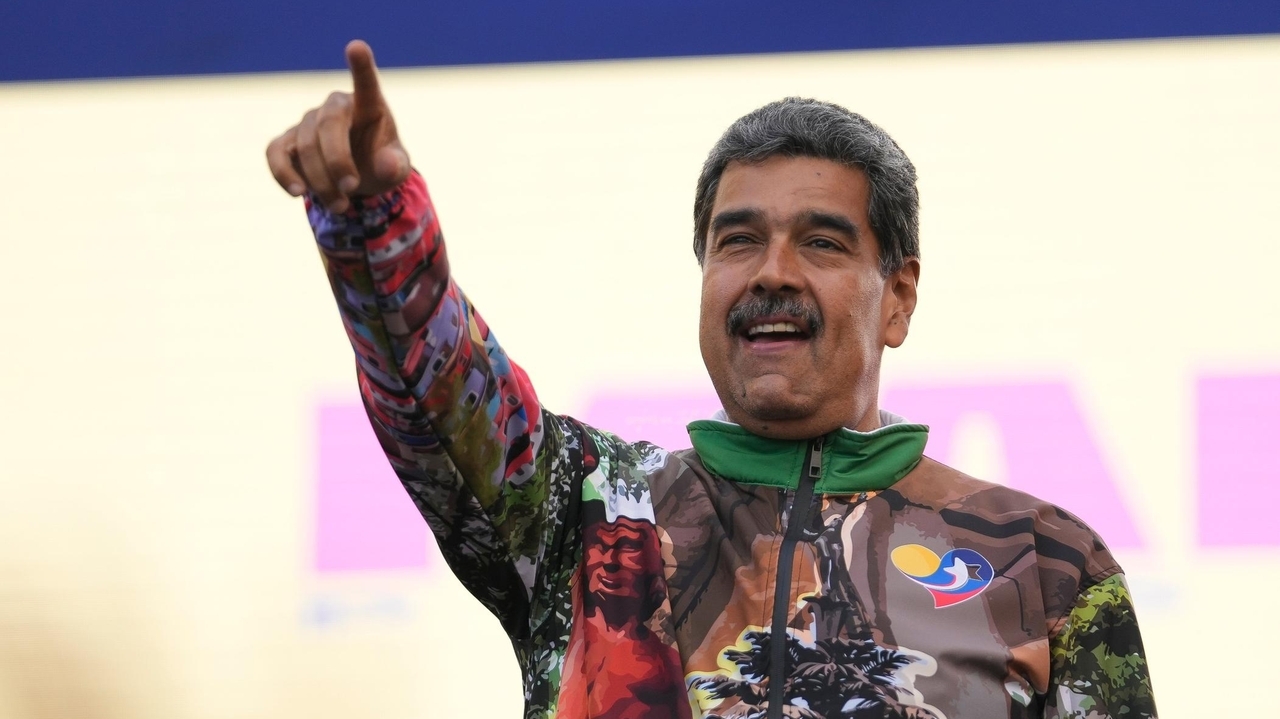
A Manhattan federal judge has set June 1, 2027, as the trial date for the narcoterrorism case against the former Venezuelan leader, Nicolás Maduro, and his wife, Cilia Flores. The couple, aged 63 and 69 respectively, have been held in a Brooklyn federal jail since January, following a dramatic nighttime raid by U.S. military forces on the presidential palace in Caracas, which led to their arrest and transfer to New York to face numerous charges.
Federal prosecutors allege that Maduro, who was succeeded by then-vice president Delcy Rodríguez days after his ouster, spearheaded a vast narcotics trafficking operation. This enterprise purportedly leveraged Venezuela's military and governmental bureaucracy to facilitate the smuggling of cocaine and other illicit drugs into the United States. During a court hearing that lasted less than 20 minutes, Maduro and his wife appeared noticeably thinner than in previous appearances. Maduro, wearing shaded glasses and tan prison scrubs, greeted his legal team, then sat taking notes while listening to an interpreter relay the proceedings through headphones.
The indictment further details that the former strongman collaborated with the Sinaloa cartel, the Marxist terrorist group FARC, and the street gang Tren de Aragua, employing violence and murder to enforce their drug trafficking network. Maduro faces one count of narcoterrorism conspiracy, while he and his wife are also charged with cocaine smuggling and weapons offenses. Both entered pleas of not guilty during their January arraignment, with Maduro famously stating to U.S. District Judge Alvin Hellerstein, "I am innocent. I'm a decent man. I am president of my country."
Prosecutors have labeled Maduro's network the "Cartel of Suns," asserting it comprised high-ranking Venezuelan government and military officials. This network allegedly provided military-grade weapons to the FARC, enabling them to maintain brutal control over a drug trafficking operation spanning South America, Central America, and into the United States. The indictment also accuses Maduro and Flores of ordering beatings, kidnappings, and the murder of a Caracas drug dealer.
Defense attorney Barry Pollack, known for representing Martin Tankleff, a man acquitted of his parents' murder, has vowed to vigorously contest the charges. Maduro has referred to himself as a "prisoner of war." The prosecution and defense have outlined a schedule for pretrial motions, extending from September 2 to jury selection in June 2027. Maduro's legal team has yet to present a definitive defense theory, although they have indicated plans to raise the issue of diplomatic immunity in future motions. This political theory posits that leaders like Maduro should not be subject to prosecution in foreign courts, though this approach faces significant legal hurdles.
The backdrop to these proceedings includes a 2019 declaration by Venezuela's legislative body, the National Assembly, that Maduro had usurped power through an illegitimate election. The United States and 50 other countries had not recognized Maduro as Venezuela's legitimate leader after his last election, as per the indictment. Further adding to the complexity, former President Donald Trump, during a speech on election fraud, claimed that the CIA had uncovered evidence of a plot by the Maduro regime to manipulate the 2020 Venezuelan elections by tampering with electronic voting machines. However, a declassified report on the matter clarified that while intelligence raised concerns about foreign-linked voting technology vendors, it did not definitively confirm that large-scale electronic fraud was successfully executed in specific Venezuelan elections.