Healthcare Crisis Looms in Zimbabwe: Medical Aid Reforms Spark Widespread Fears
Zimbabwe is grappling with proposed medical aid regulations that threaten to ban medical aid societies from owning healthcare facilities. Industry players warn that while lawmakers aim to curb conflicts of interest, the changes could lead to soaring healthcare costs, reduced access, and the potential collapse of private medical cover for citizens. Parliament's decision will critically shape the future of healthcare affordability and accessibility in the nation.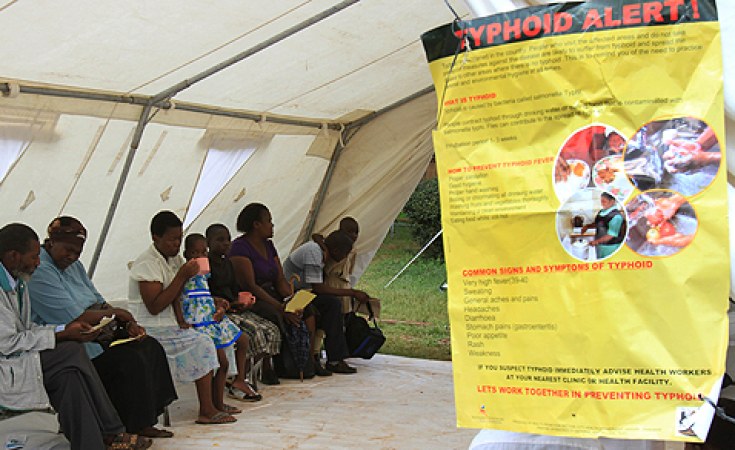
Zimbabwe is currently embroiled in a fierce debate over proposed medical aid regulations, specifically an amendment to Statutory Instrument 330 of 2000. This proposed change seeks to prohibit medical aid societies from owning or operating healthcare facilities, a practice known as vertical integration. While lawmakers contend this measure is designed to curb conflicts of interest, industry players are issuing stark warnings that such reforms could trigger a cascade of negative consequences, including rising healthcare costs, diminished access to care, and the potential collapse of private medical cover for thousands of citizens.
Addressing the Parliamentary Portfolio Committee on Health, Thando Kembo, Chief Operating Officer of Cimas Health Group, reframed the issue as one of crucial public interest rather than mere corporate control. Kembo emphasized that medical aid societies are essentially voluntary associations formed by ordinary citizens who pool their resources to secure essential healthcare, particularly in a system where public services are severely overstretched and private care remains largely inaccessible for the majority. Industry data presented to Parliament underscores this grim reality, revealing that less than 10 percent of Zimbabwe's population currently benefits from medical aid coverage, leaving over 13 million people without formal private healthcare protection.
Critics of the amendment argue that the vertically integrated model, where medical aid providers own facilities such as clinics, pharmacies, or hospitals, emerged as a necessary response to profound systemic failures within Zimbabwe's healthcare landscape. These failures include persistent tariff disputes, chronic medicine shortages, and severely limited capacity within public healthcare facilities. Kembo clarified that medical aid societies invested in service provision not as a "commercial power play," but as a "last-resort access strategy," especially during periods of economic instability when private providers frequently withdrew services or imposed unpredictable fees.
Further industry submissions to Parliament highlight that vertical integration plays a vital role in stabilizing costs. By integrating services, funders are better positioned to negotiate tariffs and effectively shield their members from excessive charges – a critical balance that stakeholders warn could be irrevocably lost if the proposed reforms are enacted. A policy briefing submitted alongside the parliamentary hearings painted a dire picture, warning of a potential "collapse cascade." This report outlines a scenario where separating medical aid funds from service providers could lead to uncontrolled pricing by healthcare providers, a dramatic increase in subscription costs for members, a subsequent decline in membership due to worsening affordability, and ultimately, the complete collapse of medical aid schemes.
Projections indicate that under a deregulated environment, tariffs could spike by as much as 800 percent without the current cost controls. Zimbabwe's healthcare financing model is already under significant strain, with medical aid contributions averaging between US$55 and US$65 per member per month, utilization rates exceeding recommended levels, and claims ratios often surpassing 90 percent. Furthermore, the country is recognized as one of the most expensive healthcare destinations in the region, compelling an increasing number of patients to seek treatment in neighboring countries like South Africa and Zambia, or further afield in India.
Stakeholders strongly contend that a blanket ban on vertically integrated models would severely undermine Zimbabwe's commitment to Universal Health Coverage (UHC). They argue that such a move would eliminate one of the few existing mechanisms that currently help control costs and expand access to care. Kembo warned that "Removing society-owned facilities does not fix tariff inflation. It removes one of the few effective tools keeping costs in check." The likely repercussions, she added, would be higher contributions, reduced benefits, and significantly declining access to care, disproportionately affecting low-income earners.
Instead of an outright prohibition, industry players are urging Parliament to adopt a more nuanced regulatory approach. They advocate for mechanisms that specifically address conflicts of interest while simultaneously preserving vital investment in healthcare infrastructure. They point to successful international models in countries such as the United States and the United Kingdom, where vertically integrated systems operate effectively under robust governance frameworks that include transparency rules, stringent tariff oversight, and comprehensive competition laws, rather than outright bans.
Parliament now faces a pivotal policy choice: whether to dismantle established integrated healthcare models in the pursuit of regulation, or to refine existing oversight mechanisms while safeguarding the current structures. For the millions of Zimbabweans already grappling with the challenges of accessing affordable healthcare, the outcome of this decision will have profound and far-reaching consequences, impacting not only the cost of medical treatment but, critically, the fundamental availability of care itself.