Groundbreaking: US Government Stamps Official GDP Data onto Bitcoin and Solana Blockchains
The U.S. Commerce Department has begun publishing GDP data on public blockchains, including Bitcoin and Ethereum, marking a significant step in integrating digital assets into economic reporting. This initiative, championed by President Donald Trump, symbolizes a major shift in government policy towards embracing cryptocurrency technology. The move, supported by oracle provider Chainlink, follows a period of strong U.S. economic growth, even as the Federal Reserve anticipates rate cuts.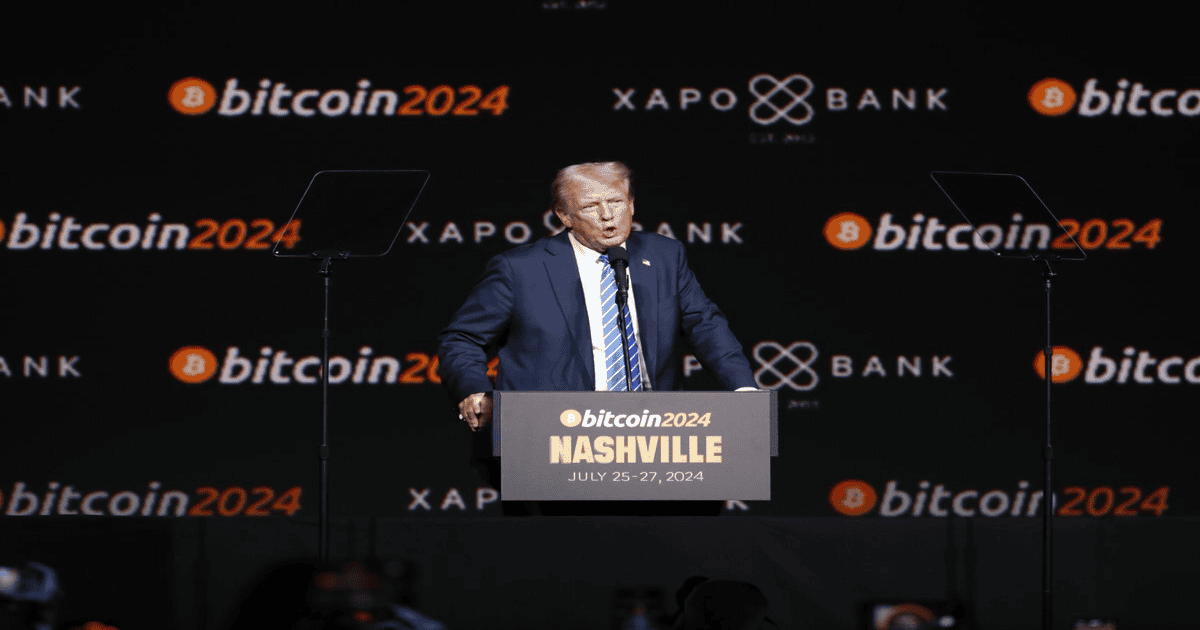
The U.S. government has initiated a groundbreaking move by officially publishing gross domestic product (GDP) data on public blockchains. This significant development, announced by the Commerce Department, integrates blockchain technology into the core of America’s economic reporting. The data is now accessible on nine different networks, including prominent ones like Bitcoin, Ethereum, and Solana, marking a pivotal moment for digital assets in the national policy landscape.
Commerce officials have clarified that this blockchain rollout is intended as “another avenue” for data distribution, rather than a replacement for traditional economic data releases. Nevertheless, the initiative carries substantial symbolic weight, signifying the government’s formal endorsement of a technology that was once met with considerable skepticism in Washington. Mike Cahill, CEO of Douro Labs, who has collaborated with the Commerce Department on this project, stated, “With today’s announcement we are now in a world where government data lives on blockchains, and market participants can participate in real time.”
The technical implementation of this initiative involves posting cryptographic hashes of GDP data. These digital fingerprints serve a crucial role in verifying the integrity and authenticity of the information. While the initial scope of the program is limited, Commerce Department officials have confirmed that President Donald Trump’s administration plans to further expand this innovative program. Commerce Secretary Howard Lutnick spearheaded the project, reportedly telling President Trump that statistics would be issued via blockchain “because you are the crypto president.” Lutnick has also previously suggested re-evaluating GDP reporting by excluding the impact of government spending.
This adoption represents a stark departure from the previous administration’s stance. Under former President Joe Biden, regulators generally maintained a cautious approach to cryptocurrency, often clashing with exchanges and imposing restrictions on digital assets. In contrast, President Trump has rapidly moved to integrate Bitcoin and other cryptocurrencies into government policy since taking office. His administration has established a U.S. Bitcoin reserve, stockpiled various digital coins like Ether and Solana, signed legislation to regulate stablecoins, and appointed crypto-friendly regulators who have ended enforcement actions against major platforms such as Coinbase.
The growing influence of the cryptocurrency industry is evident through its political engagement. Crypto firms contributed significantly to Trump’s reelection campaign and channeled over $133 million to super PACs supporting pro-crypto candidates in 2024, according to OpenSecrets. Beyond political donations, Trump’s family has also expanded its involvement in the digital asset space, backing ventures such as World Liberty Financial.
A critical component enabling the direct publication of data on blockchain networks is the prominent “oracle” provider, Chainlink. This collaboration marks a “key milestone” for government adoption of blockchain technology, as stated by Chainlink, which also provides its technology to major financial entities like SWIFT, BNY Mellon, BlackRock, Visa, and Mastercard. Following the announcement, the price of the LINK token saw a surge of over 6%. Leading U.S. cryptocurrency exchanges, including Coinbase and Gemini, also assisted the Commerce Department in implementing this change.
In related economic news, the U.S. economy experienced a stronger-than-expected expansion of 3.3% in the second quarter, with consumption increasing by 1.6%. This marks the best quarter since Q3 2023, with the latest GDP figure having been revised upwards from 3%. Economist Heather Long noted that while the data indicates the U.S. economy is slowing, it “clearly” continues to grow. Despite these relatively robust economic figures, the Federal Reserve is still widely anticipated to cut interest rates in the upcoming month.
By leveraging public blockchains for economic data, the Commerce Department joins other government agencies experimenting with crypto technology. Examples include the Department of Homeland Security considering blockchain for airport passenger screening and California’s DMV digitizing car titles on crypto. As President Trump continues to position himself as the “crypto president,” the adoption of blockchain for GDP distribution underscores a profound transformation in U.S. economic policy, further solidifying Bitcoin’s role as a significant political and financial force in Washington.