Gilgo Beach Murders: Experts Demand Immediate DNA Technique Implementation
New York is embroiled in a heated debate over the adoption of "next-generation sequencing" (NGS) technology for DNA evidence in criminal cases, with the Gilgo Beach prosecution serving as a key example of its potential. While advocates tout NGS as crucial for justice and identifying victims, civil rights groups and defense attorneys raise significant concerns about privacy, misuse, and the need for stringent regulatory oversight.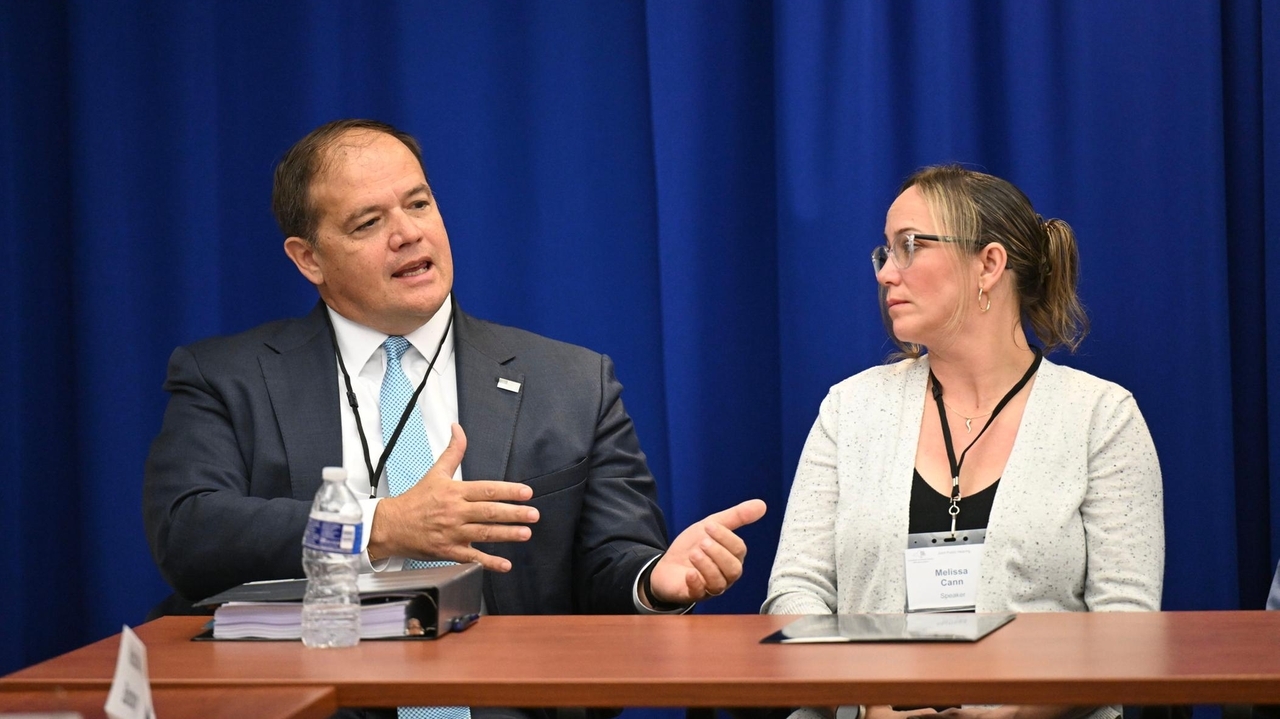
A significant debate is underway in Albany concerning the future application of DNA evidence in New York's criminal justice system. The discussion, held in a government meeting room, centered on a request by the New York State Police to permit public forensic laboratories to utilize "next-generation sequencing" (NGS) technology. This advanced method would support "forensic investigative genetic genealogy" (FIGG) as a tool for solving crimes, a move that has garnered strong support from prosecutors and victims' families, while raising serious concerns among civil rights advocates and defense attorneys.
Currently, public forensic labs in New York are constrained by older genetic technologies that prove ineffective with degraded or low-quality DNA samples. Experts assert that NGS technology overcomes this limitation by enabling the development of usable genetic profiles even from highly fragmented DNA evidence, significantly enhancing the ability to identify or exonerate suspects. While there are 25 public forensic labs statewide, including five on Long Island, only the state police lab is currently seeking authorization for this emerging technology.
Ray Tierney, the Suffolk County District Attorney who successfully prosecuted the Gilgo Beach murder case, was a prominent voice advocating for NGS. He emphasized that his office relied on DNA analysis from a private California lab, specifically whole genome sequencing applied to nine hairs found on victims, which required an unprecedented judicial ruling for its admission. Tierney asserted, "If not for NGS, Rex A. Heuermann would still remain at liberty." He further highlighted the disparity, stating, "Currently, New York State public laboratories stand on the sidelines while private laboratories are leveraging NGS every single day."
Melissa Cann, whose sister Maureen Brainard-Barnes was murdered by Heuermann, echoed Tierney's sentiments, calling the new technology a "miracle" that led to accountability. She pointed out that two other victims, Karen Vergata and Valerie Mack, could not be identified using older DNA methods. Cann passionately urged the commission to avoid delay, stressing that the technology provides "answers," "names," "accountability," and ultimately "justice" for families awaiting closure.
However, the proposed expansion of NGS technology faces considerable opposition. Heuermann's defense attorneys had previously attempted to exclude the DNA evidence, arguing its inadmissibility under state law and questioning the reliability of the private lab's standards and probability weighting. These same concerns were echoed by public defense attorneys, the Legal Aid Society, and law clinics. Their testimony highlighted fears that expanded DNA use could infringe upon the rights of distant relatives of suspects who have no connection to a case, and could pave the way for an ever-broadening deployment of the technology.
Attorneys like Richard Torres from Brooklyn Defender Services raised critical questions regarding the scope and oversight of NGS implementation, asking, "Is the technology only for state police, or every lab in New York State?" He also queried whether New York would share information with external agencies such as Immigration and Customs Enforcement (ICE), or if it could be used to identify individuals seeking abortion services or gender-affirming care. Critics urged the commission to involve the State Legislature in developing clear auditing standards, penalties for labs, and ensuring that law enforcement obtains judicial authorization for NGS use on a case-by-case basis. They also called for explicit guidelines on how information would be formalized and presented to defense attorneys to ensure compliance with fair trial laws. Sarah Chu, Policy and Reform Director at the Perlmutter Center for Legal Justice at Cardozo Law, cautioned that "Good intentions fill this room... But they are not a safeguard."
The decision now rests with the state’s Commission on Forensic Science, which convened the Friday hearing and could make a ruling as early as December. In response to the call for legislative involvement, District Attorney Tierney countered that the commission, with its specialized expertise, is better suited to make this decision quickly and effectively than the State Legislature.