NYC Erupts: Fury as ICE Agents' Shooting Fuels Political Firestorm
A shooting involving federal immigration agents and a Dominican man in the Bronx ignited widespread protests and strong condemnation from New York officials. This incident, which saw Oscar Belgal shot with his 5-year-old son in the car, has become a pivotal issue in the state's gubernatorial race, intensifying debates over immigration enforcement, sanctuary policies, and the tactics of federal agencies.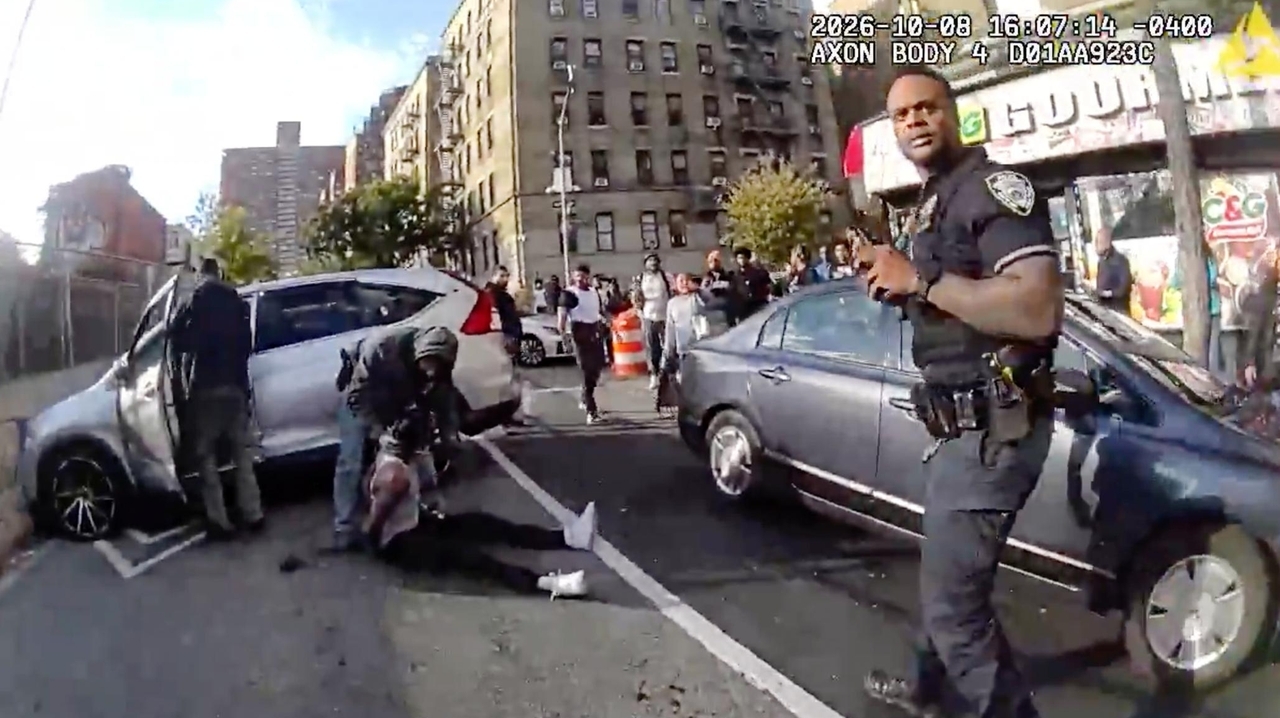
New York City and state officials, alongside numerous residents, forcefully condemned the shooting of 28-year-old Oscar Belgal by federal immigration agents in a busy Bronx neighborhood. This incident, which occurred on a Thursday night, quickly escalated into widespread protests and became a flashpoint in the ongoing debate over immigration enforcement and its political ramifications, particularly in New York State.
Federal agents from U.S. Immigration and Customs Enforcement (ICE) stated they opened fire after Belgal "weaponized" his vehicle, accelerating into a pair of government vehicles as they attempted to apprehend him. Crucially, Belgal's 5-year-old son was in the car at the time, though he was unharmed. Federal officials initially stated officers were unaware a child was present. ICE alleged Belgal had gang ties, a criminal history, and was in the country illegally, defending their agents' actions as necessary for their safety. Marcos Charles, head of ICE’s Enforcement and Removal Operations, claimed Belgal "refused lawful orders to exit his vehicle" and was "superficially" struck in the neck by a bullet or fragment after officers fired.
The shooting drew immediate and strong rebukes from state and local leaders. Gov. Kathy Hochul, in an exclusive interview with Newsday, expressed outrage and called for a suspension of ICE operations "for the time being," stating that firing into a vehicle with a child "violates all training, all precepts of normal law enforcement." Bronx District Attorney Darcel D. Clark launched an investigation, pledging to establish facts and determine appropriate action. New York Mayor Zohran Mamdani condemned ICE's tactics, highlighting that agents conducted their operation in construction uniforms and masks when "school had just gotten out" and "the street was crowded with families and children," questioning how such actions contribute to public safety. Conversely, Department of Homeland Security Secretary Markwayne Mullin, whose agency oversees ICE, referred to Belgal as a "thug" and asserted that the agency was "enforcing our nation’s laws," refusing to back down.
The incident ignited immediate public outcry and demonstrations. Protests erupted near the shooting scene in the Marble Hill neighborhood, with residents holding signs decrying ICE. By Friday evening, thousands of anti-ICE protesters gathered in Manhattan's Foley Square, chanting for justice and the removal of ICE from their streets. The NYPD reported no arrests or incidents during the non-violent protest. Legal actions swiftly followed, with a federal judge, J. Paul Oetken, temporarily blocking Belgal's deportation and prohibiting his transfer to detention facilities outside the Eastern and Southern District or New Jersey. Lawyers for Make the Road New York, an immigration advocacy group, challenged Belgal's detention, with attorney Paige Austin stating he remained in pain with a bullet still in his body. Yaritza Mendez, deputy director of Make the Road, called for a "full investigation," asserting that the "violence is the point" of an agency "armed to the teeth" in service of a "xenophobic agenda."
The shooting rapidly became a central issue in New York's political landscape, especially in the context of President Donald Trump’s aggressive stance on immigration enforcement and the upcoming gubernatorial election. Polls released around the time of the incident indicated a strong disapproval among New York voters of ICE tactics, with 60% opposing the methods used to arrest suspected undocumented immigrants and 63% believing the tactics had gone too far. Political analysts suggested the incident could energize Democratic voters, especially in New York, by providing another example of perceived ICE overreach.
The incident fueled a sharp partisan divide. Gov. Hochul and other Democrats criticized federal actions and reinforced the state's sanctuary policies, which limit local law enforcement cooperation with ICE on civil immigration matters. Hochul had previously signed a law banning such cooperation, except with a federal judicial warrant. Mayor Mamdani echoed this sentiment, declaring, "Immigrant New Yorkers belong here. ICE does not." They sought to tie Republican gubernatorial candidate Bruce Blakeman to Trump's policies, portraying him as "Trump's puppet" who would "terrorize our communities with masked ICE agents."
Conversely, Bruce Blakeman and President Trump seized upon the incident to condemn New York's sanctuary policies. At a rally in Syracuse, Trump, campaigning for Blakeman, urged voters to support Blakeman "if you want to stop illegal alien criminals from being released into your community." Blakeman, in turn, directly blamed Hochul's policies for the incident, asserting that an executive order would be waiting on his desk to end New York's sanctuary state status if he were elected governor. He also used the platform to advocate for ending "green energy scams" and reducing taxes and utility bills, aiming to make New York more affordable. Republicans, including Party spokesman David Laska, argued that "Mamdani and Hochul will put illegal immigrants — even known gang members — above law-abiding Americans."
The shooting, coming just days before the televised debate between Hochul and Blakeman and on the eve of Trump’s visit, underscored the deep divisions over immigration policy. While some analysts believed it would largely galvanize existing voter bases, others suggested it could sway undecided voters. The incident highlighted the complexities of balancing federal immigration enforcement with local and state policies, and the profound impact such confrontations have on communities and political discourse, with both sides intensifying their rhetoric in the lead-up to the elections.